In the realm of industrial automation and control systems, displacement sensors and proximity switches play pivotal roles in ensuring precision, safety, and efficiency. These devices, though often mentioned together, serve distinct functions based on their operational principles and applications. Understanding their differences, advantages, and use cases is essential for engineers and technicians working in fields such as manufacturing, robotics, and machinery monitoring.
Displacement sensors are designed to measure the distance between a target object and a reference point, providing continuous, analog, or digital output that reflects linear or angular movement. Common types include linear variable differential transformers (LVDTs), capacitive sensors, and laser-based sensors. LVDTs, for instance, use electromagnetic induction to detect linear displacement with high accuracy, often within micrometers, making them ideal for applications like valve positioning, vibration analysis, and quality inspection in automotive or aerospace industries. Capacitive sensors, on the other hand, rely on changes in capacitance to measure displacement, offering non-contact operation suitable for delicate materials or high-speed processes. Laser displacement sensors utilize optical triangulation or time-of-flight methods, enabling precise measurements over long ranges, commonly used in 3D scanning and surface profiling.
Proximity switches, also known as proximity sensors, are binary devices that detect the presence or absence of an object within a specified range without physical contact. They typically output a simple on/off signal, triggering actions like stopping a conveyor belt or activating a safety mechanism. Inductive proximity switches are widely used for detecting metallic objects, operating through electromagnetic fields that induce eddy currents in the target. Capacitive proximity switches can sense both metallic and non-metallic materials, including liquids or plastics, by detecting changes in dielectric properties. Ultrasonic and photoelectric proximity switches offer longer sensing distances, with ultrasonic types using sound waves for level detection in tanks, and photoelectric types employing light beams for object counting or positioning in packaging lines.
The choice between displacement sensors and proximity switches depends on application requirements. Displacement sensors are favored when quantitative data is needed, such as monitoring wear in machinery, controlling robotic arm movements, or ensuring dimensional accuracy in production. Their ability to provide real-time feedback allows for closed-loop control systems, enhancing process stability. In contrast, proximity switches excel in scenarios requiring simple detection, like part presence verification, limit switching, or collision avoidance. They are robust, cost-effective, and easy to integrate into programmable logic controllers (PLCs) for automated workflows.
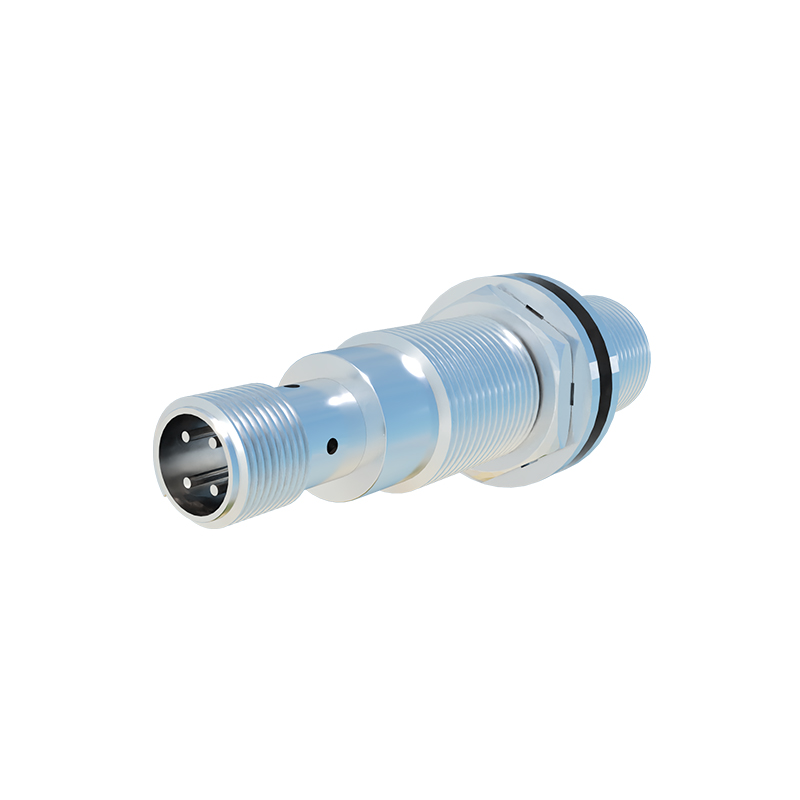
Recent advancements have blurred the lines between these technologies, with smart sensors combining displacement measurement and proximity detection in single units. Innovations like IoT-enabled sensors allow for remote monitoring and predictive maintenance, reducing downtime in industrial settings. For example, a hybrid sensor might measure displacement while also triggering an alarm if an object approaches too closely, improving safety in collaborative robot environments.
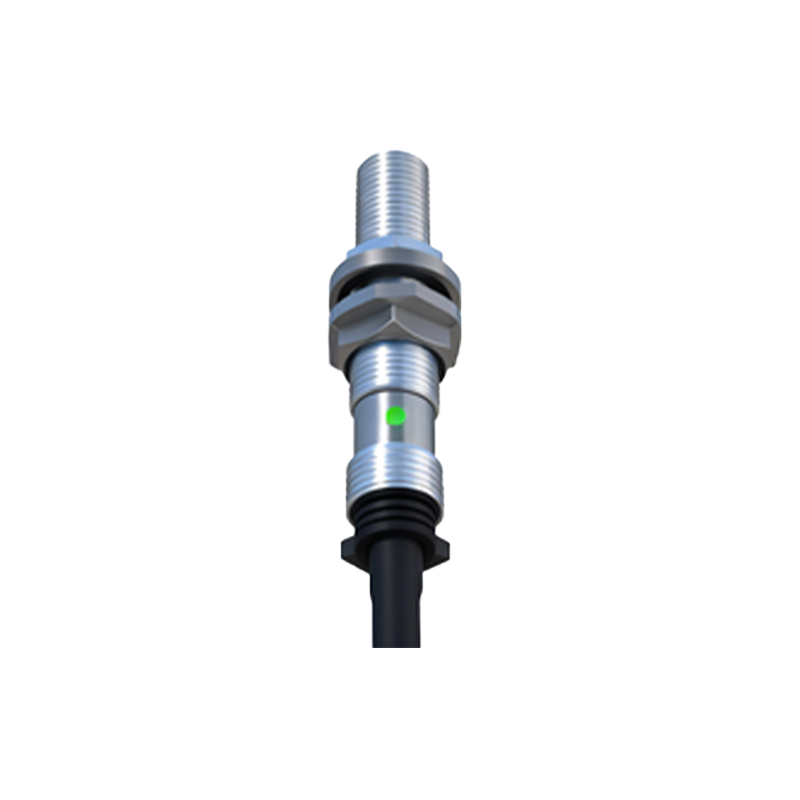
In summary, displacement sensors and proximity switches are indispensable tools in modern engineering. By selecting the appropriate device based on precision needs, environmental conditions, and budget constraints, professionals can optimize system performance and drive innovation in automation. As industries evolve toward Industry 4.0, these sensors will continue to adapt, offering greater integration and intelligence for smarter manufacturing solutions.