In modern industrial automation, precision cutting processes have evolved significantly with the integration of laser positioning sensors. These advanced devices enable high-accuracy material processing by providing real-time feedback on position, alignment, and dimensional parameters. As an electrical engineer, understanding the operational principles and implementation strategies of laser positioning sensors is crucial for optimizing cutting systems in applications ranging from metal fabrication to composite material processing.
Laser positioning sensors operate primarily on triangulation or time-of-flight principles. In triangulation-based systems, a laser diode emits a focused beam onto the target surface. The reflected light is captured by a receiver at a known angle, allowing the sensor to calculate the distance based on the geometric relationship. This method offers sub-micrometer resolution, making it ideal for precision cutting where tolerances are tight. Time-of-flight sensors measure the round-trip time of a laser pulse to determine distance, suitable for larger working ranges. Both technologies rely on robust signal processing algorithms to filter environmental noise, such as ambient light or vibrations, ensuring reliable data output.
The integration of laser positioning sensors into cutting machinery involves several key electrical engineering considerations. First, sensor selection must align with the material properties and cutting environment. For instance, reflective surfaces may require sensors with adjustable sensitivity to prevent signal saturation, while dark or absorbent materials might need higher-power lasers. Electrical interfacing typically involves analog outputs (e.g., 4-20 mA or 0-10 V) or digital protocols like IO-Link or Ethernet/IP, enabling seamless communication with PLCs or CNC controllers. Engineers must design shielding and grounding schemes to mitigate electromagnetic interference from high-power cutting tools, which can disrupt sensor signals.

Calibration and alignment are critical for maintaining accuracy. Laser sensors require periodic calibration using certified reference targets to compensate for thermal drift or mechanical wear. In automated cutting lines, multi-sensor arrays are often deployed to monitor multiple axes simultaneously. For example, a combination of linear and angular sensors can track both the position and orientation of a workpiece, allowing dynamic adjustments to cutting paths. This is particularly valuable in contour cutting applications, where complex shapes demand continuous positional updates.
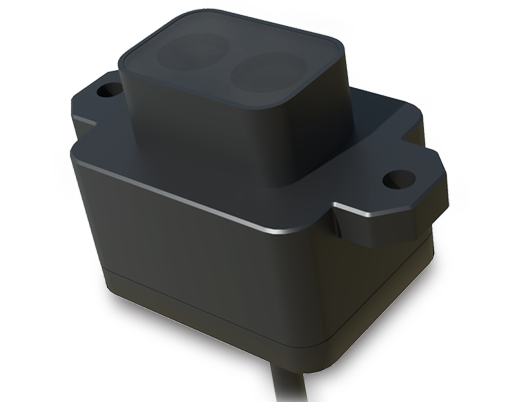
Software integration plays a pivotal role in leveraging sensor data. Modern cutting systems use sensor inputs to implement closed-loop control, where deviations from the programmed path are corrected in real time. Machine learning algorithms can further enhance performance by predicting material behavior—such as thermal expansion during laser cutting—and preemptively adjusting parameters. Electrical engineers should collaborate with software teams to develop custom interfaces that translate sensor data into actionable commands, ensuring low-latency responses.
Safety and compliance are non-negotiable aspects. Laser positioning sensors must adhere to international standards like IEC 60825-1 for laser safety, which classifies devices based on emission power and potential hazards. Engineers must incorporate fail-safe mechanisms, such as redundant sensor checks or emergency stop triggers, to prevent accidents in high-speed cutting environments. Additionally, regular maintenance schedules should include lens cleaning and optical component inspections to avoid degradation in performance.
Looking ahead, advancements in sensor technology are poised to revolutionize cutting processes. Emerging trends include the use of hyperspectral imaging for material identification and adaptive sensors that self-adjust based on environmental conditions. As Industry 4.0 gains traction, laser positioning sensors will increasingly interface with IoT platforms, enabling predictive maintenance and data analytics for process optimization. For electrical engineers, staying abreast of these developments is essential to designing cutting-edge systems that meet evolving industrial demands.
In summary, laser positioning sensors are indispensable tools for achieving precision in cutting applications. Their successful implementation hinges on a thorough understanding of electrical design, calibration protocols, and software integration. By mastering these elements, engineers can drive efficiency, reduce waste, and enhance the quality of manufactured components, ultimately contributing to smarter and more resilient industrial ecosystems.