In the realm of industrial automation and control systems, proximity sensors stand as fundamental components for non-contact object detection. Among the various types available, the NPN Normally Open (NO) proximity sensor is a widely utilized configuration, prized for its specific switching characteristics and compatibility with common control logic. This article delves into the operational principles, wiring methodologies, practical applications, and key considerations for engineers working with these essential devices.
At its core, a proximity sensor detects the presence or absence of a target object without physical contact, typically using electromagnetic fields, light, or sound. An NPN sensor refers to the type of transistor output it employs. An NPN transistor functions as a switch that sinks current to ground. In a "Normally Open" configuration, the output signal line is internally disconnected (open circuit) when no target is present. When a target enters the sensor's detection range, the internal NPN transistor activates, closing the circuit between the output signal line and the negative/common (0V) line, thereby "sinking" current.
Understanding the standard three-wire DC configuration is crucial for proper implementation. These wires are universally color-coded: Brown for the positive supply voltage (typically +10 to +30 VDC), Blue for the negative/common (0V), and Black for the output signal. For an NPN Normally Open sensor, the black wire is the switched output. In its idle state (no target detected), the black wire is at a high impedance state relative to the blue wire. Upon detection, the NPN transistor turns on, connecting the black wire to the blue wire (0V), effectively pulling the signal voltage low. This "low signal" or "sinking" action is the active state for the control system.

The choice between NPN and its counterpart, PNP, often depends on regional conventions and control system design. NPN sensors, which sink current to common, are traditionally prevalent in Asian and North American markets. They are particularly well-suited for interfacing with PLC (Programmable Logic Controller) input modules that are designed to receive a switched common or ground signal. When the NPN sensor activates, it completes the circuit to ground for the PLC input, registering a logic "1" or "ON" state, assuming the PLC input is internally pulled up to the positive supply.
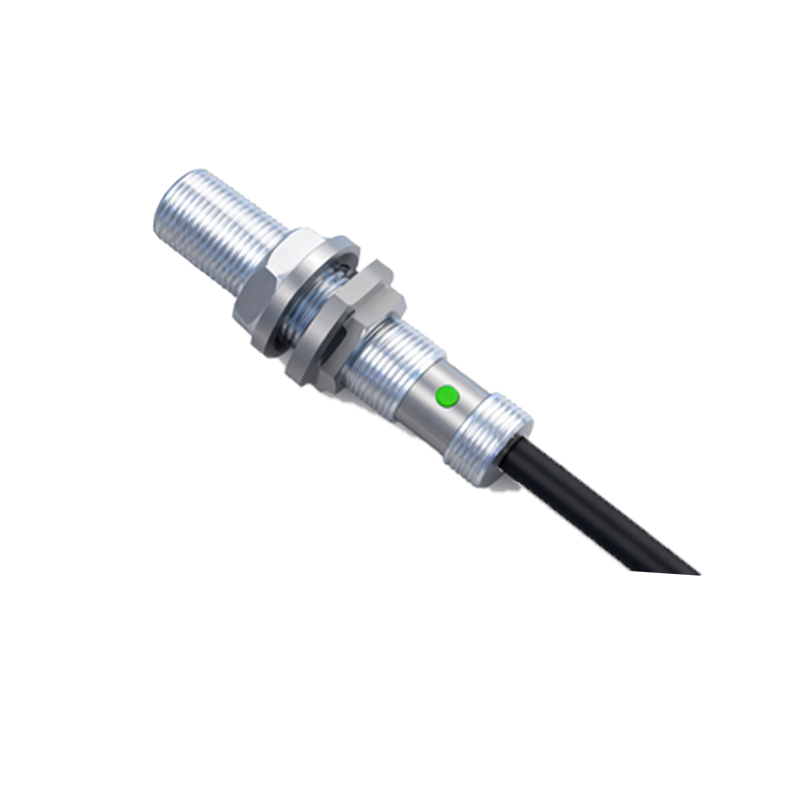
Application scenarios for NPN NO proximity sensors are vast across manufacturing, packaging, material handling, and automotive industries. Common uses include part presence verification on a conveyor, counting objects as they pass a point, detecting the end-of-travel of a machine slide, or confirming the closed position of a safety guard. The Normally Open characteristic is often preferred for safety-critical "stop" functions; the circuit is open (no signal) under normal conditions, and a detected fault (like a guard opening) activates the sensor, closing the circuit to trigger an immediate halt.
Several critical factors must be evaluated during selection and installation. Sensing range, often specified as the "nominal" or "rated" operating distance, must be chosen with a safety margin to account for target material, size, and environmental conditions. The target material itself is vital; inductive sensors, the most common type detecting metals, have different effective ranges for steel, aluminum, and copper. Environmental robustness, indicated by IP (Ingress Protection) ratings, is necessary for resistance to dust, coolants, or washdowns. Electrical load compatibility on the output must also be checked to ensure the sensor can handle the current draw of the connected device, such as a PLC input, relay coil, or indicator lamp.
Troubleshooting typically involves a systematic approach. A multimeter is an indispensable tool. First, verify power between brown (+) and blue (-) wires. Next, measure the voltage on the black output wire relative to blue. With no target present, the voltage should be near the supply voltage (high). When a target is presented, the voltage should drop to near 0V (low). Failure to switch indicates potential sensor failure, incorrect wiring, an insufficient or inappropriate target, or physical damage to the sensing face.
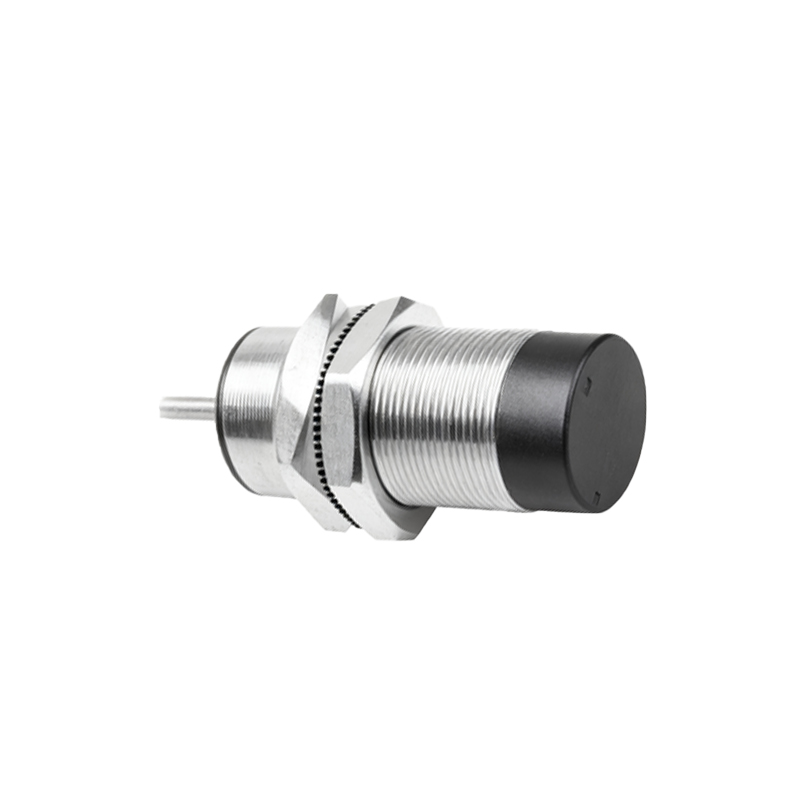
In conclusion, the NPN Normally Open proximity sensor is a robust and logical choice for countless automation tasks requiring reliable sinking outputs. Its operation, hinging on the activation of an internal NPN transistor to connect the signal line to common, provides a clear and reliable interface with standard control electronics. By mastering the wiring principles, understanding the "normally open" logic state, and carefully considering application parameters, electrical engineers can effectively integrate these sensors to build efficient, safe, and responsive automated systems. Their continued evolution in terms of sensing technology, miniaturization, and connectivity ensures they will remain a cornerstone of industrial control for the foreseeable future.