In the realm of industrial automation, precision, reliability, and efficiency are paramount. Laser sensors have emerged as a cornerstone technology, enabling unprecedented levels of accuracy in measurement, detection, and positioning tasks across diverse sectors such as manufacturing, logistics, and robotics. This guide delves into the core principles, types, applications, and selection criteria for laser sensor devices, providing a thorough understanding for engineers and system integrators.
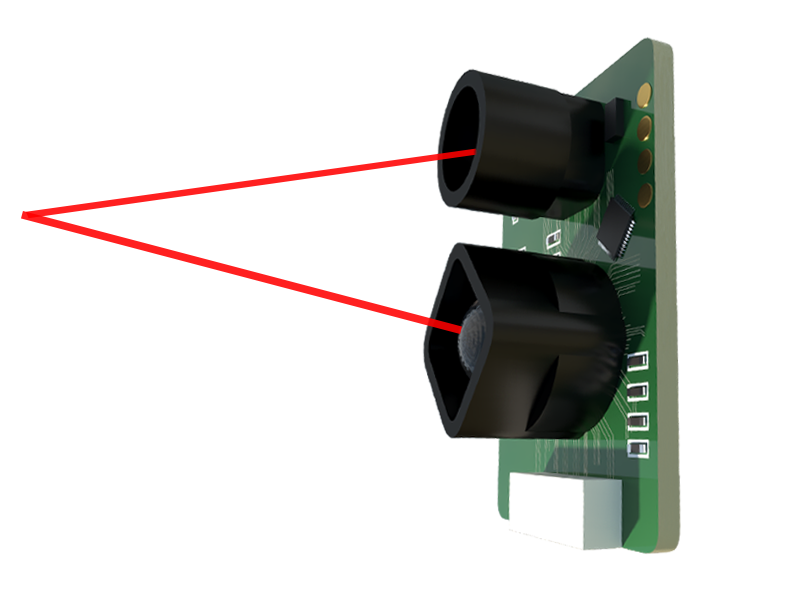
At its essence, a laser sensor is a device that utilizes laser light to detect, measure, or profile an object. It operates by emitting a focused beam of coherent light—typically from a laser diode—towards a target. The sensor then analyzes the properties of the reflected or scattered light. The most common measurement principles include time-of-flight (ToF), triangulation, and confocal measurement. Time-of-flight sensors calculate distance by measuring the time delay between the emission and reception of the laser pulse, making them ideal for long-range applications. Triangulation sensors, on the other hand, use a geometric approach with a laser emitter, a receiver (like a CCD or CMOS array), and the target forming a triangle; they excel in high-precision, short to medium-range measurements. Confocal chromatic sensors utilize polychromatic light and spectral analysis to achieve nanometer-level resolution, often used for surface profiling and thickness measurement.
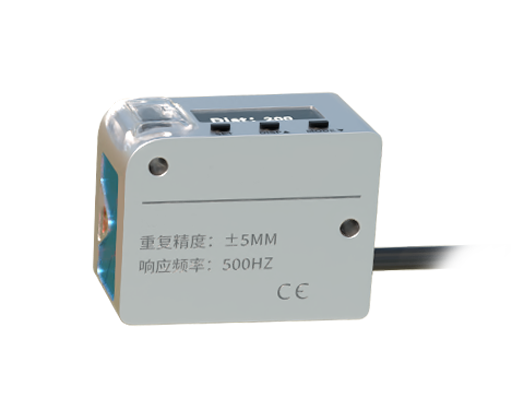
The industrial landscape features several key types of laser sensors. Laser distance sensors are ubiquitous for non-contact positioning and level monitoring. Laser displacement sensors provide micron-level accuracy for measuring dimensions, vibrations, or warpage. Laser profile sensors, or line lasers, project a line onto a target to capture a 2D or 3D cross-sectional profile, crucial for inspection and robotic guidance. Furthermore, laser photoelectric sensors are workhorses for presence detection, counting, and object differentiation based on reflectivity, available in through-beam, retro-reflective, and diffuse reflection models. Each type is engineered to address specific challenges, from harsh environments with dust and vibration to demanding tasks requiring sub-micron repeatability.
Applications of laser sensors are vast and transformative. In automotive assembly, they ensure precise robot welding paths and inspect panel gaps. In electronics manufacturing, they measure component placement on PCBs and verify solder paste height. Logistics and warehousing rely on them for parcel dimensioning, palletizing, and automated guided vehicle (AGV) navigation. In the pharmaceutical industry, laser sensors control fill levels in vials and inspect packaging integrity. Their non-contact nature prevents product damage and allows for high-speed operation, which is impossible with mechanical probes or tactile methods.
Selecting the appropriate laser sensor requires careful consideration of several technical parameters. Measurement range and standoff distance define the operational window. Resolution and linearity determine the achievable accuracy. The laser's spot size influences the minimum detectable feature. Response time and sampling rate must match the process speed. Environmental factors like ambient light, temperature fluctuations, and the presence of contaminants (dust, oil, steam) dictate the required ingress protection (IP) rating and housing material. Additionally, output interfaces (analog, digital, Ethernet-based fieldbus) must be compatible with the existing control system. It is also critical to consider the target surface properties; dark, matte, or transparent materials may require sensors with specific receiver sensitivities or specialized algorithms to ensure reliable operation.
Recent advancements continue to push the boundaries. The integration of artificial intelligence and machine learning allows sensors to perform complex classification and anomaly detection directly at the edge. Miniaturization leads to more compact designs for integration into tight spaces. Enhanced connectivity via Industrial Internet of Things (IIoT) protocols enables predictive maintenance and centralized data analytics. Furthermore, the development of blue laser technology offers advantages for measuring hot or shiny metals due to its shorter wavelength and reduced susceptibility to interference.
In conclusion, laser sensor technology is a dynamic and indispensable element of modern industrial automation. Its ability to deliver precise, non-contact measurements under challenging conditions drives quality, efficiency, and innovation. A deep understanding of its operating principles, variants, and application-specific requirements empowers engineers to design robust and future-proof automated systems. As technology evolves, laser sensors will undoubtedly continue to be at the forefront, enabling smarter and more adaptive manufacturing and logistical processes.