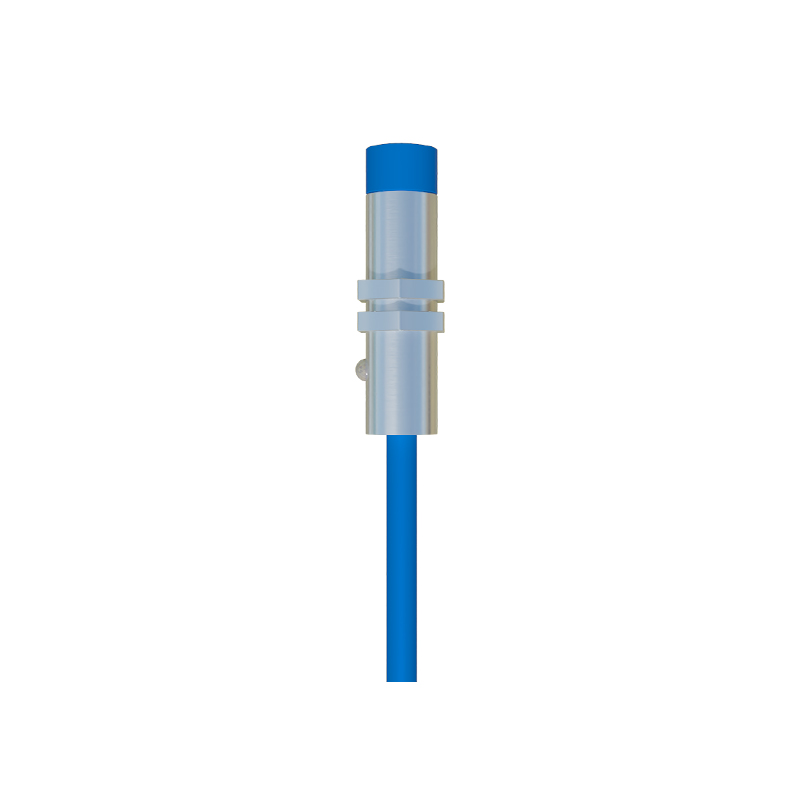
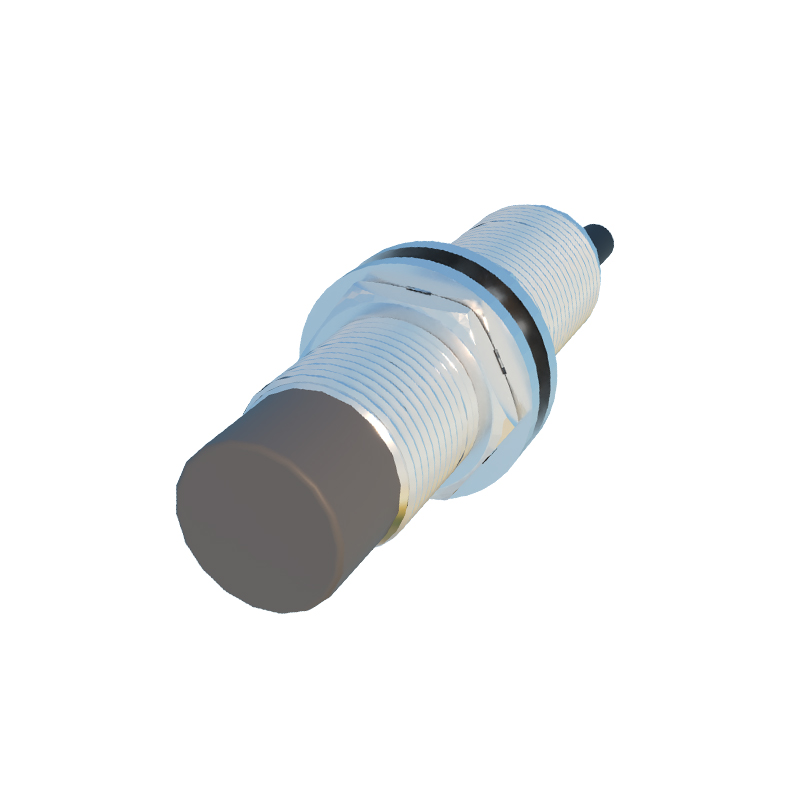
In the realm of industrial automation and electronic systems, proximity sensors stand as critical components for non-contact detection. Among the various technologies employed, infrared (IR) proximity sensing has carved out a significant niche due to its reliability, versatility, and cost-effectiveness. This article delves into the operational principles, key applications, and essential selection criteria for infrared-based proximity sensors.
At its core, an infrared proximity sensor operates by emitting an invisible beam of infrared light, typically from a light-emitting diode (LED). This beam travels outward until it encounters an object within its detection range. Upon striking the object, a portion of the infrared light is reflected back towards the sensor. A dedicated photodetector, often a phototransistor or photodiode, receives this reflected signal. The sensor's internal circuitry then processes this signal. The fundamental principle hinges on the change in the intensity of the reflected IR light. By measuring this intensity, the sensor can determine the presence of an object. More advanced sensors can even gauge approximate distance by analyzing the strength of the return signal, a method known as analog output sensing.
The advantages of infrared technology in proximity sensing are manifold. Firstly, IR sensors are largely unaffected by ambient visible light, making them suitable for various lighting conditions. They offer excellent performance for detecting non-metallic objects, which can be challenging for inductive proximity sensors. Their response time is generally fast, enabling high-speed counting or positioning applications. Furthermore, the components are relatively inexpensive and allow for compact sensor designs.
Infrared proximity sensors are ubiquitous across industries. In consumer electronics, they are the technology behind smartphone screen blanking during calls and automatic brightness adjustment. In the automotive sector, they are integral to parking assistance systems and occupancy detection for airbag deployment. Industrial automation heavily relies on them for object detection on conveyor belts, bottle counting in packaging lines, and robotic guidance. Security systems utilize passive infrared (PIR) sensors for motion detection by sensing changes in infrared radiation from warm bodies.
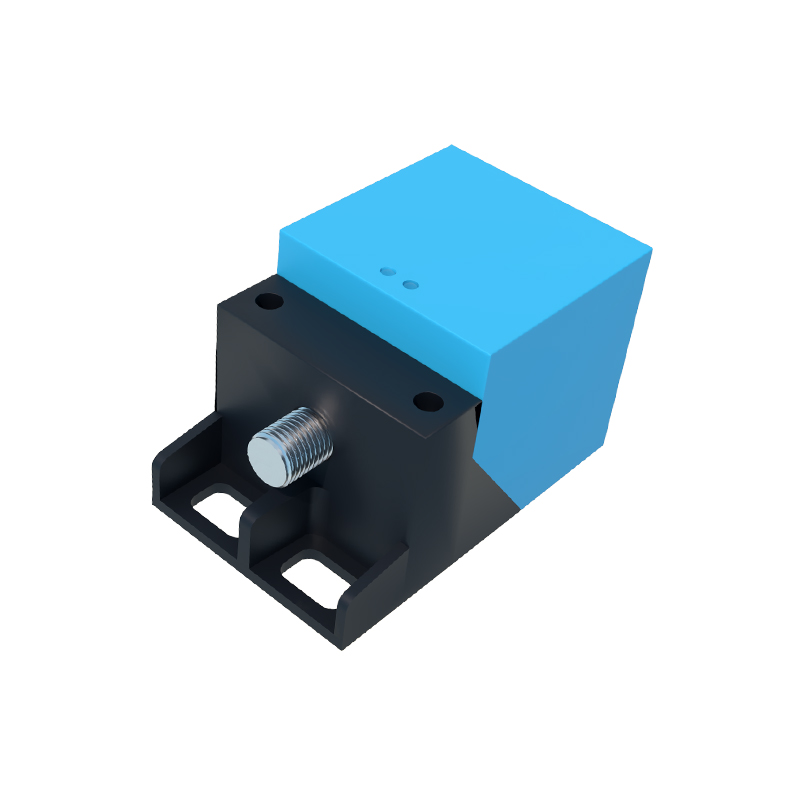
However, selecting the right IR proximity sensor requires careful consideration of several parameters. The sensing range is paramount; it must match the application's required detection distance. Environmental factors pose significant challenges. Dust, fog, or direct sunlight can scatter or overpower the IR beam, leading to false readings or reduced range. The color and surface texture of the target object also influence performance; dark, matte surfaces absorb more IR light and reflect less, potentially shortening the effective range compared to light, reflective surfaces. Other critical specifications include the response time, output type (digital on/off or analog), power requirements, and housing material for durability in harsh environments.
To mitigate environmental interference, many modern IR proximity sensors incorporate modulation techniques. Instead of emitting a constant beam, the IR LED is pulsed at a specific high frequency. The receiver circuit is tuned to recognize only light modulated at that same frequency. This design effectively filters out ambient IR noise from sources like sunlight or heating elements, dramatically improving reliability and signal-to-noise ratio.
In conclusion, infrared proximity sensors provide a robust and economical solution for a vast array of detection tasks. Their ability to sense a wide variety of materials, coupled with continuous advancements in noise immunity and miniaturization, ensures their continued prevalence. A thorough understanding of their working principle, alongside a meticulous evaluation of the application's environmental conditions and target properties, is essential for engineers to harness their full potential and integrate them seamlessly into efficient and reliable systems.