In the evolving landscape of industrial automation, the ability to detect objects without physical contact is fundamental. While inductive proximity sensors have long been the standard for metallic target detection, a significant portion of modern manufacturing and packaging involves non-metallic materials such as plastics, glass, wood, cardboard, and various liquids. This necessity has driven the development and widespread adoption of non-metallic object proximity sensors, primarily capacitive and photoelectric types. These sensors fill a critical gap, enabling reliable detection, counting, positioning, and quality control across diverse industries.
Capacitive proximity sensors operate on the principle of capacitance change. The sensor's active surface and a grounded shield form an open capacitor. When any material—be it solid, liquid, granular, or powdered—enters the electrostatic field, it alters the dielectric constant and thus the capacitance of the system. The sensor's internal oscillator detects this change, triggering a switching output. A key advantage is their ability to detect virtually any material, including non-conductive substances like plastic, wood, or glass, and even conductive materials through non-metallic container walls. This makes them ideal for applications like liquid level sensing in plastic tanks, detecting filled levels of powders in hoppers, or verifying the presence of glue or adhesive on a product. However, they are sensitive to environmental factors like humidity and dust, which can affect the dielectric constant and potentially cause false triggers. Proper shielding and calibration are essential.
Photoelectric sensors, another dominant technology for non-metallic detection, function by emitting a beam of light (visible red, infrared, or laser) and detecting changes in the received light. They are categorized mainly into three modes: through-beam, retro-reflective, and diffuse (proximity) mode. Through-beam sensors, with separate emitter and receiver units, offer the longest sensing ranges and highest reliability, perfect for detecting transparent bottles on a high-speed conveyor. Retro-reflective types use a reflector and are excellent for detecting objects that break the beam over moderate distances. Diffuse sensors, where the emitter and receiver are in the same housing, detect the reflection from the target itself. Advanced background suppression and foreground suppression diffuse models can precisely ignore objects beyond or behind a set distance, crucial for detecting specific product heights on a pallet. Photoelectric sensors excel in long-range detection and can be finely tuned for color, transparency, and contrast detection, but their performance can be compromised by ambient light, heavy dust, fog, or dirt accumulation on the lens.
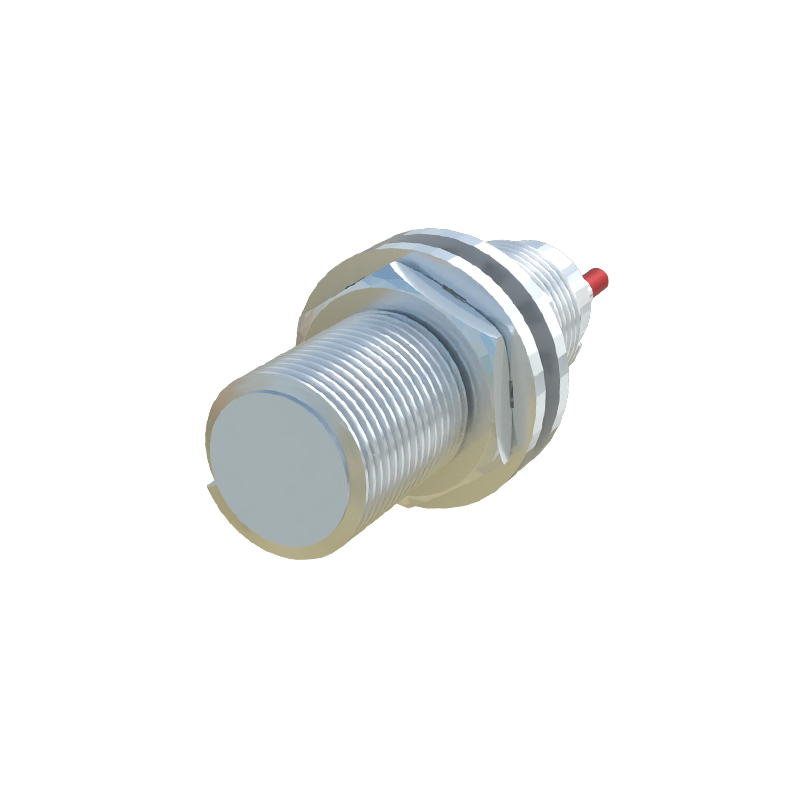
Ultrasonic sensors, which use sound waves, are also highly effective for non-metallic objects, especially where optical methods fail due to target color, transparency, or environmental contaminants like dust or steam. They measure the time-of-flight of an ultrasonic pulse and are superb for distance measurement and level sensing of bulk solids or liquids.
The selection of the appropriate non-metallic proximity sensor hinges on a detailed analysis of the application parameters. Key factors include: the composition, color, and surface finish of the target material; the required sensing distance; the operating environment (presence of dust, moisture, chemicals, or temperature extremes); the required response speed and switching frequency; and the electrical output type (PNP/NPN, analog, IO-Link). For instance, a capacitive sensor is the clear choice for detecting the fill level of detergent inside an opaque plastic bottle, while a polarized retro-reflective photoelectric sensor would be better suited for detecting clear glass panels on a washing machine assembly line to avoid false signals from shiny backgrounds.
Applications are vast. In packaging, these sensors detect labels, monitor film web breaks, and count cardboard boxes. In food and beverage, they verify cap presence on plastic bottles, control liquid filling levels, and detect broken cookies on a conveyor. In the automotive sector, they ensure the correct placement of plastic interior components and monitor resin levels in molding machines. In pharmaceutical manufacturing, they are indispensable for verifying the presence of pills in blister packs and monitoring powder levels in mixing vessels.
The integration of smart features like IO-Link communication is revolutionizing sensor functionality. It allows for remote parameter setting, real-time monitoring of signal strength or switch point distance, and predictive maintenance alerts, reducing downtime and enhancing process transparency. Furthermore, the miniaturization of sensors enables their installation in increasingly confined spaces, expanding their applicability.
In conclusion, non-metallic object proximity sensors are indispensable components in today's automated systems. Moving beyond the limitations of inductive sensing, technologies like capacitive, photoelectric, and ultrasonic provide versatile and reliable solutions. A thorough understanding of their operating principles, coupled with a careful assessment of the application's specific demands, is crucial for selecting the optimal sensor. This ensures robust performance, maximizes efficiency, and contributes to the creation of more flexible, intelligent, and productive automation environments across all sectors of industry.