Optical distance proximity sensors are pivotal components in modern industrial automation, robotics, and safety systems. These devices operate by emitting light—typically infrared, laser, or visible LED—and detecting the reflected signal to determine the presence, absence, or distance of an object. The core principle hinges on the time-of-flight (ToF), triangulation, or intensity-based measurement methods, each tailored to specific applications.
Time-of-flight sensors calculate distance by measuring the time delay between light emission and reception. A pulsed light source, such as a laser diode, sends short bursts toward the target. The reflected photons are captured by a photodetector, often an avalanche photodiode or CMOS sensor. The elapsed time, multiplied by the speed of light, yields the distance with high precision, suitable for ranges up to several meters. This method excels in environments requiring rapid, accurate measurements, like autonomous vehicles or warehouse logistics.
Triangulation-based sensors employ geometric principles. A light emitter projects a beam onto the target, and the reflected spot is imaged onto a position-sensitive detector (PSD) or CCD array. As the target moves, the spot shifts on the detector, allowing distance calculation through trigonometric relationships. This approach offers sub-millimeter resolution at close ranges, making it ideal for precision manufacturing, such as part inspection or assembly line monitoring.
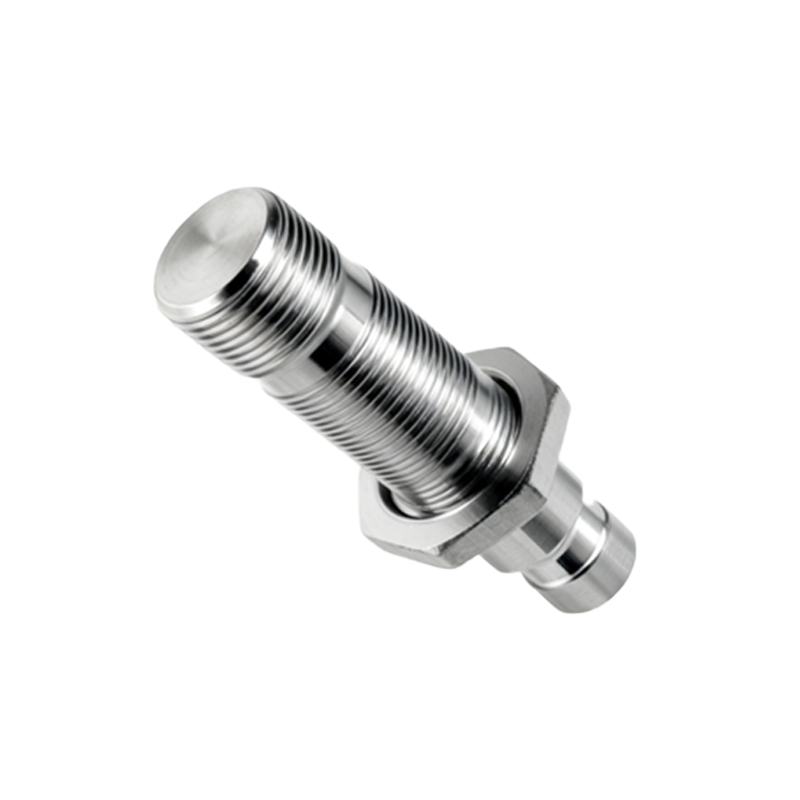
Intensity-based sensors, simpler in design, rely on the amplitude of reflected light. They emit continuous light and use a phototransistor to gauge the return intensity, which correlates inversely with distance due to light dispersion. While cost-effective and compact, these sensors are sensitive to environmental factors like object color or ambient light, necessitating calibration for consistent performance. Common applications include object detection in consumer electronics, like automatic faucets or paper detection in printers.
Key components include the light source, optics, detector, and signal processing unit. Advances in semiconductor technology have enabled miniaturization and integration, with microcontrollers implementing algorithms for noise reduction, ambient light compensation, and data output. For instance, digital ToF sensors now incorporate on-chip processing, providing direct distance readings via I2C or SPI interfaces.
Environmental challenges, such as dust, humidity, or varying surface reflectivity, can affect accuracy. Engineers mitigate these through modulated light signals, filters, or dual-sensor setups. In hazardous areas, sensors with rugged housings and high ingress protection (IP) ratings ensure reliability.
Optical proximity sensors are indispensable in Industry 4.0, enabling smart factories with real-time monitoring and adaptive control. They enhance safety by halting machinery upon detecting human intrusion, and boost efficiency in packaging, sorting, and quality assurance. Future trends point toward multisensor fusion, combining optical data with ultrasonic or capacitive sensing for robust performance across diverse conditions.
In summary, optical distance proximity sensors leverage light-based technologies to deliver non-contact measurement solutions. Their versatility and evolving capabilities continue to drive innovation in automation, making them a cornerstone of modern engineering systems.