In the realm of precision measurement, micro laser distance sensors have emerged as a pivotal technology, enabling accurate, non-contact distance detection across a multitude of industries. These compact devices operate on the principle of laser triangulation or time-of-flight measurement, projecting a focused laser beam onto a target surface and analyzing the reflected light to calculate distance with remarkable precision, often down to the micrometer range. Their miniaturized form factor belies their powerful capabilities, making them indispensable in applications where space is constrained and high accuracy is non-negotiable.
The core advantage of micro laser displacement sensors lies in their ability to perform without physical contact. This eliminates the risk of damaging delicate surfaces or influencing the measurement through mechanical force, a critical factor in electronics assembly, semiconductor inspection, and precision manufacturing. For instance, in the production of printed circuit boards (PCBs), these sensors verify component placement height and solder paste thickness with exceptional speed and reliability, ensuring product quality and minimizing waste. Similarly, in automated robotics, they provide real-time feedback for positioning and guidance, enhancing the precision of pick-and-place operations and assembly tasks.
Beyond manufacturing, micro laser rangefinders are revolutionizing fields like medical device engineering and automotive safety systems. In medical applications, they are used for precise dimensional checks of tiny components like stents or catheter tips. Within advanced driver-assistance systems (ADAS), these sensors contribute to object detection and low-speed collision avoidance, measuring the proximity to obstacles with consistent accuracy. Their high response speed and immunity to ambient light interference, achieved through specialized optical filters and signal processing algorithms, make them robust even in challenging environments.
The integration of these sensors into the Internet of Things (IoT) and Industry 4.0 frameworks is a significant trend. By providing a continuous stream of precise dimensional data, they facilitate predictive maintenance, process optimization, and full traceability in smart factories. A sensor can monitor tool wear on a micromachining center, triggering an alert before tolerances are compromised, thereby preventing unplanned downtime. This data-driven approach enhances overall equipment effectiveness (OEE) and operational intelligence.

Selecting the right micro laser distance sensor requires careful consideration of several parameters. Key specifications include measuring range, resolution, repeatability, spot size, and sampling rate. The choice between a red laser or a blue laser model, for example, depends on the target material's color and surface properties, as different wavelengths interact with surfaces uniquely. Furthermore, environmental factors such as temperature fluctuations, dust, or vibrations must be accounted for, with many industrial-grade models featuring robust housings and temperature compensation circuits to ensure stable performance.
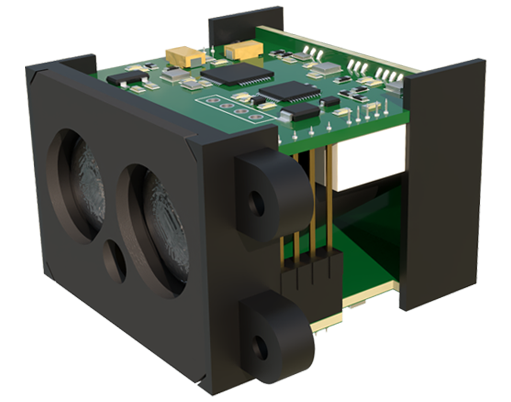
Installation and alignment are also crucial for optimal performance. Even a slight misalignment can lead to measurement errors. Manufacturers often provide intuitive software for configuration, calibration, and data visualization, simplifying integration into existing control systems. Regular maintenance, primarily keeping the lens clean from contaminants, is essential to preserve long-term accuracy and sensor longevity.
Looking ahead, the evolution of micro laser distance measurement technology points toward even smaller sizes, higher speeds, and enhanced smart features. The convergence with artificial intelligence for advanced data analysis and the development of multi-point sensors capable of capturing profile data are set to open new frontiers in quality control and automation. As demand for miniaturization and precision continues to grow across sectors, from consumer electronics to aerospace, the role of these sophisticated sensors will only become more central, driving innovation and efficiency in the microscopic details that define modern engineering excellence.