Proximity inductive sensors are fundamental components in modern industrial automation, offering non-contact detection of metallic objects. Their operation hinges on the principles of electromagnetic induction, providing reliability, longevity, and high-speed performance in harsh environments. Understanding their core functionality, key characteristics, and application nuances is essential for engineers designing robust control systems.
At the heart of an inductive proximity sensor lies a coil wound around a ferrite core, which forms part of an oscillator circuit. When energized, this oscillator generates a high-frequency electromagnetic field that radiates from the active face of the sensor. In the absence of a conductive target, the oscillator operates at its base amplitude. The critical event occurs when a metallic object enters this oscillating field. According to Faraday's law of induction, eddy currents are induced on the surface of the target material. These circulating currents create their own magnetic field, which opposes the original field generated by the sensor coil—a phenomenon governed by Lenz's law.
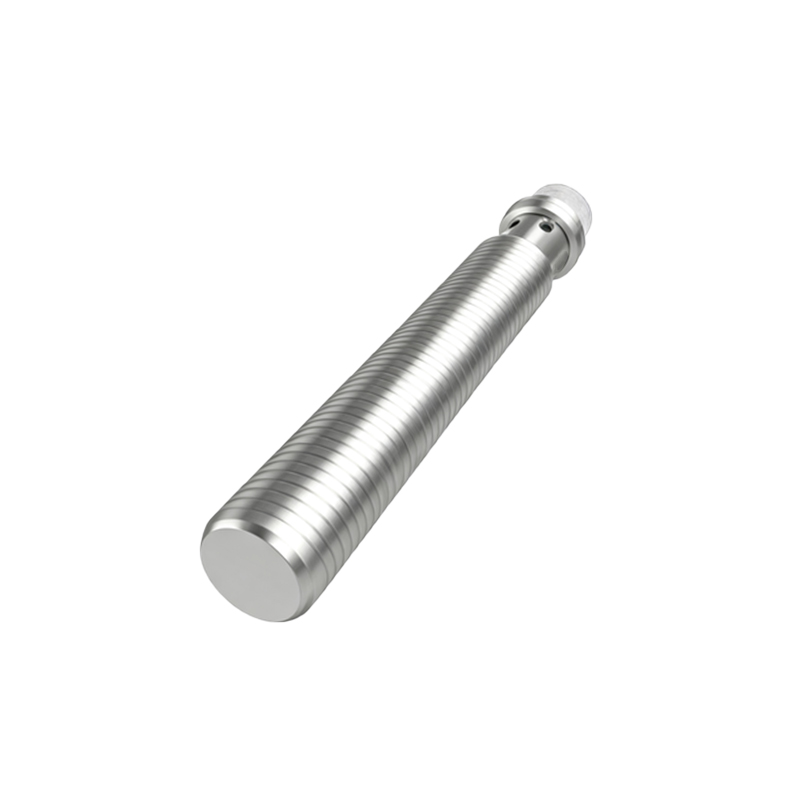
This opposition results in a measurable energy loss within the oscillator circuit. The sensor's internal electronics, specifically a trigger circuit or amplitude detection circuit, continuously monitors the oscillator's amplitude. When the energy loss (and thus the amplitude reduction) reaches a predetermined threshold, the circuit triggers a state change in the sensor's output. For a standard Normally Open (NO) sensor, this means switching its solid-state output (typically PNP or NPN) from an "off" state to an "on" state. The target's departure from the sensing field allows the oscillator to regain its amplitude, causing the output to revert to its original state.
Several key specifications define a sensor's performance. The nominal sensing distance (Sn) is a theoretical value under standardized conditions (usually a mild steel target of defined size). The effective operating distance (Sr) accounts for manufacturing tolerances, typically 90% of Sn. Engineers must also consider the hysteresis—the difference between the switch-on and switch-off points—which prevents output chatter when a target is at the sensing limit. Repeat accuracy is critical for precision applications, defining how consistently the sensor detects the same target under identical conditions.

Target material significantly influences performance. Ferrous metals (like iron and steel) induce both eddy currents and add magnetic permeability, yielding the longest sensing ranges. Non-ferrous metals (aluminum, copper, brass) are detected primarily through eddy currents, resulting in a reduced sensing range, often requiring a correction factor (e.g., 0.4 for aluminum). Stainless steel, depending on its grade, can have a factor between 0.6 and 0.9. Sensors are largely insensitive to non-metallic materials like plastics, wood, or liquids, making them ideal for applications requiring detection through such materials.
The output configuration is a vital selection criterion. Two-wire AC/DC, three-wire DC (PNP or NPN sourcing/sinking), and four-wire versions (with both NO and NC outputs) are common. PNP (sourcing) outputs switch the positive voltage to the load, while NPN (sinking) outputs switch the ground path. Choosing the correct type is imperative for compatibility with Programmable Logic Controllers (PLCs) and other control devices. Housing materials, such as nickel-plated brass, stainless steel, or PBT plastic, are selected based on the environmental demands, including exposure to coolants, welding spatter, or physical impact.
Applications are vast and varied. They are ubiquitous in manufacturing for tasks like part presence verification on conveyor lines, end-of-travel limit sensing on actuators, and rotary speed monitoring via gear teeth counting. In metalworking, they detect broken tools or monitor spindle position. Their non-contact nature eliminates mechanical wear, making them superior to mechanical limit switches. Advanced models feature analog current (4-20 mA) or voltage (0-10 V) outputs for distance-proportional measurement, or IO-Link digital communication for parameter setting and advanced diagnostics.
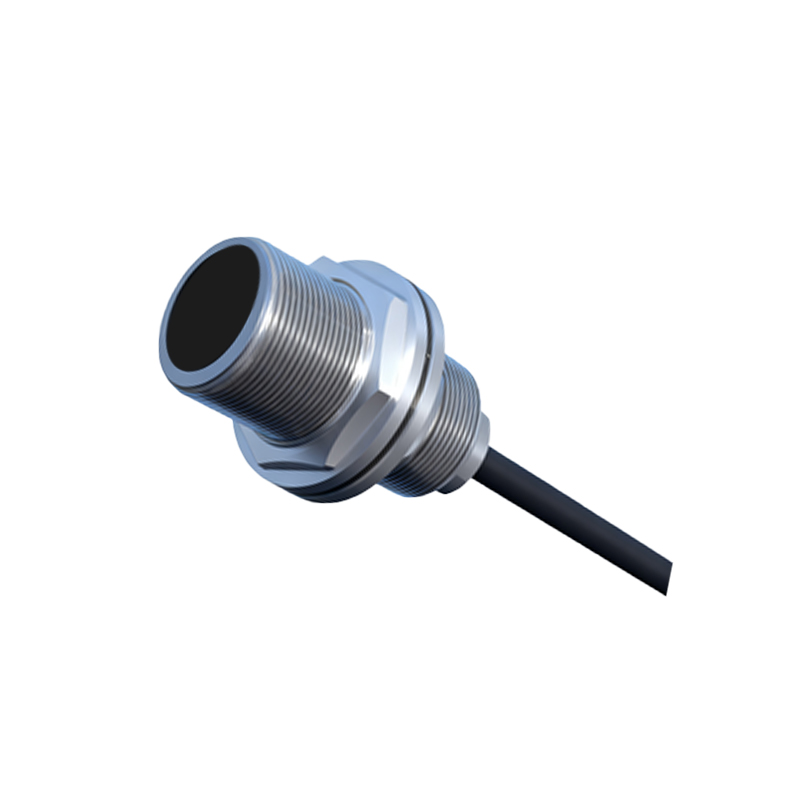
Installation requires careful consideration of the mounting conditions. Flush-mountable sensors can be installed in metal without affecting their range, as their field is focused forward. Non-flush sensors offer a longer range but require a clear lateral area free of metal to avoid false triggering. Engineers must also account for mutual interference when mounting multiple sensors side-by-side, adhering to manufacturer-specified minimum separation distances.
In summary, proximity inductive sensors are elegant solutions translating a fundamental electromagnetic principle into robust industrial utility. Their design elegantly solves the problem of wear-free, high-speed metallic object detection. For the automation engineer, a deep grasp of their operating principles, material dependencies, and application constraints is not merely academic but a practical necessity for designing efficient, reliable, and maintainable industrial systems.
SEO描述