Laser distance sensors have become indispensable tools across industries ranging from construction and manufacturing to robotics and autonomous systems. These devices operate on the principle of time-of-flight or phase-shift measurement, emitting laser pulses and calculating distance based on the time taken for the reflection to return. Programming these sensors involves interfacing with their communication protocols, configuring parameters, and processing data for real-world applications.
Most modern laser sensors support standard interfaces like UART, I²C, SPI, or industrial protocols such as Modbus and PROFIBUS. Initial setup requires connecting the sensor to a microcontroller or single-board computer like Arduino, Raspberry Pi, or industrial PLCs. For UART-based sensors, developers typically begin by setting the correct baud rate, data bits, and parity through serial communication libraries. A simple Arduino example might involve initializing Serial.begin(9600) and sending command bytes to request distance readings.
Sensor configuration often includes adjusting measurement modes (single-shot, continuous), setting measurement ranges, and applying environmental compensations. Advanced sensors allow programming of tolerance thresholds, enabling automatic triggering of outputs when measurements deviate from set limits. For instance, in a quality control system, a sensor can be programmed to flag objects shorter than 50mm by comparing each reading against this threshold and activating a digital pin to reject the item.
Data processing techniques are crucial for reliable operation. Implementing moving average filters helps smooth out noise from surface irregularities or environmental interference. Outlier rejection algorithms discard obviously erroneous readings caused by temporary obstructions. Many applications also require converting raw sensor data into engineering units or compensating for temperature variations using built-in or external temperature sensors.
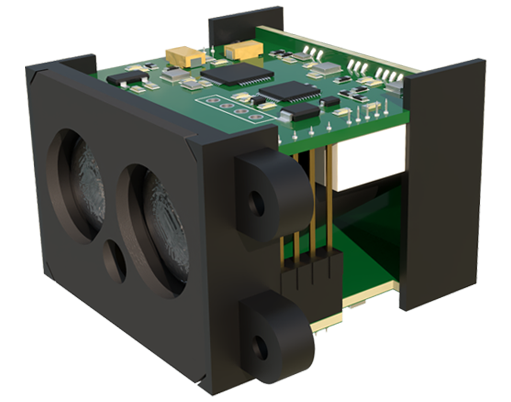
In robotics, laser sensors are frequently programmed for obstacle detection and navigation. A common approach involves creating scanning routines where the sensor sweeps across an area while recording distance values into an array. These arrays can then generate 2D profiles of surfaces or detect gaps in assembly lines. For AGVs (Automated Guided Vehicles), sensors are often programmed with multiple zones—warning zones that slow the vehicle and stop zones that trigger emergency halts.

Industrial integration typically involves higher-level programming through SCADA systems or custom software. Using Python with libraries like PySerial, developers can create monitoring dashboards that log data, generate alerts, and export reports. A Python script might open a serial port, send "GET_DISTANCE" commands at regular intervals, and publish the values to an MQTT broker for IoT integration.
Error handling is a critical programming aspect. Robust code should monitor sensor health flags, check for communication timeouts, and implement fallback procedures. Many sensors provide status bytes indicating conditions like weak signals or out-of-range measurements. Programmers should parse these bytes and respond appropriately—for example, by increasing laser power or ignoring readings during sensor initialization.
Calibration routines maintain long-term accuracy. Some applications require programming automatic zero-point calibration against reference surfaces or using two-point calibration for linearity correction. Factory automation systems often include calibration sequences that run during scheduled maintenance cycles.
Emerging trends involve programming sensors for network connectivity and edge computing. Modern sensors with Ethernet or WiFi capabilities can be programmed to send data directly to cloud platforms. Developers might implement HTTP POST requests to upload JSON-formatted measurements to databases or use WebSocket connections for real-time monitoring applications.
The choice of programming approach depends on application requirements. Simple threshold detection might need only basic microcontroller code, while complex measurement systems requiring data fusion with other sensors often employ embedded Linux systems running C++ or Python applications. Regardless of complexity, effective laser sensor programming always balances measurement speed, accuracy requirements, and system reliability.
As sensor technology advances, programming environments are becoming more sophisticated. Some manufacturers provide graphical configuration tools that generate code snippets, while others offer full SDKs with APIs for custom application development. These tools significantly reduce development time while ensuring optimal sensor performance across diverse operating conditions.