In the realm of industrial automation, proximity sensors stand as fundamental components, enabling non-contact detection of objects and ensuring seamless, efficient, and safe operations. These devices, crucial for modern manufacturing, logistics, and process control, detect the presence or absence of a target without physical contact, thereby eliminating mechanical wear and enabling high-speed, reliable performance in harsh environments. This article delves into the core principles, primary types, key applications, and essential selection factors for industrial proximity sensors.
At their core, proximity sensors operate by emitting an electromagnetic field, beam, or ultrasonic waves and detecting changes in the field or return signal caused by a target object. The absence of physical contact is their defining advantage, leading to longer service life, reduced maintenance, and the ability to detect fragile, small, or hot objects that might be damaged by tactile switches. The most prevalent technologies include inductive, capacitive, ultrasonic, and photoelectric sensors, each with distinct operating principles and ideal use cases.
Inductive proximity sensors are the workhorses of metal detection. They generate an oscillating electromagnetic field from a coil. When a metallic target enters this field, it induces eddy currents, causing a change in oscillation amplitude that the sensor's circuit detects. These sensors are exceptionally robust, immune to environmental factors like dust, oil, and moisture, and are ideal for detecting ferrous and non-ferrous metals in applications such as machine tooling, robotic arms, and conveyor systems for part counting or position verification.
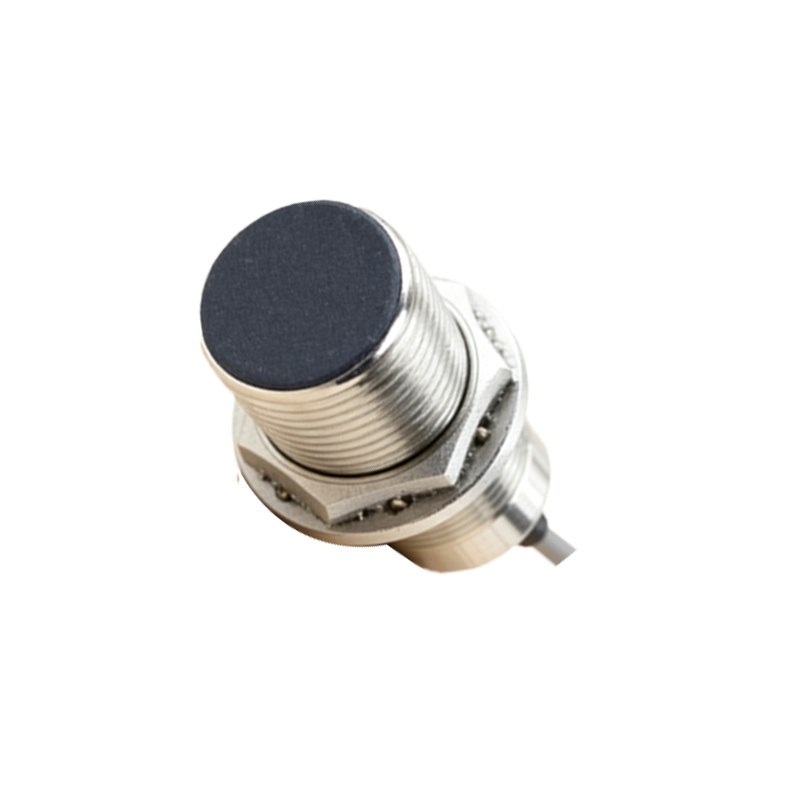
Capacitive proximity sensors, in contrast, can detect both metallic and non-metallic materials—liquids, plastics, wood, or granules. They function by generating an electrostatic field. Any object with a dielectric constant different from air alters the capacitance of the sensor's circuit, triggering detection. This makes them perfect for level detection in tanks (e.g., monitoring liquid or powder levels), detecting non-metallic containers on production lines, or sensing materials through thin non-metallic walls.
Photoelectric sensors utilize light beams, typically infrared or laser, for detection. They consist of an emitter and a receiver. The three main operating modes are through-beam (separate emitter and receiver), retro-reflective (target breaks a beam reflected back to the receiver), and diffuse (sensor detects light reflected directly from the target). They offer the longest sensing ranges and are excellent for detecting objects of any material, color, or transparency, commonly used in packaging, material handling, and automated assembly lines.
Ultrasonic sensors measure the time interval between emitting an ultrasonic pulse and receiving its echo. They are highly effective for precise distance measurement and level sensing, unaffected by color, transparency, or material (though absorbent materials can be challenging). Typical applications include bulk solid level control in silos, loop control in web processes, and robot palletizing.
Selecting the appropriate proximity sensor requires careful consideration of several parameters. First, the target material dictates the sensor technology: inductive for metals, capacitive for diverse materials, photoelectric for long-range or precise positioning. The sensing distance, or nominal range, must be specified with a safety margin to account for installation tolerances and environmental factors. Environmental conditions are critical; sensors may need specific ingress protection (IP) ratings for dust and water resistance, temperature ratings for extreme heat or cold, and resistance to chemicals, oils, or welding spatter. Output type is another key decision; common outputs include NPN/PNP transistor configurations (sinking or sourcing), analog (4-20 mA or 0-10 V for continuous measurement), or IO-Link for digital smart sensor communication. Finally, the physical housing size and shape (barrel, rectangular, ring-shaped) must suit the mechanical constraints of the installation.
In application, these sensors form the sensory nervous system of automated plants. They provide vital input to Programmable Logic Controllers (PLCs) for tasks like part presence verification on an assembly line, precise positioning of a robotic gripper, jam detection on a conveyor, or ensuring a safety door is closed before machine cycle initiation. Their reliability directly impacts overall equipment effectiveness (OEE), minimizing downtime and preventing costly errors or damage.
In conclusion, proximity sensors are indispensable in achieving the high levels of automation demanded by Industry 4.0. Understanding their operating principles, strengths, and limitations is essential for engineers and technicians tasked with designing, maintaining, and optimizing industrial systems. The correct selection and implementation of these devices ensure robust, efficient, and intelligent manufacturing processes, driving productivity and operational excellence in an increasingly competitive industrial landscape.