In the realm of industrial automation, sensors serve as the critical interface between the physical environment and control systems, enabling precise monitoring and responsive actions. Among the diverse sensor types, photoelectric and proximity sensors are widely utilized for their reliability, versatility, and non-contact operation. This article delves into their working principles, applications, and selection criteria to aid engineers in optimizing automation setups.
Photoelectric sensors operate by emitting a light beam—typically infrared, visible, or laser—and detecting changes in the received light. They are categorized into three main configurations: through-beam, retro-reflective, and diffuse reflective. Through-beam sensors consist of separate emitter and receiver units, offering long detection ranges and high accuracy by sensing interruptions in the beam. Retro-reflective sensors use a reflector to bounce light back to a combined emitter-receiver unit, suitable for moderate distances. Diffuse reflective sensors detect objects by measuring light scattered back from the target itself, ideal for close-range applications. These sensors excel in detecting presence, position, or color contrasts, commonly applied in packaging lines, material handling, and safety systems.
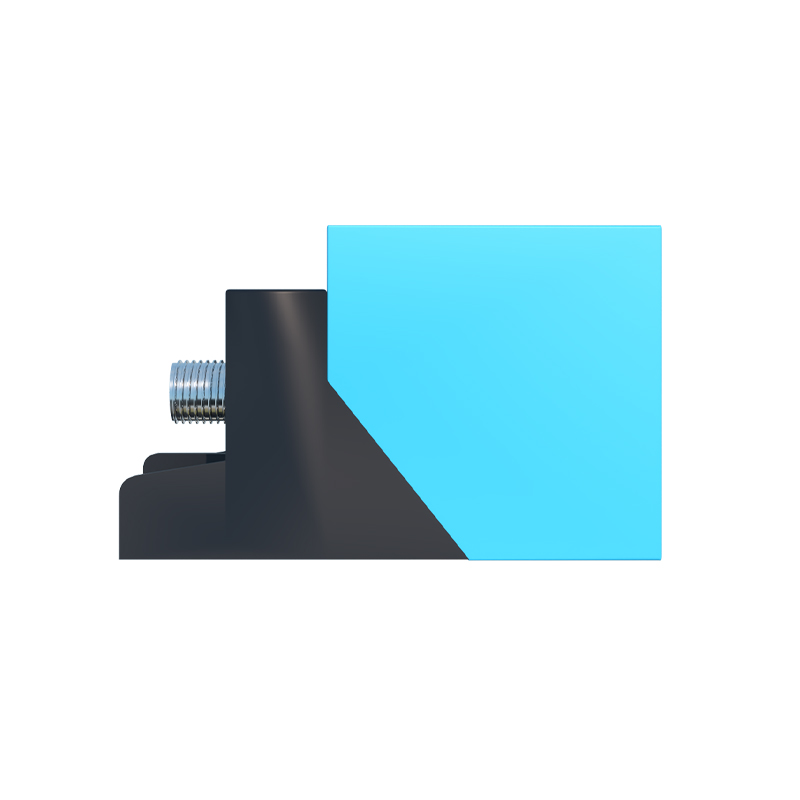
Proximity sensors, on the other hand, detect the presence or absence of objects without physical contact, primarily using electromagnetic fields or capacitive effects. Inductive proximity sensors generate an oscillating magnetic field to sense metallic objects, making them robust in harsh industrial environments with dust, oil, or moisture. Capacitive proximity sensors detect both metallic and non-metallic materials by measuring changes in capacitance, useful for liquid level sensing or plastic detection. Key advantages include durability, fast response times, and minimal maintenance. They are integral in assembly automation, robotics, and conveyor systems for object counting, positioning, and end-of-travel detection.
When selecting between photoelectric and proximity sensors, engineers must consider factors such as detection range, target material, environmental conditions, and cost. Photoelectric sensors offer longer ranges and flexibility for non-metallic objects but may be affected by ambient light or transparent materials. Proximity sensors provide consistent performance in dirty settings but are limited to shorter ranges and specific material types. Integration with PLCs (Programmable Logic Controllers) and IoT platforms enhances their functionality, enabling predictive maintenance and data-driven optimization.
Emerging trends include miniaturization, enhanced connectivity via IO-Link or Ethernet, and smart sensors with self-diagnostic capabilities. As Industry 4.0 advances, combining these sensors with AI algorithms can improve anomaly detection and process efficiency. By understanding their distinct characteristics, engineers can deploy photoelectric and proximity sensors effectively, ensuring reliable automation that meets modern industrial demands for precision, safety, and productivity.