In the realm of industrial automation and machine design, proximity sensors are indispensable components for non-contact detection of objects. Selecting the correct sensor involves numerous parameters, with physical dimensions being a critical, yet often underappreciated, factor. A well-understood proximity sensor size chart is not merely about fitting a component into a panel; it's about ensuring optimal performance, reliability, and integration within the spatial constraints of your application. This guide provides a detailed overview of standard proximity sensor sizes, their implications, and key selection criteria.
Proximity sensors are primarily categorized by their sensing technology (inductive, capacitive, ultrasonic) and their housing shape. The most common shapes are cylindrical (barrel-type) and rectangular (block-type). Each follows a somewhat standardized sizing convention.
Cylindrical Inductive Proximity Sensors:
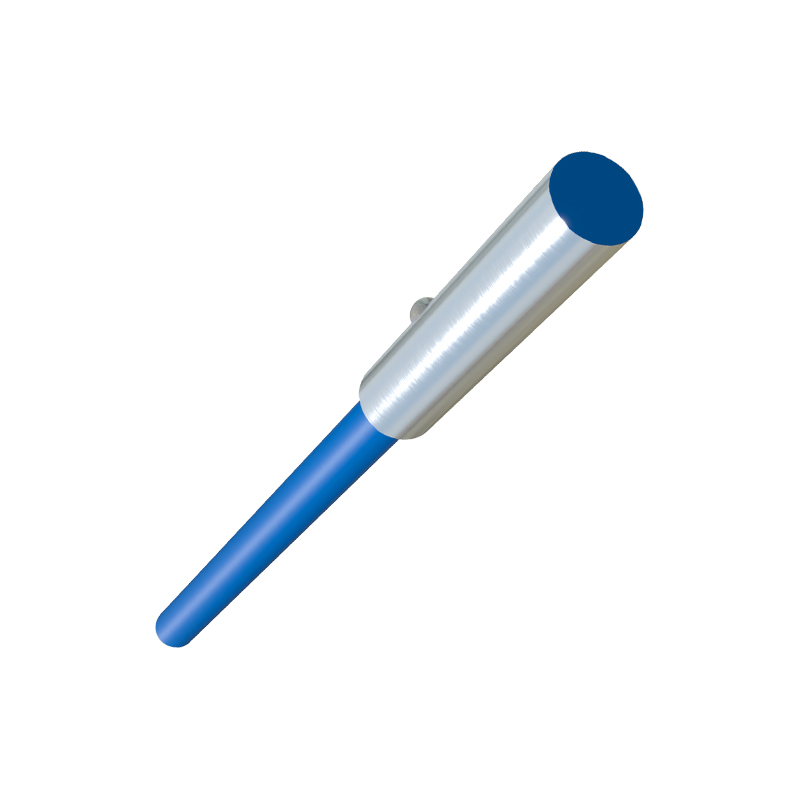
This is the most ubiquitous type. Their size is denoted primarily by the barrel diameter and length.
Micro Size (e.g., M4, M5, M8): Diameters of 4mm, 5mm, and 8mm. These are used in extremely space-limited applications, such as small assembly robots, precision machinery, or PCB handling equipment. Their sensing range is typically very short (1-2mm for M8).
Standard Miniature Size (M12): Perhaps the most common industrial size. The 12mm diameter offers a good balance between compact design and reasonable sensing range (2-4mm, depending on material). Widely used in packaging, material handling, and general factory automation. Many M12 sensors feature a threaded body for easy mounting.
General Purpose Size (M18): With an 18mm diameter, these sensors provide longer sensing ranges (5-8mm for steel) and are often more robust. Suitable for heavier industrial environments like automotive manufacturing or metalworking.
Large Duty Size (M30 and above): Sensors with 30mm, 34mm, or 40mm diameters are designed for long-range sensing (10-25mm) and harsh conditions. They are commonly found in mining, forestry, and heavy machinery applications where durability is paramount.
The length of the cylindrical sensor varies significantly based on the embedded electronics, connection type (cable or connector), and sensing face design (flush or non-flush mount). A typical M12 sensor might be 40-70mm long.
Rectangular / Block-Type Proximity Sensors:
These sensors are defined by their three-dimensional footprint (Length x Width x Height). They offer design flexibility, often allowing for sensing from multiple sides.
Small Format (e.g., 10x20x30 mm): Used for edge detection, small part counting, or where a flat profile is needed.
Standard Format (e.g., 20x40x60 mm): A versatile size for many conveyor belt applications, door position sensing, and palletizing systems.
Large Format: Used for specialized long-range or area sensing applications.
Key Dimensions Beyond Basic Size:
A complete size chart must account for more than just the housing.
1. Sensing Distance (Sn): This is the nominal range at which the sensor can detect a standard target. It is intrinsically linked to the sensor's diameter; larger sensors generally have longer ranges.
2. Mounting Dimensions: This includes thread length, nut size, and mounting hole clearances. For rectangular sensors, it involves bolt hole spacing and depths.
3. Dead Band: The area directly in front of the sensing face where detection is not possible. This is crucial for flush-mounted cylindrical sensors.
4. Connection Type: The size and type of the connector or cable gland contribute to the overall installation envelope. A pre-wired M12 sensor with a 2-meter cable has a very different spatial requirement than one with a quick-disconnect plug.
Selection Considerations Based on Size:
Space Constraints: Always verify the available clearance for both the sensor body and the tooling required for installation/maintenance.
Sensing Range Requirement: Choose a sensor size that provides the necessary range with a safety margin (typically 70-80% of Sn). Do not overspecify, as a larger sensor may be more expensive and obstructive.
Target Material and Size: The target must be large enough to interact effectively with the sensor's electromagnetic field. A rule of thumb for inductive sensors is that the target should be at least equal to the sensor's diameter.
Environmental Factors: In high-vibration environments, a shorter, sturdier sensor (M18 vs. a long M12) may be more reliable. For washdown areas, the housing size and seal rating (IP67/IP69K)