In the realm of industrial automation and electrical control systems, proximity sensors are ubiquitous. A common question that arises among engineers, especially those new to system design or maintenance, is: "Are proximity sensors universal?" The short answer is a qualified no. While they serve a universal purpose—detecting the presence or absence of an object without physical contact—their selection, application, and compatibility are far from one-size-fits-all. Understanding the nuances is crucial for optimal system performance, reliability, and safety.
The core principle of non-contact detection is universal, but the technology behind it is diverse. The primary types include Inductive, Capacitive, Ultrasonic, and Photoelectric sensors. Each operates on a distinct physical principle, making them suitable for specific materials and environments. An inductive sensor, for instance, detects only metallic objects (primarily ferrous metals) by generating an electromagnetic field. It is "universal" within the context of metal detection but utterly ineffective for plastic, wood, or liquid. Conversely, a capacitive sensor can detect nearly any material by sensing changes in capacitance, making it seem more "universal," but it is highly sensitive to environmental factors like humidity and dust.
Beyond the sensing technology, electrical characteristics are a major factor in compatibility. Proximity sensors are broadly categorized by their output configuration: NPN (sinking) and PNP (sourcing). These are not interchangeable. An NPN sensor, common in Asian and European designs, switches the negative (0V) line to the load. A PNP sensor, often found in North American systems, switches the positive voltage line. Connecting an NPN sensor to a PLC input card configured for PNP will result in a non-functional system. This is a fundamental compatibility hurdle that prevents universality.
Furthermore, output types include digital (discrete ON/OFF), analog (4-20mA, 0-10V), and IO-Link (smart digital). A simple digital switch is not "universal" with an analog input expecting a variable signal representing distance or thickness. The voltage ratings (e.g., 10-30V DC, 90-250V AC) and current-carrying capacity of the output also vary significantly. A sensor designed for 24V DC control circuits cannot be directly used in a 120V AC line-voltage application without risking immediate failure.
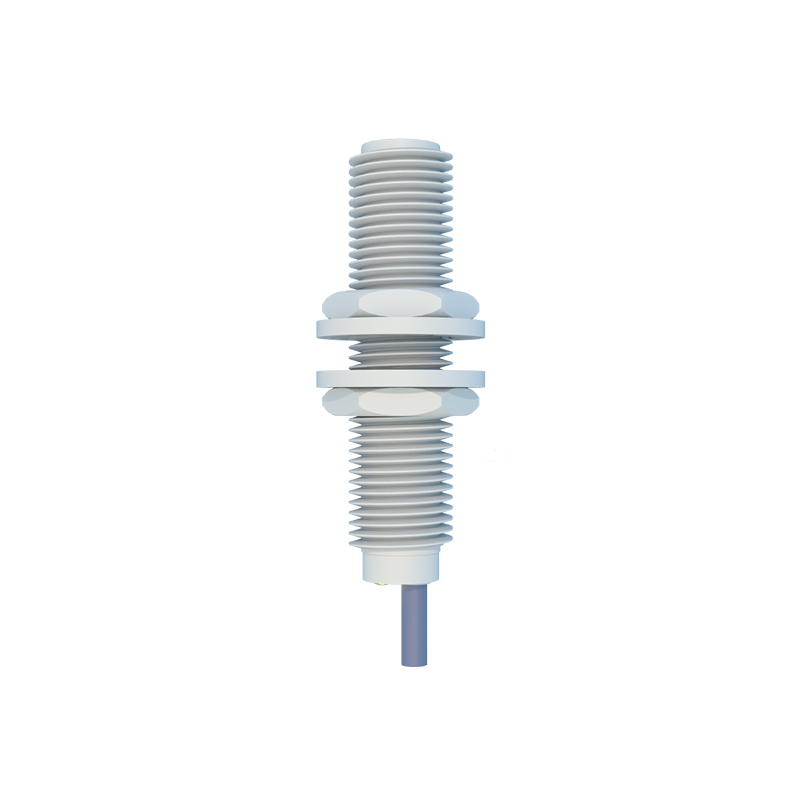
Physical form and mounting are other critical dimensions. Housing materials (metal vs. plastic), shapes (cylindrical, rectangular, ring-shaped), sizes (M8, M12, M18, M30 being common metric threads), and protection ratings (IP67, IP69K) are standardized to a degree, but selection depends entirely on the mechanical constraints and environmental conditions of the installation. An M12 sensor is not a universal replacement for an M18 sensor if the mounting hole is sized for the latter.
Environmental robustness adds another layer of specificity. A standard inductive sensor might fail in an environment with strong welding fields or extreme temperatures. Specialized models with weld-field immunity, high-temperature ratings, or chemical resistance are required. Their operation is not universal across all industrial settings.
Finally, the concept of "universality" is challenged by communication protocols in modern Industry 4.0 setups. While traditional sensors provide a simple signal, smart sensors with IO-Link, PROFINET, or EtherNet/IP interfaces offer detailed diagnostics and parameterization. These are protocol-specific and require compatible master devices.
In conclusion, proximity sensors are not universal plug-and-play components. Their application requires careful consideration of:
1. Target Material: Metal, plastic, liquid, etc.
2. Sensing Technology: Inductive, capacitive, ultrasonic, photoelectric.
3. Electrical Interface: NPN vs. PNP, voltage rating, output type (digital/analog).
4. Physical Form: Size, mounting style, housing material, protection rating.
5. Environmental Conditions: Temperature, presence of contaminants, electromagnetic interference.
The key for electrical engineers is to treat sensor selection as a critical design parameter. Always consult the manufacturer's datasheet, understand the requirements of the control system (PLC, relay), and consider the operational environment. Standardization exists within categories (like M12 connectors or 24V DC operation), but true universality remains an ideal rather than a practical reality. The right sensor, correctly specified and installed, is what ensures a robust, reliable, and efficient automation solution.