In the rapidly evolving landscape of industrial automation and precision measurement, Hejian laser distance sensors have emerged as a cornerstone technology, offering unparalleled accuracy, reliability, and versatility. These sensors utilize laser technology to determine the distance to a target object by emitting a laser beam and measuring the time it takes for the reflection to return, a method known as time-of-flight (ToF). This principle allows for non-contact measurement, which is crucial in applications where physical contact could damage the product or sensor, or where high-speed, repetitive measurements are required.
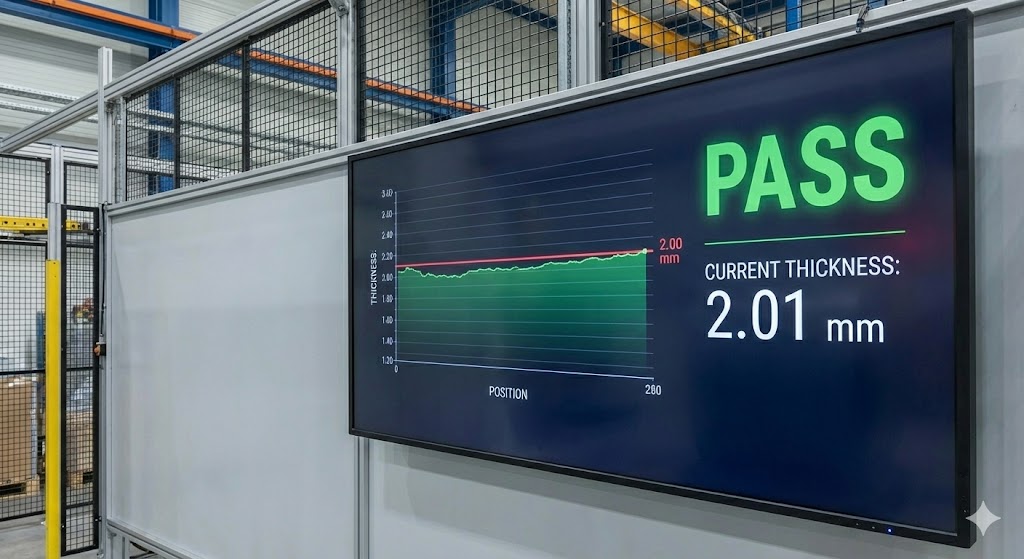
The core advantage of Hejian laser sensors lies in their exceptional precision. Capable of achieving micrometer-level accuracy, they are indispensable in quality control processes across manufacturing sectors. For instance, in the automotive industry, these sensors are deployed to verify the exact dimensions of components, ensuring that every part meets stringent tolerances. Similarly, in electronics manufacturing, they monitor the placement of microchips on circuit boards, preventing costly errors and enhancing production yield. The high-speed response of these sensors, often in the millisecond range, enables real-time monitoring and adjustment in dynamic production lines, significantly improving efficiency and reducing waste.
Beyond dimensional measurement, Hejian laser distance sensors are pivotal in level monitoring and positioning systems. In logistics and warehousing, they facilitate automated guided vehicles (AGVs) by providing precise location data for navigation and pallet handling. In bulk material handling, such as in silos or hoppers, they continuously monitor material levels, preventing overfills or shortages and optimizing inventory management. The robustness of these sensors is another key feature; many models are designed with IP67 or higher ingress protection ratings, making them resistant to dust, moisture, and vibrations commonly found in harsh industrial environments. This durability ensures consistent performance and a long operational lifespan, minimizing downtime and maintenance costs.

The integration of Hejian laser sensors with Industry 4.0 frameworks is a significant trend. Equipped with digital interfaces like IO-Link, Ethernet/IP, or PROFINET, these sensors can seamlessly communicate with programmable logic controllers (PLCs) and supervisory control and data acquisition (SCADA) systems. This connectivity enables the collection of vast amounts of measurement data, which can be analyzed for predictive maintenance, process optimization, and overall equipment effectiveness (OEE) calculations. By providing actionable insights, these smart sensors contribute to the development of more agile and intelligent manufacturing ecosystems.
Furthermore, the application scope extends to safety and robotics. In collaborative robot (cobot) cells, laser distance sensors create virtual safety zones, detecting the presence of human operators and triggering slowdowns or stops to prevent accidents. In robotic arms, they provide feedback for precise movement and object manipulation, enhancing the robot's dexterity and application range. The flexibility of Hejian sensors is also evident in their configurability; parameters such as measurement range, output type (analog or digital), and response time can often be adjusted via software to suit specific application needs.
When selecting a Hejian laser distance sensor, engineers must consider several factors. The measurement range and required accuracy are primary determinants. The reflectivity and surface properties of the target material can affect performance; some sensors feature advanced algorithms to compensate for variations in surface color or texture. Environmental conditions like ambient light, temperature fluctuations, and potential interference from other optical sources must also be evaluated. Fortunately, Hejian offers a diverse portfolio, from compact models for tight spaces to long-range sensors for large-scale measurements, ensuring a suitable solution for nearly every industrial challenge.

In conclusion, Hejian laser distance sensors represent a critical enabler of modern industrial precision and automation. Their ability to deliver fast, accurate, and reliable non-contact measurements underpins advancements in manufacturing quality, operational efficiency, and system intelligence. As industries continue to push the boundaries of automation and data-driven decision-making, the role of these sophisticated sensing devices will only become more central, driving innovation and competitiveness in the global market.