Laser sensor technology has undergone a transformative journey since its inception, evolving from rudimentary laboratory concepts to sophisticated systems integral to modern industrial automation, autonomous vehicles, and precision measurement. The foundational principle, utilizing the coherence and monochromaticity of laser light for detection, ranging, and profiling, has remained constant. However, the advancements in semiconductor lasers, photodetectors, and signal processing algorithms have dramatically expanded its capabilities and applications.
The initial development phase in the mid-20th century focused on military and aerospace applications, such as rangefinding and guidance systems. These early sensors were bulky, expensive, and required significant power. The breakthrough came with the commercialization of laser diodes and the development of fiber-optic technology. This miniaturization wave enabled the integration of laser sensors into factory automation for tasks like non-contact dimensional gauging, alignment, and defect detection on high-speed production lines. The robustness and precision of laser sensors made them superior to traditional mechanical or ultrasonic methods in many demanding environments.
A significant leap forward was the advent of Light Detection and Ranging (LiDAR) technology. By employing pulsed laser beams to create high-resolution 3D point clouds, LiDAR sensors became the cornerstone for environmental mapping. Their application in autonomous driving is perhaps the most publicized, where they provide real-time, 360-degree perception of a vehicle's surroundings, crucial for obstacle detection and navigation. Beyond automotive, topographic LiDAR is revolutionizing geography, archaeology, and forestry by providing unprecedented detail of terrestrial surfaces.
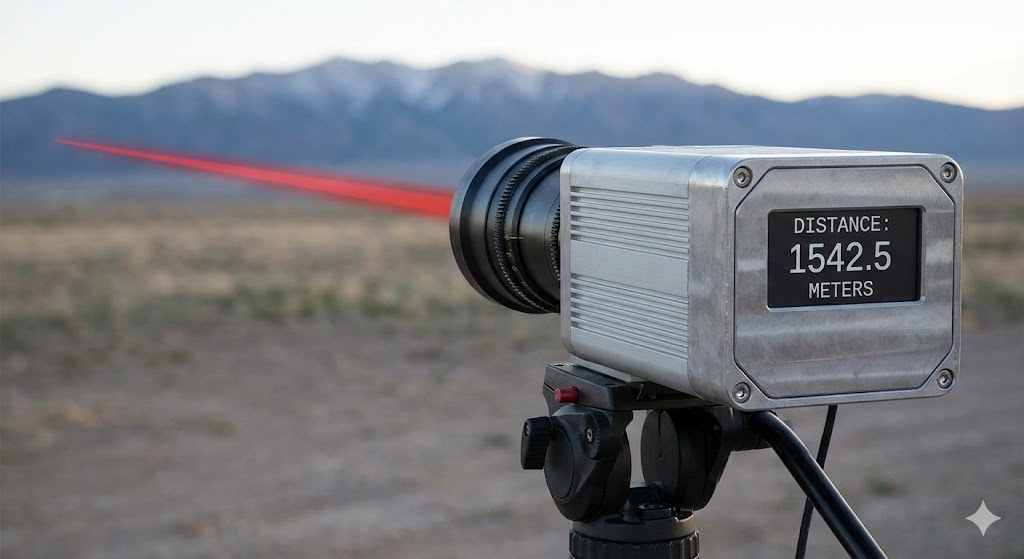
Concurrently, the development of laser Doppler vibrometry has opened new frontiers in non-destructive testing and structural health monitoring. By measuring the minute frequency shift of laser light reflected from a vibrating surface, these sensors can detect faults in machinery, measure material properties, and even monitor biological signals without physical contact. This principle is also pivotal in advanced interferometric sensors used for measuring displacements at the nanometer scale, essential in semiconductor manufacturing and precision engineering.
The current research frontier is intensely focused on enhancing performance metrics: increasing measurement speed, accuracy, and range while simultaneously reducing size, power consumption, and cost. Solid-state LiDAR, which eliminates moving mechanical parts, is a key trend aimed at improving reliability and enabling mass production. Furthermore, the integration of artificial intelligence and machine learning with laser sensor data is creating "smart sensors." These systems can not only capture data but also interpret it in real-time, identifying patterns, predicting failures, and making autonomous decisions. For instance, in smart manufacturing, a laser vision system can now inspect a complex weld seam, classify defects by type and severity, and trigger a corrective action—all within milliseconds.
Another promising direction is the development of novel laser sources and detection schemes. Quantum cascade lasers are enabling new spectroscopic sensors for detecting trace gases with high specificity, vital for environmental monitoring and industrial safety. Similarly, research into frequency-modulated continuous-wave (FMCW) LiDAR is gaining momentum. Unlike traditional pulsed ToF (Time-of-Flight) LiDAR, FMCW technology uses a continuously changing laser frequency, allowing it to simultaneously measure both distance and instantaneous velocity with extreme accuracy. This technology promises greater resistance to interference from sunlight or other LiDAR systems, a critical challenge for widespread autonomous vehicle deployment.

The future trajectory of laser sensor technology points toward greater integration and multifunctionality. We are moving towards chip-scale photonic sensors where lasers, waveguides, and detectors are fabricated on a single silicon chip, promising ultra-compact, low-cost sensor arrays. The fusion of laser sensing data with other modalities like radar and camera vision (sensor fusion) will create more robust and comprehensive perception systems for robots and autonomous machines. As the Internet of Things (IoT) expands, low-power, wireless laser sensor nodes will play a crucial role in monitoring infrastructure, agriculture, and urban environments.
In conclusion, the evolution of laser sensors is a testament to relentless innovation in photonics and electronics. From enabling factory automation to empowering self-driving cars, they have become a critical enabling technology. The ongoing research into miniaturization, intelligence, and new physical principles ensures that laser sensors will continue to be at the forefront of solving complex measurement and perception challenges across diverse sectors, driving efficiency, safety, and new capabilities for years to come.
