Laser distance sensors have become indispensable tools across numerous industries due to their exceptional precision and versatility. Unlike traditional measurement methods, these devices operate by emitting a laser beam towards a target and calculating the distance based on the time it takes for the light to reflect back to the sensor, a principle known as time-of-flight. This fundamental technology grants them a unique set of characteristics that set them apart.
One of the most prominent features is high accuracy and resolution. Modern laser sensors can achieve measurement accuracies within micrometers or even sub-micrometer ranges, making them ideal for applications where minute details are critical, such as in semiconductor manufacturing or precision engineering. This level of precision is consistently maintained over both short and long distances.
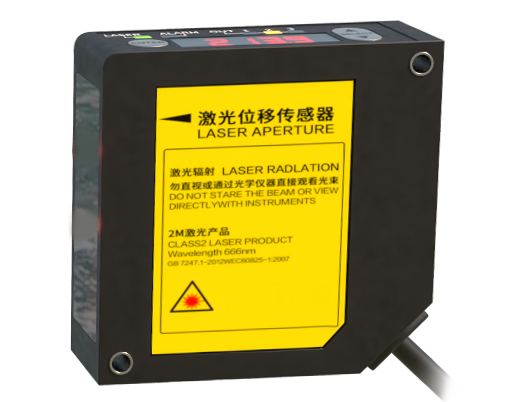
Another key characteristic is non-contact measurement. The sensor does not need to physically touch the target object. This is crucial for measuring delicate, soft, hot, or moving surfaces that could be damaged by contact or where contact is impractical. It eliminates the risk of deformation or contamination, ensuring the integrity of both the sensor and the measured object.
The speed of measurement is exceptionally fast. Laser sensors can perform thousands, or even hundreds of thousands, of measurements per second. This high sampling rate allows for real-time monitoring and control in dynamic processes, such as on high-speed production lines, robotics for object positioning, or vibration analysis.

Furthermore, laser distance sensors offer excellent performance over long ranges. Depending on the model and technology, they can reliably measure distances from a few millimeters up to several hundred meters. This makes them suitable for diverse applications, from monitoring tiny component displacements to large-scale surveying and leveling tasks in construction.
They are also known for their compact size and robust design. Many industrial-grade sensors are built to withstand harsh environmental conditions, including dust, moisture, and temperature variations. Their small form factor allows for easy integration into existing machinery, automated systems, and portable devices.
The application of laser distance sensors is vast. In industrial automation, they are used for precise positioning, thickness gauging, and profile scanning. In the automotive industry, they assist in assembly line robotics and vehicle dimension checks. In logistics, they help with warehouse automation and volume measurement. Consumer electronics, from smartphones with autofocus capabilities to robotic vacuum cleaners, also utilize miniaturized versions of this technology.
When selecting a laser distance sensor, factors such as required accuracy, measurement range, target surface properties (color, reflectivity), environmental conditions, and output interface must be carefully considered. Proper installation and alignment are also essential for optimal performance.
In summary, the defining features of laser distance sensors—high precision, non-contact operation, fast response, long range, and durability—make them powerful solutions for a multitude of measurement and control challenges. As technology advances, these sensors continue to evolve, offering even greater capabilities for the future of automation and quality control.