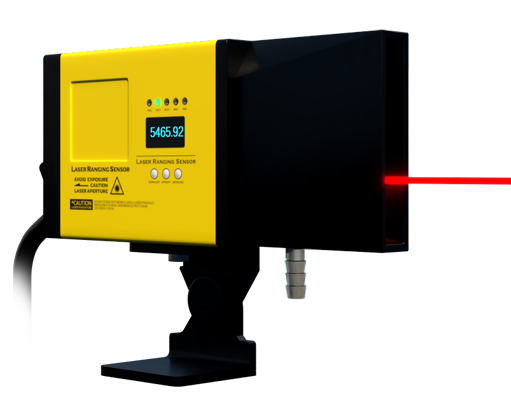
In the realm of industrial automation and precision measurement, Laser Distance Sensor D has emerged as a pivotal technology, offering unparalleled accuracy, speed, and reliability. This article delves into the operational principles, diverse applications, and critical factors for selecting the right sensor for specific industrial needs.
At its core, a Laser Distance Sensor D operates on the time-of-flight (ToF) principle or phase-shift measurement. In the ToF method, the sensor emits a short pulse of laser light towards a target. The time taken for the reflected light to return to the sensor's receiver is precisely measured. Since the speed of light is a known constant, the distance to the target can be calculated with high accuracy using the formula: Distance = (Speed of Light × Time of Flight) / 2. Phase-shift variants, often used for shorter ranges and higher precision, modulate the amplitude of the laser beam and measure the phase difference between the emitted and reflected signals. This method provides exceptional resolution, often down to the sub-millimeter level, making Sensor D ideal for demanding tasks.
The advantages of Laser Distance Sensor D are manifold. It provides non-contact measurement, eliminating mechanical wear and allowing measurement of delicate, hot, or moving objects. Its high measurement rate, often in the kilohertz range, enables real-time process control. Furthermore, the focused laser beam allows for precise targeting, even in confined spaces or on small surface areas. Modern iterations feature robust housings with high Ingress Protection (IP) ratings, ensuring reliable operation in harsh industrial environments characterized by dust, moisture, and vibration.
Applications for Laser Distance Sensor D span across numerous industries. In manufacturing and robotics, it is indispensable for positioning, dimension checking, and contour profiling. For instance, on an assembly line, Sensor D can verify the height of components or guide robotic arms for precise pick-and-place operations. In logistics and warehousing, these sensors are used for palletizing, level monitoring in silos, and vehicle guidance in automated guided vehicles (AGVs). The construction sector utilizes them for monitoring structural deformation, alignment, and volume calculation. Even in agricultural automation, they assist in guidance systems for machinery and monitoring crop growth.

Selecting the appropriate Laser Distance Sensor D requires careful consideration of several technical parameters. The primary specification is the measuring range, which must encompass the minimum and maximum distances required for the application. Accuracy and resolution define the sensor's precision; high-accuracy models are crucial for quality control, while standard models may suffice for presence detection. The response time or measurement frequency must align with the speed of the process being monitored. Environmental conditions dictate the necessary housing material and IP rating. The type of output signal—analog (e.g., 4-20 mA, 0-10 V), digital (e.g., RS-232, RS-485, Ethernet), or switching outputs—must be compatible with the existing control system (PLC, PC). Finally, features like background suppression, which helps ignore irrelevant objects behind the target, and programmable teaching functions for easy setup, can significantly enhance usability.
Installation and maintenance are straightforward but vital for optimal performance. Ensuring a stable mounting, proper alignment perpendicular to the target surface, and a clean lens free from obstructions are fundamental. Regular calibration checks, as per the manufacturer's guidelines, help maintain long-term accuracy. It is also essential to consider the target surface properties; while most sensors work well on diffuse surfaces, highly reflective or absorbent materials may require special models or settings.

In conclusion, Laser Distance Sensor D represents a sophisticated yet accessible tool for modern industry. Its ability to deliver fast, precise, and reliable distance data makes it a cornerstone of automation, quality assurance, and process optimization. By understanding its working principles, vast application potential, and key selection criteria, engineers and technicians can effectively leverage this technology to drive efficiency, safety, and innovation in their operations. As Industry 4.0 advances, the integration of these sensors with IoT platforms and data analytics will further unlock their potential for predictive maintenance and smart manufacturing.