In the rapidly evolving landscape of industrial automation, the demand for reliable, high-precision sensing technology is paramount. Omeon laser sensors stand at the forefront of this technological revolution, offering unparalleled accuracy and robustness for a myriad of applications. These sensors utilize advanced laser triangulation or time-of-flight principles to deliver non-contact measurement and detection, making them indispensable in environments where precision, speed, and durability are non-negotiable.
The core technology behind Omeon laser sensors involves emitting a focused laser beam onto a target object. The reflected light is then captured by a high-resolution receiver. Through sophisticated onboard algorithms, the sensor calculates precise distance, position, height, or presence based on the beam's displacement or flight time. This method ensures micron-level accuracy, even when dealing with challenging surfaces, varying colors, or extreme ambient light conditions. Unlike traditional mechanical or ultrasonic sensors, laser sensors provide a much smaller, more defined spot size, enabling the detection of minute features and edges with exceptional consistency.
One of the defining characteristics of Omeon's product line is its adaptability. From compact, cost-effective models designed for basic object detection on high-speed assembly lines to high-end versions capable of sub-micron resolution for quality control in semiconductor manufacturing, Omeon provides a solution for virtually every tier of industrial need. Key series often include background suppression sensors for reliable detection independent of surface color, contrast sensors for mark and label verification, and distance-measuring sensors for precise dimensional control.
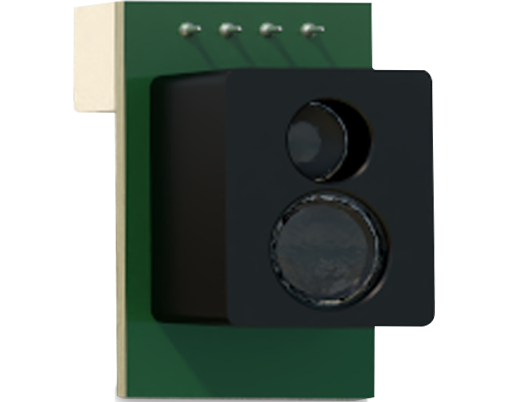
The application spectrum for Omeon laser sensors is vast. In automotive manufacturing, they are crucial for robot guidance, weld seam inspection, and part presence verification. Within the electronics industry, they ensure the precise placement of components on PCBs and measure the thickness of coatings and wafers. Logistics and packaging benefit from their ability to accurately count, sort, and measure packages on conveyor belts. Furthermore, their resilience to dust, vibration, and temperature fluctuations makes them ideal for harsh environments like metalworking and foundries.
Integration is seamless, thanks to standardized industrial interfaces such as IO-Link, analog outputs, and various switching outputs. IO-Link capability, in particular, represents a significant advancement, enabling not just data transmission but also remote parameter configuration, real-time diagnostics, and predictive maintenance insights. This smart sensor functionality aligns perfectly with Industry 4.0 initiatives, feeding valuable process data into higher-level control systems for optimized production flow.

When selecting an Omeon laser sensor, engineers must consider several parameters: required measuring range, resolution, response time, laser class (for safety), housing material (often stainless steel or ruggedized plastic), and the specific environmental conditions of the installation site. Proper alignment and setup are critical, and Omeon typically provides user-friendly software tools for commissioning and fine-tuning.
In comparison to competitors, Omeon distinguishes itself through a strong emphasis on durability, consistent performance under industrial stress, and a clear value proposition that balances advanced features with cost-effectiveness. Their sensors are engineered for longevity, reducing total cost of ownership by minimizing downtime and replacement frequency.

Looking ahead, the future of Omeon laser sensors is intertwined with trends like miniaturization, increased intelligence at the edge, and enhanced connectivity. The integration of AI for pattern recognition and anomaly detection directly within the sensor housing is a likely next step, pushing the boundaries of autonomous quality control.
In conclusion, Omeon laser sensors represent a critical enabling technology for modern industrial automation. By providing precise, reliable, and versatile non-contact measurement, they empower manufacturers to enhance product quality, increase throughput, and achieve new levels of operational efficiency. For any engineering professional designing or maintaining automated systems, understanding and leveraging the capabilities of Omeon laser sensors is a key step toward building smarter, more responsive, and more competitive production environments.