In the realm of industrial safety, environmental monitoring, and air quality control, the accurate detection of particulate matter is paramount. Among the various technologies available, laser-based dust sensors have emerged as a superior solution, offering high precision, reliability, and real-time monitoring capabilities. This article delves into the fundamental principles of how these sophisticated sensors operate and explores their critical applications across diverse sectors.
At its core, a laser dust sensor operates on the principle of light scattering, specifically Mie scattering theory. The sensor's main components typically include a laser diode, a photodetector (such as a photodiode), a controlled air passage, and a sophisticated signal processing unit. The process begins when the laser diode emits a highly focused, coherent beam of light—usually in the visible red or infrared spectrum—into a precisely designed sensing chamber. As airborne particles, including dust, smoke, pollen, or other aerosols, are drawn through this chamber via a small fan or pump, they intersect the laser beam.
When a particle passes through the beam, it scatters the incident light. The Mie scattering theory, which describes the scattering of electromagnetic radiation by spherical particles, is particularly applicable when the particle size is comparable to or larger than the wavelength of the light. The scattered light radiates in all directions. The strategically positioned photodetector collects a portion of this scattered light, typically at a specific angle (often 90 degrees) to minimize interference from the main beam and background noise. The intensity of the scattered light captured by the detector is directly proportional to the concentration and size of the particles. Larger particles or higher concentrations result in stronger scattered light signals.
The raw analog signal from the photodetector is extremely weak and requires significant amplification and processing. The sensor's internal circuitry converts this analog signal into a digital one. Advanced algorithms then analyze this digital signal. These algorithms are calibrated to differentiate between signal noise and actual particle events, and they can often categorize particles based on the signal pulse height and width, which correlate to particle size. The final output is typically a digital signal (e.g., PWM, UART) or an analog voltage that corresponds to a mass concentration value, commonly expressed in micrograms per cubic meter (µg/m³) or as a particle count.
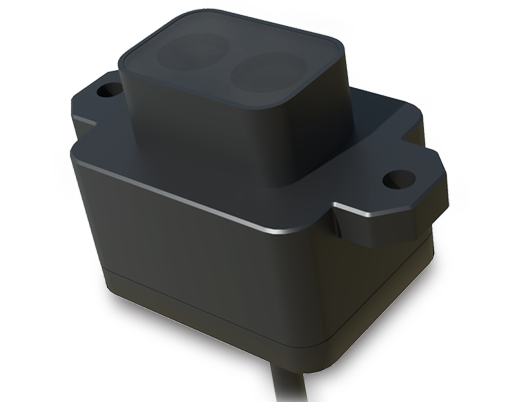
The advantages of laser dust sensors over traditional methods, such as piezoelectric or ionizing methods, are substantial. They provide a much faster response time, often in seconds, enabling real-time monitoring. Their sensitivity allows them to detect extremely fine particles, including PM2.5 and PM10, which are critical for health assessments. Furthermore, they are less prone to saturation and can operate continuously with minimal maintenance, as the non-contact optical method avoids sensor fouling common in other technologies.
The applications of laser dust sensors are vast and growing. In industrial settings, they are indispensable for monitoring workplace air quality to ensure compliance with Occupational Safety and Health Administration (OSHA) standards, particularly in industries like mining, construction, pharmaceuticals, and manufacturing where combustible dust or toxic particulates pose a risk. Within the Heating, Ventilation, and Air Conditioning (HVAC) industry, these sensors are integrated into smart systems to automatically control air filtration, improving energy efficiency and indoor air quality. They are also the backbone of environmental monitoring networks, providing data on urban air pollution. Consumer applications have surged with the integration of these sensors into portable air quality monitors, air purifiers, and even smart home systems, empowering individuals to monitor their personal environment.

In conclusion, laser dust sensors represent a convergence of optical physics, precision engineering, and digital signal processing. Their operation, based on the reliable principle of light scattering, provides a robust method for quantifying airborne particulate matter. As regulations tighten and public awareness of air quality increases, the role of these precise, efficient, and versatile sensors will only become more central to safeguarding health, optimizing industrial processes, and protecting our environment. Future developments may focus on miniaturization, reduced power consumption, and enhanced capabilities for identifying particle composition, further solidifying their position as a critical tool in modern sensing technology.