Laser displacement sensors are essential tools in modern manufacturing, quality control, and research. They provide non-contact, high-precision measurements of distance, position, thickness, and vibration. Understanding how to use these sensors effectively is crucial for obtaining reliable data. This guide covers the fundamental principles, selection criteria, setup procedures, and best practices for laser displacement sensor measurements.
How Laser Displacement Sensors Work
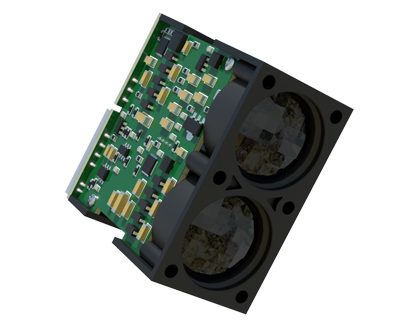
These sensors operate on the principle of triangulation or time-of-flight. In triangulation-based sensors, a laser diode projects a focused beam onto the target surface. The reflected light is captured by a receiving lens at a specific angle and focused onto a position-sensitive detector (PSD) or CMOS/CCD array. The displacement of the light spot on the detector correlates directly with the distance to the target. Time-of-flight sensors measure the round-trip time of a laser pulse to calculate distance, suitable for longer ranges.
Key Selection Factors
Choosing the right sensor depends on several parameters:
1. Measuring Range: The distance over which the sensor can accurately measure. Ensure your target stays within this range.
2. Resolution: The smallest detectable change in distance. Higher resolution is needed for micro-level inspections.
3. Spot Size: The diameter of the laser point on the target. Smaller spots allow precise measurement of tiny features or edges.
4. Sampling Rate: The speed at which measurements are taken, critical for dynamic or high-speed applications.
5. Material and Surface: The target’s color, reflectivity, texture, and transparency affect performance. Polished metals may require diffuse reflection models, while dark or absorbent surfaces might need higher laser power.
Setup and Installation Best Practices
Proper installation minimizes errors. Mount the sensor securely to avoid vibration. Align the laser beam perpendicular to the target surface whenever possible, as倾斜 angles can introduce cosine errors. Ensure the target remains within the sensor’s specified measuring range and that the spot is fully on the target surface. Avoid environmental interference such as strong ambient light, dust, or temperature fluctuations, which can degrade signal quality. Many sensors feature environmental resistance (IP ratings) for harsh conditions.
Calibration and Zero-Point Setting
Calibrate the sensor using a known reference standard, such as gauge blocks or a calibrated stage. Follow the manufacturer’s instructions for zero-point adjustment, often performed at the mid-point of the measuring range for optimal linearity. Regular recalibration maintains accuracy over time.
Measurement Techniques and Tips
- For thickness measurement, use two opposing sensors and calculate the difference between their readings.
- To measure vibration, utilize the high sampling rate and track displacement changes over time.
- When measuring transparent objects (e.g., glass), adjust the sensor to focus on the surface of interest, as lasers may penetrate or reflect from multiple layers.
- For curved or uneven surfaces, ensure the laser spot size is small enough to follow contours accurately.
Common Challenges and Solutions
- Speckle Noise: Caused by interference of coherent laser light on rough surfaces. Use sensors with algorithms to average or filter speckle patterns.
- Edge Effect: When measuring near edges, part of the laser spot may fall off, causing drift. Choose a sensor with edge detection compensation or position the spot fully on the target.
- Surface Variations: Highly reflective or multi-colored surfaces can cause signal saturation or dropout. Adjust the sensor’s gain settings or employ automatic gain control models.
Data Interpretation and Output
Laser displacement sensors typically provide analog (e.g., 4-20mA, 0-10V) or digital (e.g., RS-485, Ethernet) outputs. Integrate these with data acquisition systems or PLCs for real-time monitoring. Software tools allow for waveform analysis, statistical process control, and trend visualization.
Maintenance and Care
Keep the lens clean using appropriate cleaning materials to prevent scattering or attenuation of the laser beam. Check cables and connections periodically. Store sensors in a controlled environment when not in use.
By following this guide, users can optimize laser displacement sensor performance, enhance measurement accuracy, and extend equipment lifespan. Always consult the specific sensor’s manual for detailed operational guidelines and safety precautions.