Laser sensors represent a cornerstone of modern industrial automation and precision measurement. Their operation is fundamentally based on the principles of optics and photonics, utilizing the unique properties of coherent light to detect, measure, and analyze objects with exceptional accuracy and speed. At its core, a laser sensor system comprises three primary components: a laser diode emitter, a photodetector or receiver, and sophisticated signal processing electronics.
The operational principle begins with the laser emitter, which generates a highly focused, monochromatic, and coherent beam of light. This coherence is crucial, as it allows the light to travel over long distances with minimal divergence, maintaining a tight beam profile. Common types include visible red lasers, infrared lasers, and, for high-precision applications, laser diodes with specific wavelengths chosen to suit the target material's reflective properties and the environmental conditions.
The emitted laser beam is directed towards the target object. Upon striking the surface, the light interacts in several ways: it may be reflected, scattered, absorbed, or transmitted. The sensor's design dictates which interaction is measured. The most common methods are based on triangulation, time-of-flight (ToF), and laser interferometry.
In triangulation-based sensors, the emitted laser beam creates a bright spot on the target's surface. A lens in the receiver, positioned at a known angle relative to the emitter, images this spot onto a position-sensitive photodetector, typically a CCD or CMOS array. The position of the light spot on the detector shifts proportionally to the distance of the target. This method offers extremely high resolution for short to medium ranges and is widely used in dimensional gauging, profile scanning, and surface inspection.

Time-of-Flight sensors measure the time delay between the emission of a laser pulse and the detection of its reflection. Given the constant speed of light, this time interval is directly proportional to twice the distance to the target (round-trip). Advanced electronics with precise timing circuits are essential. ToF sensors are ideal for longer-range applications, such as level measurement in silos, vehicle detection, and large-volume 3D mapping, offering good accuracy over several meters.
Laser interferometry is used for ultra-high-precision displacement measurement, often at the nanometer scale. It works on the principle of interference between a reference laser beam and a measurement beam reflected from the target. Changes in the target's position cause phase shifts in the interference pattern, which are detected and converted into displacement data. This technology is critical in semiconductor manufacturing, precision machine tool calibration, and scientific research.
The photodetector converts the received light signal (its intensity, position, or time of arrival) into an electrical current. This weak analog signal is then amplified and conditioned. The signal processing unit is the brain of the sensor, employing algorithms to filter out ambient light noise, compensate for surface color or reflectivity variations, and calculate the final measurement value—be it distance, height, thickness, or presence. Modern sensors integrate microprocessors that enable advanced features like programmable switching points, analog output linearization, and digital communication via IO-Link, Ethernet/IP, or PROFINET.

Key performance parameters define a laser sensor's suitability for an application. These include measurement range, resolution (the smallest detectable change), linearity (accuracy across the entire range), repeatability (consistency of measurements), and response time. Environmental factors such as ambient temperature, dust, fog, or ambient light must also be considered, often addressed through protective housings (IP67/IP69K ratings), specific wavelength selection, and optical filters.
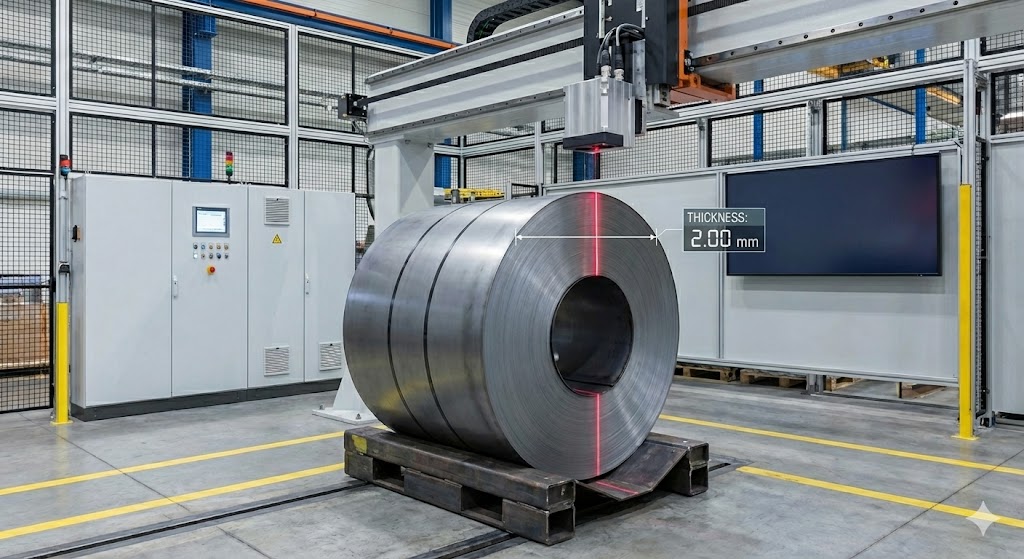
Industrial applications are vast and transformative. In automotive assembly, laser sensors ensure precise robot guidance for welding and part placement. In electronics manufacturing, they verify component placement on PCBs and measure solder paste thickness. In logistics, they read barcodes on fast-moving parcels and control sorting systems. In metal processing, they provide non-contact thickness monitoring of rolled sheets. Furthermore, laser profile scanners capture complete 3D cross-sections of objects for quality control, reverse engineering, and robotic bin-picking.
The evolution continues with trends like miniaturization of sensor heads, integration of AI for smarter data interpretation directly at the edge, and the development of multi-function sensors that combine distance measurement with color detection or thermal imaging. As Industry 4.0 and smart factories advance, the role of the laser sensor as a critical data acquisition node in the IoT ecosystem becomes ever more pronounced, driving efficiencies, ensuring quality, and enabling new levels of automation.