In the realm of industrial automation and safety systems, proximity sensors stand as fundamental components, enabling machines to interact with their environment without physical contact. As an electrical engineer, a thorough understanding of these devices is crucial for designing efficient, safe, and intelligent systems. This article delves into the principles, types, applications, and key considerations of proximity sensors.
At its core, a proximity sensor is a device that detects the presence or absence of an object within a specified range, typically without any physical contact. It converts information about the movement or presence of an object into an electrical signal. This non-contact operation is its primary advantage, leading to high reliability, long operational life, and minimal maintenance, as there is no mechanical wear and tear.
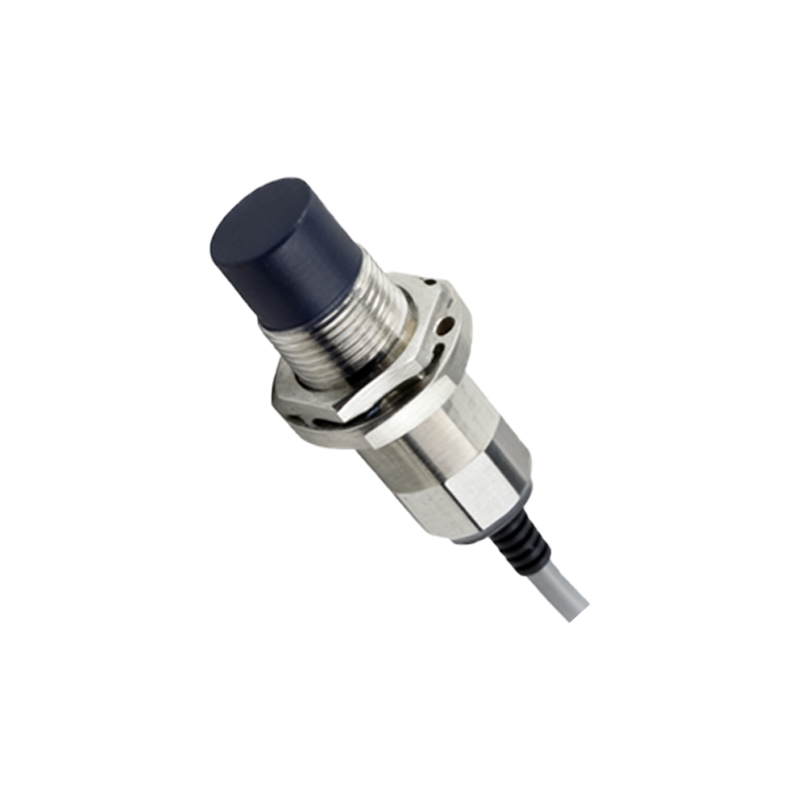
The working principle varies significantly based on the technology employed. The most common types include:
1. Inductive Proximity Sensors: These sensors generate an electromagnetic field. When a metallic object (the target) enters this field, eddy currents are induced in the object, causing a change in the sensor's oscillation amplitude. This change is detected and triggers a switch. They are ideal for detecting ferrous and non-ferrous metals and are widely used in machine automation for position sensing, counting, and speed detection.
2. Capacitive Proximity Sensors: These sensors can detect both metallic and non-metallic objects (plastics, wood, liquids, granules) by measuring changes in capacitance. The sensor and the target act as two plates of a capacitor. As the target approaches, the capacitance increases, and once it reaches a threshold, the sensor activates. They are perfect for level detection in tanks, material handling, and presence detection of non-metallic products.
3. Ultrasonic Proximity Sensors: These emit high-frequency sound waves and evaluate the echo received back. The time lapse between sending the signal and receiving the echo is used to calculate the distance to the target. They are excellent for distance measurement, level sensing of liquids and bulk solids, and object detection in challenging environments (dust, fog).
4. Photoelectric Sensors: While often categorized separately, they function as proximity devices. They use a light emitter (usually LED) and a receiver. The presence of an object is detected by either the interruption (through-beam) or reflection (retro-reflective, diffuse) of the light beam. They offer long sensing ranges and can detect virtually any material.
5. Magnetic Proximity Sensors (Reed Switches/Hall Effect): These detect the presence of a permanent magnet. Reed switches use ferromagnetic reeds that close when a magnetic field is applied. Hall Effect sensors produce a voltage proportional to the magnetic field strength. They are commonly used for door position sensing, cylinder position detection in pneumatics, and low-speed rotation sensing.
Key Specifications and Selection Criteria:
Selecting the right sensor requires careful analysis of several parameters:
Sensing Range: The maximum distance at which the sensor can reliably detect a standard target.
Target Material: Inductive for metals, capacitive for a broader range, etc.
Output Type: Digital (PNP/NPN transistor, NO/NC) or analog (4-20mA, 0-10V).
Response Time: How quickly the sensor can react to a target's presence.
Environmental Factors: IP rating for ingress protection, resistance to temperature extremes, chemicals, and shock/vibration.
Mounting and Size: Flush-mounted or non-flush, barrel-style or rectangular.
Applications in Modern Industry:
The applications are vast. In automotive assembly, inductive sensors verify the presence of metal components. In packaging lines, capacitive sensors detect filled levels of bottles (liquid or powder). Ultrasonic sensors manage bulk material levels in silos. Photoelectric sensors count products on high-speed conveyors. In safety, they form part of light curtains and area guards to protect personnel from hazardous machinery.
Installation and Troubleshooting Tips:
Proper installation is critical. Engineers must ensure adequate clearance from metal surfaces (especially for inductive types), avoid sensor-to-sensor interference, and align photoelectric and ultrasonic sensors correctly. Common issues include false triggering due to environmental noise (electrical or acoustic), reduced sensing range from incorrect target material, or physical damage to the sensing face. A systematic approach—checking power supply, output load, wiring, and environmental conditions—is essential for diagnosis.
In conclusion, proximity sensors are the silent sentinels of automation. Their ability to provide reliable, non-contact detection forms the backbone of modern control systems. For the electrical engineer, mastering their characteristics is not merely about component selection; it is about designing systems that are more responsive, efficient, and inherently safer. As Industry 4.0 and the Internet of Things (IoT) advance