In the realm of industrial automation, environmental monitoring, and air quality management, the accurate detection and measurement of particulate matter (PM) is paramount. Among the various sensing technologies available, infrared laser-based dust sensors have emerged as a dominant and reliable solution. This article delves into the operational principles, key advantages, diverse applications, and critical selection factors for these sophisticated devices, providing a comprehensive guide for engineers and system integrators.
At the core of an infrared laser dust sensor lies the principle of light scattering. A stable, low-power infrared laser diode emits a focused beam of light into a precisely designed detection chamber. As airborne particles are drawn through this chamber via a small fan or pump, they intersect the laser path. Upon striking a particle, the laser light scatters in all directions. A photodetector, strategically positioned at a specific angle (typically 90 degrees to minimize interference from reflected light), captures this scattered light. The intensity of the scattered signal is proportional to the concentration and size of the particles. Sophisticated algorithms within the sensor's microprocessor then analyze this signal, correlating it to mass concentration values for specific particle size ranges, such as PM1.0, PM2.5, and PM10.
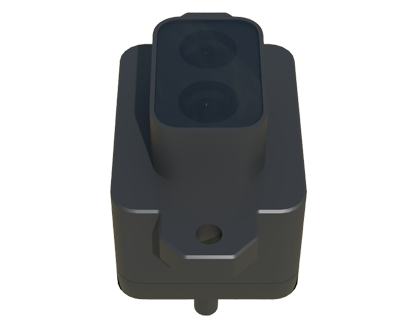
The choice of an infrared laser source, typically in the 780-850 nm range, is deliberate. It offers an optimal balance between performance, cost, size, and longevity. Compared to visible light LEDs used in older sensors, infrared lasers provide a more coherent and focused beam. This results in superior sensitivity to smaller particles, more stable baseline readings, and reduced interference from ambient light. Furthermore, infrared lasers have a longer operational lifespan and generate less heat than some alternatives, contributing to the sensor's long-term reliability.
The applications for infrared laser dust sensors are vast and growing. In industrial settings, they are indispensable for monitoring workplace air quality to ensure compliance with occupational health and safety standards (e.g., OSHA, EU directives). They protect sensitive machinery and processes in sectors like semiconductor manufacturing, pharmaceuticals, and food processing by detecting harmful dust ingress. Within the Heating, Ventilation, and Air Conditioning (HVAC) industry, these sensors are integrated into smart ventilation systems to optimize air filtration, improve indoor air quality (IAQ), and reduce energy consumption. They are also a critical component in air purifiers, environmental monitoring stations, and even consumer-grade air quality monitors. The advent of the Internet of Things (IoT) has further expanded their use into networked, real-time monitoring solutions for smart buildings and cities.
When selecting an infrared laser dust sensor for a specific application, several technical parameters demand careful consideration. Measurement Range and Resolution: The sensor must cover the expected concentration levels, from clean rooms to moderately polluted industrial environments. Particle Size Detection: Ensure the sensor reports the relevant PM sizes (PM2.5 being the most common for health-related IAQ). Accuracy and Consistency: Look for data on calibration methods and long-term drift. A sensor that maintains consistency is often more valuable than one with a nominal high accuracy that degrades quickly. Response Time: This is critical for control applications, such as triggering an air purifier or an alarm. Output Interface: Common options include UART (serial), I2C, PWM, and analog voltage/current (0-5V, 4-20mA), which must be compatible with the host system. Physical Form Factor and Power Requirements: Consider the installation space and available power supply (often 5V DC). Finally, Environmental Durability is key; the sensor should be rated for the expected temperature, humidity, and potential exposure to condensation or high dust loads.
Maintenance is straightforward but essential. While the sensors are largely solid-state, the intake pathway can become clogged with large debris over extended periods in very dirty environments. Some models feature self-cleaning mechanisms, but periodic inspection and gentle cleaning of the air inlet with compressed air are recommended to ensure optimal performance and longevity.
In conclusion, infrared laser dust sensors represent a mature, cost-effective, and highly effective technology for particulate matter sensing. Their blend of sensitivity, stability, and compact design makes them the preferred choice across a spectrum from industrial safety to consumer wellness. By understanding their working principles and carefully matching specifications to application needs, engineers can reliably integrate these sensors to create smarter, safer, and more efficient systems for monitoring and controlling airborne particulate pollution.