In the realm of precision industrial measurement, length measurement laser sensors have established themselves as indispensable tools. Their ability to deliver non-contact, high-speed, and exceptionally accurate dimensional data has revolutionized quality control, process monitoring, and automation across countless sectors. For engineers and technical professionals, understanding the core principles, varied applications, and key selection criteria is paramount for successful integration and optimal performance.
At the heart of these sensors lies the principle of laser triangulation. A laser diode projects a visible or invisible spot onto the target surface. The reflected light is captured by a receiving lens at a specific angle and focused onto a position-sensitive detector, typically a CCD or CMOS array. As the distance to the target changes, the position of the laser spot on the detector shifts linearly. This displacement is processed by sophisticated onboard electronics to calculate the exact distance with micron-level resolution. Alternative high-end principles include interferometry, used for ultra-precise measurements at nanometer scales, and time-of-flight, suitable for longer ranges with slightly lower resolution.
The advantages of laser sensors for length measurement are compelling. The non-contact nature eliminates mechanical wear, prevents damage to delicate surfaces, and allows measurement of hot, moving, or vibrating objects. They offer remarkably high sampling rates, often in the kilohertz range, enabling real-time process control. Furthermore, their precision and repeatability far surpass traditional contact methods like calipers or micrometers, especially in automated production lines.
Industrial applications are vast and diverse. In automotive manufacturing, these sensors meticulously measure critical gaps and flushness between body panels, ensuring aesthetic quality and aerodynamic performance. In the electronics industry, they verify the coplanarity of Ball Grid Array (BGA) components on printed circuit boards and measure the thickness of wafer substrates. The rolling and extrusion processes in metal production rely on laser sensors for continuous thickness and width monitoring, directly impacting material yield and quality. In logistics and warehousing, they perform dimensional weighing (DIM weighing) of packages to optimize shipping costs and storage space.
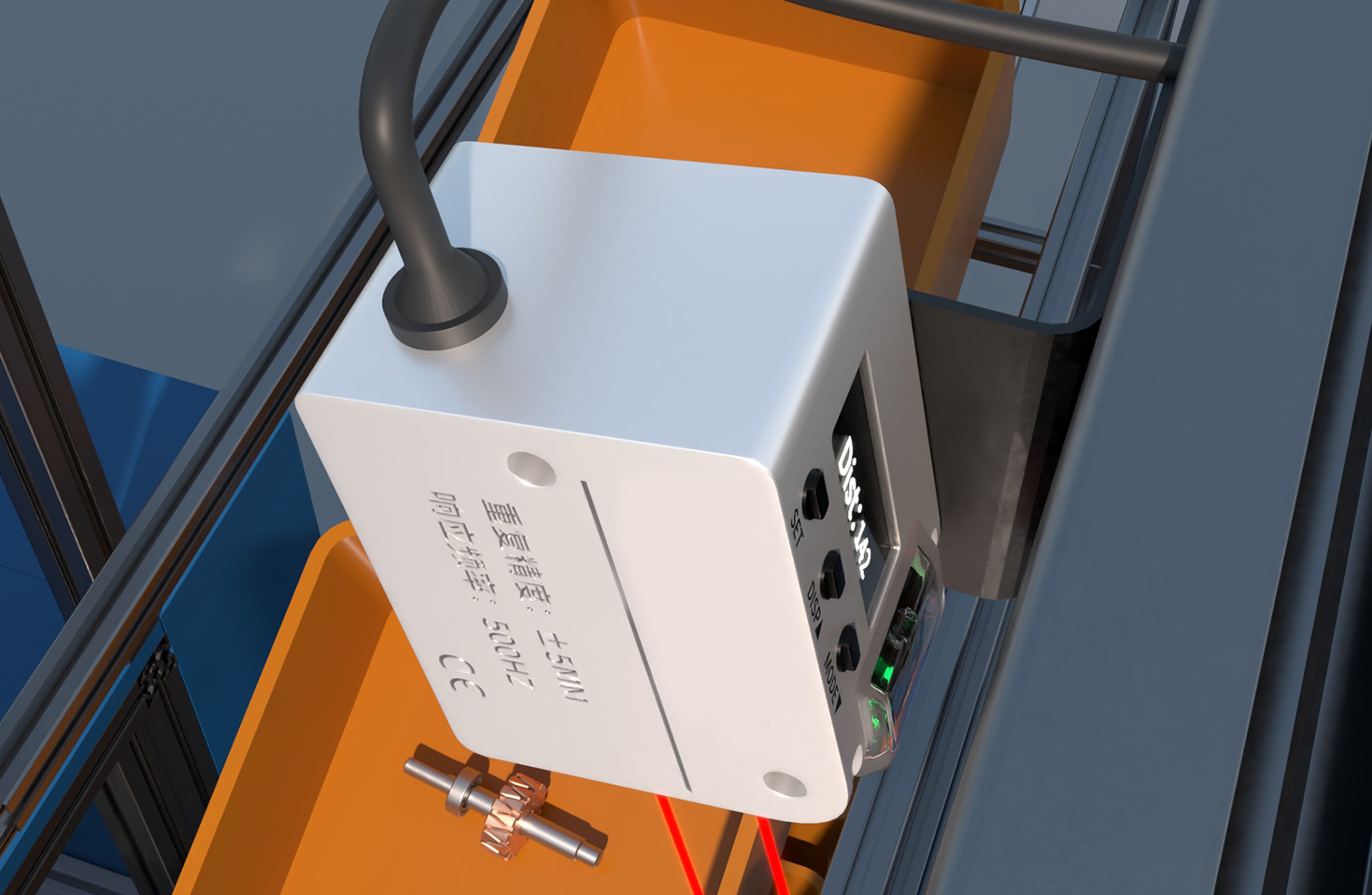
Selecting the appropriate length measurement laser sensor requires careful consideration of several technical parameters. Measurement Range defines the minimum and maximum distances over which the sensor can operate accurately. Resolution indicates the smallest detectable change in distance, crucial for high-precision tasks. Linear Accuracy specifies the maximum deviation from the true value across the entire range. The Spot Size affects the sensor's ability to measure small features or rough surfaces; a smaller spot allows for finer detail but may be problematic on diffusely reflecting materials. Sampling Rate must be matched to the target's speed to avoid aliasing. Environmental factors are equally critical: the sensor's housing must provide an adequate Ingress Protection (IP) rating against dust and coolants, and its operating temperature range must suit the factory environment.
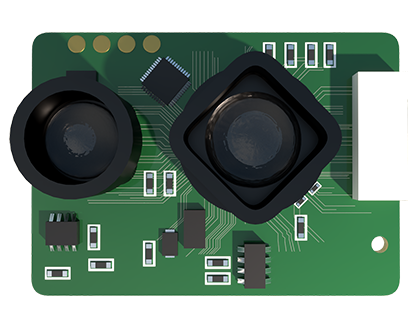
Integration challenges must also be anticipated. The surface properties of the target—its color, reflectivity, texture, and material—significantly influence the sensor's performance. Highly reflective or shiny surfaces can cause specular reflection, scattering the laser beam away from the receiver. Dark, matte, or absorbent surfaces may weaken the signal. Many modern sensors feature automatic exposure control or teach-in functions to compensate for these variations. For transparent objects like glass or plastic films, specialized sensors with background suppression or confocal chromatic principles are necessary. Proper mounting, alignment, and vibration isolation are essential for stable readings.
Looking forward, advancements in laser sensor technology continue to push boundaries. Integration with smart factory concepts is a major trend. Sensors with integrated IO-Link or Ethernet interfaces facilitate seamless data exchange with PLCs and higher-level systems for predictive maintenance and data analytics. Multi-point sensors and laser line profilers are evolving, enabling not just single-point distance measurement but full 2D profile and 3D contour inspection. Enhanced algorithms are improving robustness against challenging surface conditions and ambient light interference.
In conclusion, length measurement laser sensors are a cornerstone of modern industrial metrology. Their precision, speed, and versatility solve complex measurement challenges that contact methods cannot address. For the engineering professional, a methodical approach to selection—balancing specifications, environmental demands, and target characteristics—is the key to unlocking their full potential, driving improvements in product quality, manufacturing efficiency, and operational intelligence.