Proximity switches utilizing magnetic sensing principles are fundamental components in modern industrial automation, offering non-contact detection of ferromagnetic objects with high reliability and longevity. Unlike mechanical limit switches, these sensors have no moving parts that can wear out, making them ideal for harsh environments with dust, moisture, or vibration. The core principle revolves around the interaction between a permanent magnet and a magnetically sensitive switching element, typically a reed switch or a Hall-effect sensor.
The most classic design incorporates a reed switch. A reed switch consists of two ferromagnetic, flexible metal reeds sealed within a glass tube filled with an inert gas. The reeds' overlapping ends are separated by a small gap and plated with a contact material like rhodium or ruthenium. In its normal state, the reels are open. When a permanent magnet, either integrated into the sensor body or attached to the target object, approaches the switch, its magnetic field magnetizes the reeds. The opposite magnetic poles induced at the contact ends create an attractive force, causing the reeds to flex and touch, thus closing the electrical circuit. When the magnet moves away, the reeds' spring force separates them, opening the circuit. This simple on/off action provides a clear signal for presence detection.

A more advanced and now predominant technology is the Hall-effect sensor. Discovered by Edwin Hall in 1879, the Hall effect occurs when a current-carrying conductor is placed in a magnetic field perpendicular to the current flow. The magnetic field exerts a force on the moving charge carriers, deflecting them to one side of the conductor. This creates a measurable voltage difference, the Hall voltage, across the conductor, perpendicular to both the current and the field. In a Hall-effect proximity sensor, a semiconductor chip (the Hall element) is integrated with signal conditioning electronics. When a magnet approaches, the magnetic flux density through the chip increases, generating a proportional Hall voltage. The integrated circuitry processes this voltage, triggering a clean, digital output switch at a precise magnetic threshold. Hall sensors offer superior switching accuracy, faster response times, and the ability to detect both the presence and strength of a magnetic field.
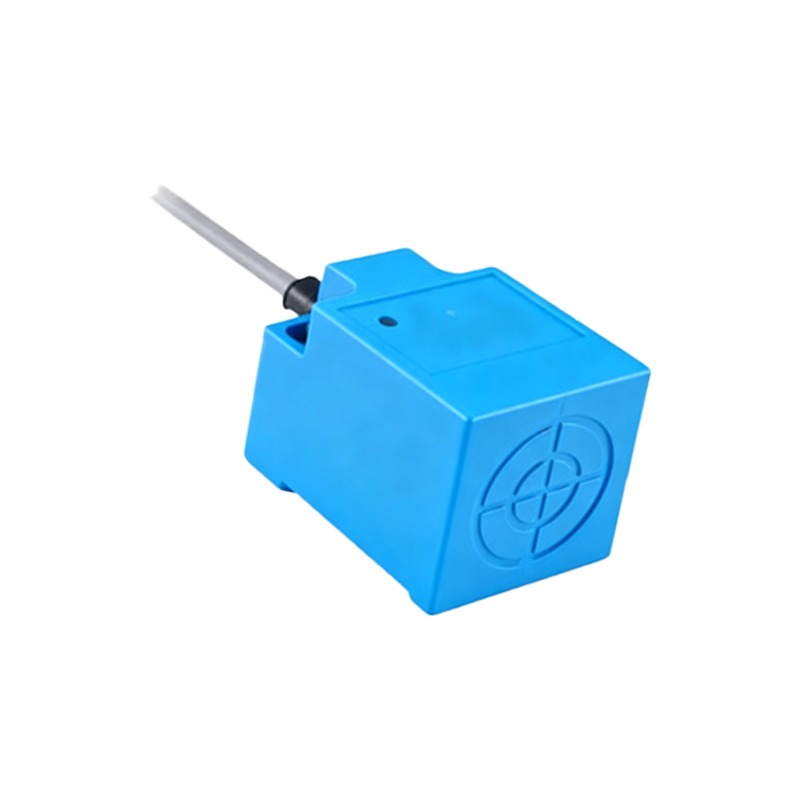
Key performance characteristics define their application. Sensing distance, or operating point, is the critical distance at which the switch activates. This is specified for a standard target material, usually mild steel. Release point is the distance where the switch deactivates as the target moves away. The difference between these points is the hysteresis, a crucial feature that prevents chattering (rapid on/off cycling) when a target is positioned at the exact switching boundary. Environmental factors like temperature can affect magnetic properties and sensor electronics, so operating temperature ranges are carefully specified. Housing materials, typically nickel-plated brass, stainless steel, or PBT plastic, are chosen for mechanical strength and resistance to chemicals.
The advantages of magnetic proximity switches are numerous. Their non-contact nature eliminates mechanical wear and tear, ensuring millions of reliable switching cycles. They are immune to contaminants like oil, dirt, and chips that would jam mechanical switches. They offer fast response speeds, suitable for high-speed counting or positioning applications. Installation is straightforward, and they require minimal maintenance.
In industrial practice, these sensors are ubiquitous. Common applications include position sensing on cylinders (where a magnet is embedded in the piston), detecting the open/closed status of doors or guards, rotary speed measurement on shafts, and end-of-travel detection on linear actuators. In cylinder applications, for instance, sensors mounted on the cylinder body detect the magnet in the piston, providing feedback on whether the cylinder is extended or retracted, which is vital for programmable logic controller (PLC) sequences.
When selecting a magnetic proximity sensor, engineers must consider several factors: the required sensing distance, the switching frequency, the output type (e.g., NPN, PNP, or NO/NC), the supply voltage, the environmental protection rating (IP code), and the temperature range. Proper shielding and mounting are also essential to avoid interference from stray magnetic fields or adjacent sensors.
In summary, magnetic proximity switches, whether based on reed or Hall-effect technology, provide a robust, precise, and maintenance-free solution for detecting the presence and position of ferrous objects. Their underlying principles of magnetic field interaction translate into highly reliable performance, cementing their role as indispensable workhorses in automated systems across manufacturing, packaging, automotive, and material handling industries. Continued advancements in Hall-effect ICs promise even greater integration, miniaturization, and smart features like analog output or IO-Link communication for Industry 4.0 applications.