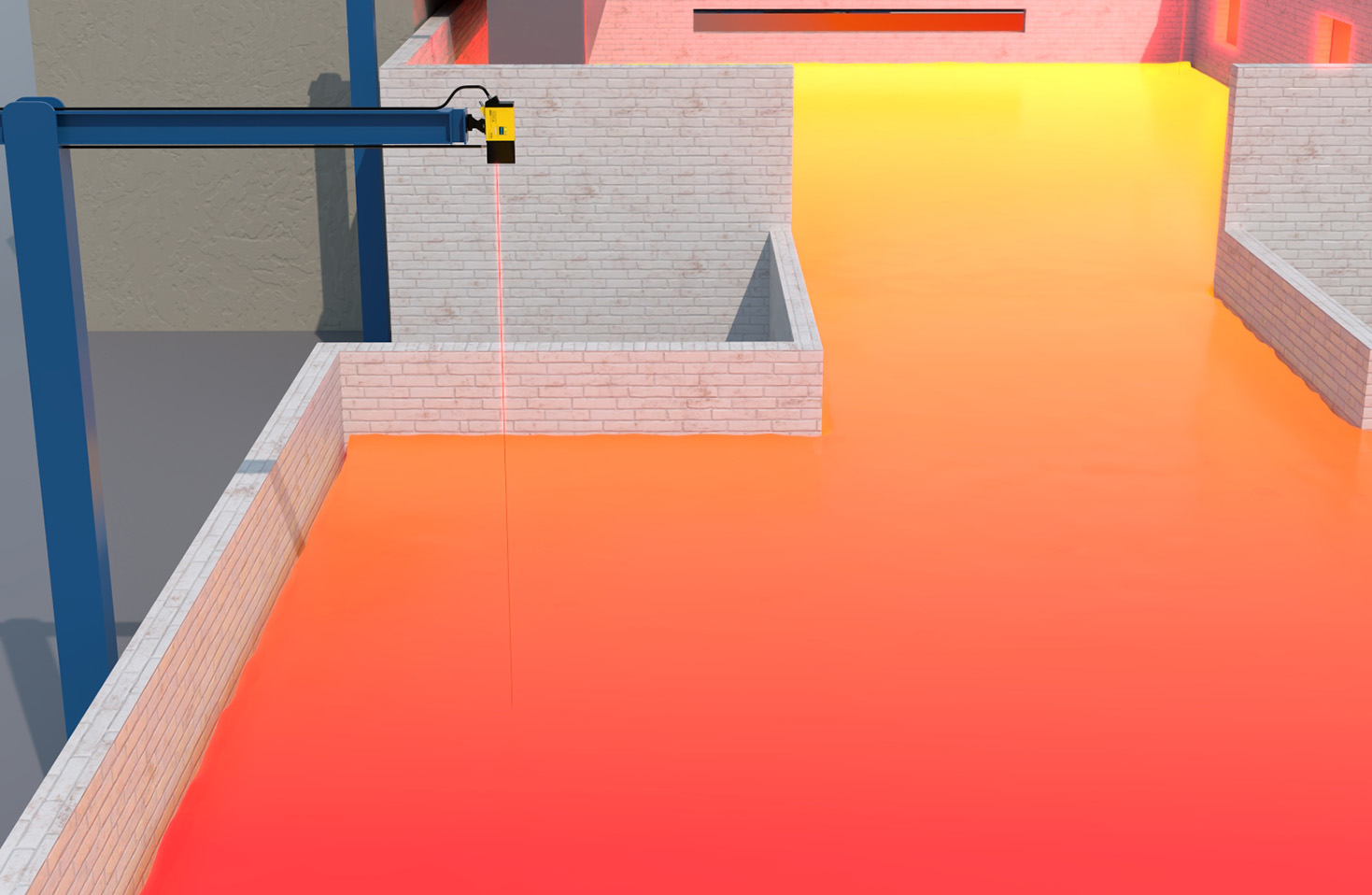
In the realm of industrial automation and quality control, laser height sensors have emerged as indispensable tools for achieving unparalleled precision in non-contact measurement. These sophisticated devices utilize laser triangulation principles to accurately determine the distance or height of a target object with micron-level resolution. By emitting a focused laser beam onto the surface and analyzing the reflected light's position via a high-resolution CMOS or CCD sensor, they calculate precise dimensional data in real-time. This technology is particularly vital in sectors such as automotive manufacturing, electronics assembly, and aerospace engineering, where even minute deviations can lead to significant operational failures or safety risks.
The core advantage of laser height sensors lies in their ability to perform rapid, repeatable measurements without physical contact, thereby eliminating potential damage to delicate surfaces and ensuring consistent data acquisition. Modern iterations incorporate advanced features like automatic calibration, environmental compensation for temperature and humidity fluctuations, and robust housing designs resistant to dust, vibrations, and electromagnetic interference. Integration with industrial networks—such as EtherCAT, PROFINET, or IO-Link—enables seamless data transmission to PLCs and SCADA systems, facilitating automated feedback loops for process adjustments. For instance, in robotic welding applications, these sensors precisely monitor seam heights to optimize weld quality, while in semiconductor fabrication, they verify wafer flatness to prevent lithography defects.
Despite their robustness, selecting the appropriate laser height sensor requires careful consideration of parameters like measurement range, spot size, sampling rate, and material reflectivity. Highly reflective or transparent surfaces may necessitate specialized models with adjustable laser intensity or coaxial lighting to ensure reliable readings. Moreover, adherence to international safety standards, such as IEC 60825-1 for laser product safety, is paramount to protect operators from accidental exposure. As Industry 4.0 drives demand for smarter manufacturing, future trends point toward miniaturized sensors with embedded AI capabilities for predictive maintenance and anomaly detection, further enhancing operational efficiency. Ultimately, laser height sensors represent a critical convergence of optics, electronics, and software, empowering industries to uphold stringent quality benchmarks while accelerating production throughput in an increasingly competitive global market.