In the realm of industrial automation and electrical engineering, proximity sensors stand as critical components for non-contact detection, ensuring efficiency, safety, and precision. Among these, the K15082 model represents a robust and reliable solution designed for demanding applications. This article delves into the technical specifications, operational principles, typical applications, and best practices for integrating the K15082 proximity sensor into modern electrical systems.
The K15082 is an inductive proximity sensor, a type widely favored for detecting metallic objects without physical contact. Its core operating principle is based on electromagnetic induction. The sensor generates an oscillating electromagnetic field from its active face. When a conductive metal target enters this field, eddy currents are induced within the target. This causes a change in the oscillation amplitude within the sensor's internal LC tank circuit. This change is detected by the sensor's circuitry, which subsequently triggers a solid-state output switch. The K15082 typically features a normally open (NO) or normally closed (NC) configuration, providing flexibility for various control logic requirements. Key specifications often include a defined sensing range, which must be carefully selected based on the target material and size. It operates on standard DC voltages, commonly 10-30V DC, and offers a PNP (sourcing) or NPN (sinking) output, making it compatible with a wide array of Programmable Logic Controllers (PLCs) and control systems. Its housing is usually constructed from nickel-plated brass or stainless steel, providing excellent resistance to mechanical stress, oils, and coolants, which is essential for harsh industrial environments like machine tools, assembly lines, and material handling systems.
When selecting and applying the K15082, several critical factors must be considered to ensure optimal performance. First, the target material is paramount. Inductive sensors like the K15082 are primarily sensitive to ferrous metals (like steel and iron), offering the longest sensing distance. For non-ferrous metals (such as aluminum, copper, or brass), the effective sensing range is reduced, often necessitating a reduction factor. Engineers must consult the sensor's datasheet for specific correction factors. Second, the installation environment plays a crucial role. While the K15082 is built to be resilient, factors like extreme temperatures, strong electromagnetic interference (EMI) from nearby motors or welding equipment, and direct exposure to cutting fluids can impact its reliability. Proper mounting, often in a non-flush (unshielded) or flush (shielded) manner, is essential to prevent interference from surrounding metal. Non-flush models offer a longer sensing range but require a metal-free zone around the sensing face, whereas flush models can be embedded in metal without affecting performance but have a shorter range.
Typical applications for the K15082 proximity sensor are vast within industrial settings. It is extensively used for position detection, such as verifying the presence of a metal part on a conveyor belt, determining the end-of-travel for a cylinder or actuator, or counting metallic objects. In automated machinery, it serves as a safety interlock, ensuring a guard door is closed before initiating a cycle. It also finds use in rotary speed monitoring by detecting gear teeth or keyways. The sensor's fast response time and high switching frequency make it suitable for high-speed counting and sorting operations. Its robust design allows it to function reliably in challenging conditions where optical sensors might fail due to dirt, dust, or fog.
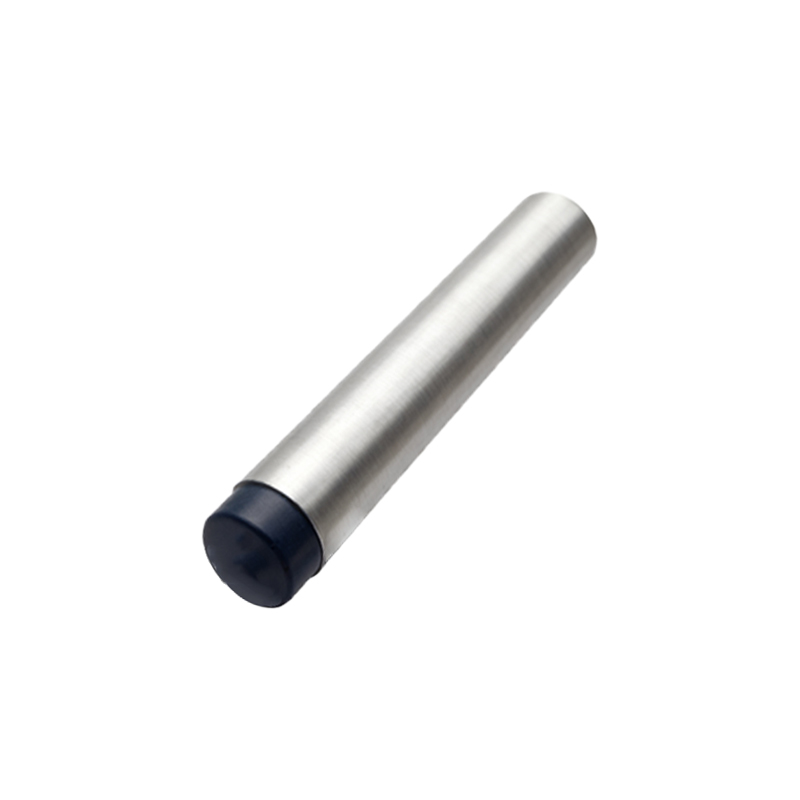
Integration and wiring are straightforward but require attention to detail. The standard three-wire configuration (brown for +V, blue for 0V/common, and black for the output signal) is common. It is imperative to connect a protective circuit, such as a flyback diode for DC loads or a surge absorber for inductive loads, across the load to suppress voltage spikes that could damage the sensor's output transistor. For long cable runs in electrically noisy environments, using shielded cables with the shield properly grounded at the controller end is highly recommended. Regular maintenance, though minimal, involves periodic checks for physical damage, accumulation of metallic debris on the sensing face, and verification of the output signal under operational conditions.
In conclusion, the K15082 inductive proximity sensor is a versatile and durable workhorse in electrical engineering and industrial automation. Its design prioritizes reliability in tough environments, providing accurate and non-contact detection of metallic objects. A thorough understanding of its operating parameters—sensing range relative to target material, environmental limits, and correct electrical installation—is essential for engineers to leverage its full potential. By adhering to best practices in selection, installation, and maintenance, the K15082 can significantly enhance the performance, safety, and uptime of automated systems, proving to be a valuable asset in any engineer's toolkit for creating efficient and intelligent machinery.