In the world of industrial automation and robotics, precision and reliability are paramount. Among the many technologies enabling this high level of performance, the laser line tracking sensor stands out as a critical component for guidance, inspection, and measurement tasks. Unlike simple photoelectric sensors or basic cameras, these sophisticated devices project a visible laser line onto a target surface and analyze its deformation to extract precise, real-time data about an object's position, profile, or presence.
At its core, a laser line tracking sensor operates on the principle of optical triangulation. The sensor contains a laser diode that emits a focused beam of light, which is then diffracted by a cylindrical lens to form a thin, bright line. This line is projected onto the object or surface to be measured. A high-resolution CMOS or CCD image sensor, positioned at a known angle relative to the laser emitter, captures the image of this laser line. When the target object's surface is not perfectly flat or is at a varying distance, the projected laser line appears distorted—it may bend, break, or shift in position. The sensor's onboard processor uses sophisticated algorithms to analyze this distortion. By calculating the displacement of each point along the line in the captured image and referencing the fixed triangulation geometry, the sensor can determine precise measurements such as height, width, contour, or lateral position with micron-level accuracy. This process happens thousands of times per second, providing a continuous stream of highly accurate spatial data.
The advantages of using a laser line over a single laser point are significant. A single line provides a profile of data in one capture, dramatically increasing inspection speed and enabling the measurement of complex shapes and edges that a single point could miss. This makes line sensors ideal for dynamic applications where objects are moving on a conveyor belt. Common output data includes 2D profile height maps, precise edge detection for guidance, and binary presence/absence signals based on profile matching.
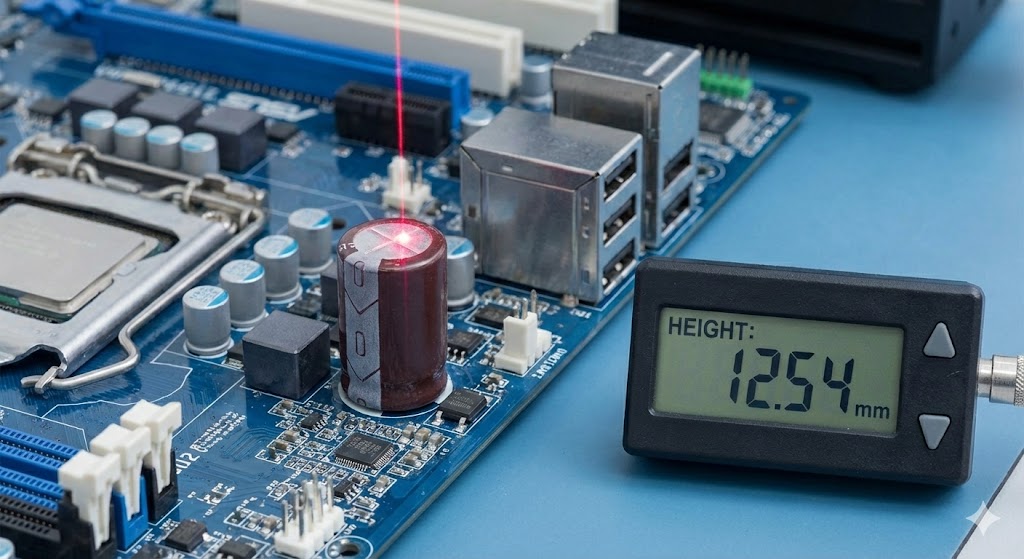
The applications for laser line tracking sensors are vast and span numerous industries. In automotive manufacturing, they are indispensable for tasks like verifying the correct application of adhesive beads on windshields, inspecting weld seam quality on body panels, and ensuring precise robot guidance for part placement. In electronics assembly, these sensors measure component coplanarity (ensuring all leads sit flat on a PCB), inspect solder paste height, and guide pick-and-place machines with extreme precision. The logistics and packaging sector relies on them for parcel dimensioning (to calculate shipping costs), checking package seal integrity, and sorting items based on size and shape. Furthermore, in metalworking, they profile rolled steel for thickness consistency and guide cutting lasers along complex paths.
When selecting a laser line sensor for an application, several key specifications must be considered. Measurement range and resolution define the sensor's capability; some are designed for sub-micron resolutions over short ranges, while others can measure larger objects with slightly lower resolution. The scanning rate, measured in profiles per second, determines how fast a moving object can be inspected. Environmental robustness is crucial for industrial settings; factors like IP rating for dust and water resistance, resistance to ambient light interference, and operational temperature range are vital. Finally, the interface—common options include Ethernet/IP, PROFINET, EtherCAT, or analog outputs—must integrate seamlessly with the existing control system.
Looking ahead, the evolution of laser line tracking sensors is intertwined with advancements in computing and artificial intelligence. While the core triangulation physics remains constant, newer sensors incorporate embedded AI capabilities for more intelligent feature recognition and anomaly detection directly at the edge, reducing the need for centralized processing. Integration with 3D vision systems, where multiple line sensors or scanning units build a complete volumetric model, is also becoming more common. Furthermore, miniaturization and cost reduction are opening new applications in smaller-scale robotics and consumer electronics manufacturing.
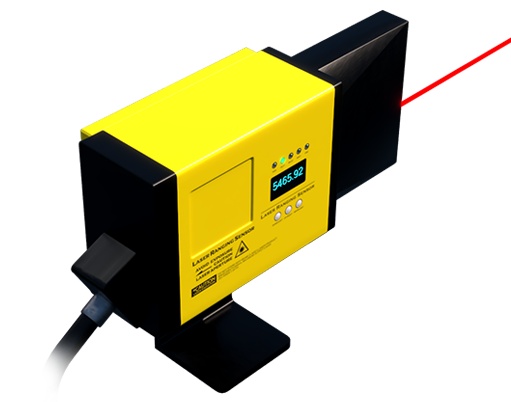
In conclusion, the laser line tracking sensor is a foundational technology for modern automated systems. By transforming a simple line of laser light into rich, actionable data, it provides the "eyes" for machines to perform with unparalleled accuracy and speed. From ensuring the quality of everyday products to enabling complex robotic maneuvers, its role in driving efficiency, safety, and innovation across manufacturing and logistics continues to grow, solidifying its status as a key enabler of Industry 4.0 and beyond.