In the world of automation, safety, and measurement technology, two types of sensors dominate countless applications: laser sensors and infrared (IR) sensors. While both are essential for non-contact detection and measurement, they operate on fundamentally different principles, leading to distinct advantages, limitations, and ideal use cases. Understanding these differences is crucial for engineers, designers, and hobbyists to select the right tool for the job.
The Core Technology: Light Wavelength
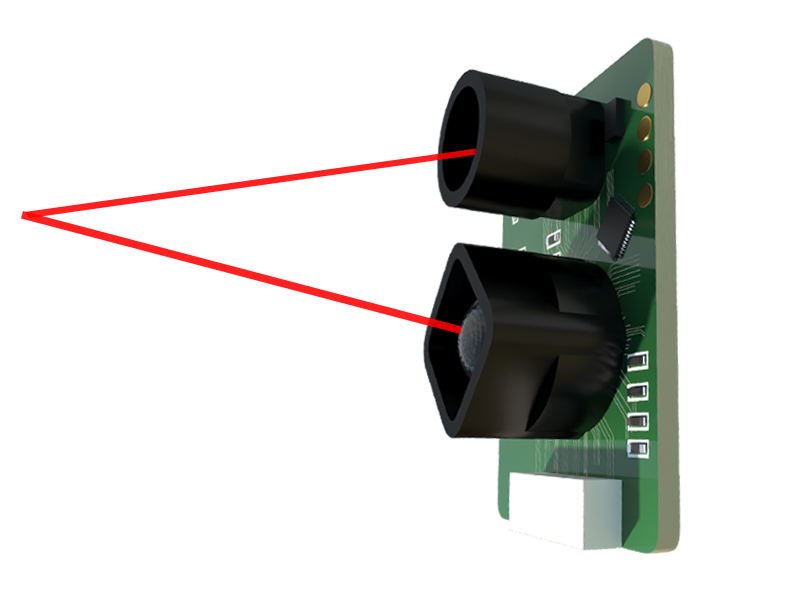
The primary distinction lies in the type of light they emit and detect. A laser sensor utilizes a highly focused, coherent beam of light. "Coherent" means the light waves are in phase, traveling in a tight, parallel line. This results in an extremely precise, narrow beam that can travel long distances with minimal dispersion. Common laser types used in sensors include visible red lasers and invisible Class 1 or 2 laser diodes.
In contrast, an infrared sensor typically uses an LED to emit light in the infrared spectrum, which is invisible to the human eye. This light is incoherent, meaning it spreads out in a cone-shaped pattern as it leaves the emitter. IR sensors work by detecting the reflection or interruption of this diffuse infrared light.
Performance Characteristics: Precision vs. Versatility
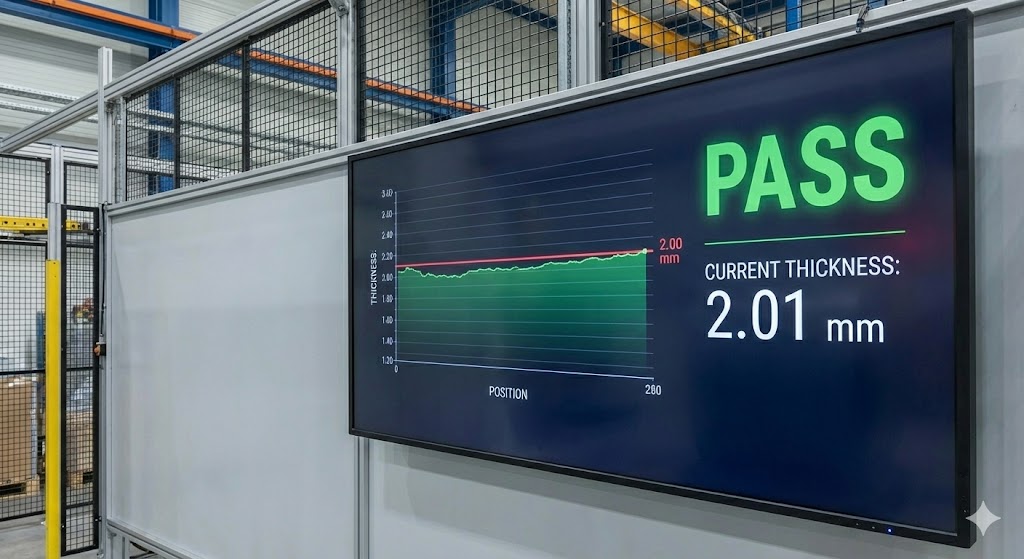
This difference in light source leads to a direct impact on performance. Laser sensors excel in applications demanding high precision. Their tight beam allows for extremely accurate distance measurement, precise edge detection, and reliable operation over longer ranges. They can detect very small objects or measure minute displacements. For example, in industrial manufacturing, laser sensors are indispensable for precise positioning, thickness gauging, and profile scanning.
Infrared sensors, with their broader beam, are generally less precise for exact measurement but offer excellent versatility for presence detection. They are highly effective for detecting objects within a defined area, such as in automatic doors, object counters on conveyor belts, or touchless faucets. Their diffuse nature can be an advantage for detecting objects regardless of slight variations in surface angle or color, within certain limits.

Environmental Factors and Challenges
Both sensor types face environmental challenges, but of different kinds. Laser sensors are renowned for their strong resistance to ambient light interference. The specific, modulated wavelength of the laser beam makes it easier for the receiver to distinguish from background light, allowing them to perform reliably in brightly lit environments. However, their performance can be severely affected by certain target properties. Transparent objects (like glass or clear plastic) or highly reflective, mirror-like surfaces can cause the beam to pass through or reflect away, leading to a failed detection.
Infrared sensors are more susceptible to interference from ambient infrared sources, such as sunlight, halogen lamps, or other hot objects. This can cause false triggers or reduced sensing range. Modern IR sensors often use modulated signals to mitigate this. On the other hand, they often handle a wider variety of surface types better than lasers, though very dark or black surfaces that absorb IR light can still pose a problem.
Typical Applications in the Real World
The application landscape clearly separates the two technologies. Laser sensors are the go-to choice for high-accuracy tasks:
* Industrial Metrology: Precise dimensional measurement, vibration analysis, and alignment.
* LiDAR Systems: For autonomous vehicles, robotics, and 3D mapping.
* Barcode Scanning: Long-range and high-speed scanning in logistics.
* Level Monitoring: Accurate measurement of material levels in tanks or silos.
Infrared sensors shine in cost-effective, robust presence detection:
* Proximity Sensing: In smartphones, robots, and appliances.
* Security Systems: For motion detection in PIR (Passive Infrared) sensors.
* Consumer Electronics: TV remote controls, touchless interfaces.
* Object Detection: Counting, sorting, and break-beam applications in automation.
Making the Right Choice
Selecting between a laser and an infrared sensor boils down to the application's specific requirements. Key questions to ask include: What is the primary need—exact measurement or reliable presence detection? What is the required sensing distance and beam spot size? What are the environmental conditions (ambient light, dust)? What are the properties of the target object (color, material, surface finish)? Finally, what is the project budget, as laser sensors are typically more expensive than their IR counterparts due to their higher complexity and precision.
In conclusion, neither sensor type is universally superior. The laser sensor is a precision specialist, offering unparalleled accuracy for measurement-centric tasks. The infrared sensor is a versatile generalist, providing reliable and economical detection for a vast array of presence-sensing applications. By carefully evaluating the technical demands of a project, one can leverage the unique strengths of each technology to build more efficient, reliable, and intelligent systems.