In the realm of computer peripherals, the mouse remains an indispensable tool for navigation and control. While much attention is given to primary tracking sensors, the technology embedded within the scroll wheel—specifically, laser-based scroll wheel sensors—represents a critical yet often overlooked component of modern user experience. This article delves into the engineering principles, operational mechanics, and performance advantages of laser sensors used in mouse wheels, providing a technical overview for professionals and enthusiasts in the electrical and computing industries.
The fundamental purpose of a scroll wheel is to translate rotational motion into digital signals that the computer interprets as scrolling commands. Traditional mechanical encoders, which rely on physical contact and metallic brushes, have been prevalent for decades. However, they are prone to wear, dust accumulation, and contact bounce, leading to inconsistent performance and eventual failure. The advent of optical encoders marked a significant improvement by using an LED and phototransistor to detect wheel rotation through interruptions in a light beam, eliminating physical contact. The latest evolution in this domain is the laser-based scroll wheel sensor, which leverages the precision and reliability of laser technology.

A laser scroll wheel sensor operates on the principle of laser interferometry or high-resolution surface tracking. Instead of a simple interruption-based system, it typically employs a low-power laser diode to illuminate the surface of a specially designed encoder wheel. This wheel is not a simple spoked disc but often features a finely detailed pattern or a micro-textured surface. A complementary metal-oxide-semiconductor (CMOS) sensor or a dedicated photodetector array captures the reflected laser light. As the wheel rotates, the pattern or texture under the laser beam changes. The sensor's onboard processor, often a dedicated application-specific integrated circuit (ASIC), analyzes these minute changes in the reflected laser speckle pattern or surface features.
The core technology enabling this is similar to that used in laser navigation sensors for the mouse's primary tracking. It involves capturing successive images of the surface at an extremely high rate—often thousands of frames per second. A digital signal processor (DSP) then compares these images using cross-correlation algorithms to determine the direction and magnitude of movement. This method provides several orders of magnitude higher resolution than mechanical or basic optical encoders. The resolution is often measured in counts per detent (the tactile "click" feeling) or overall counts per revolution, allowing for incredibly fine-grained control over scrolling speed and distance.
The performance advantages of laser wheel sensors are substantial. First and foremost is durability. With no moving parts in contact (the wheel itself rotates on a bearing, but the sensing mechanism is contactless), the sensor is immune to the wear and tear that plagues mechanical encoders. It is also highly resistant to environmental contaminants like dust, lint, and minor liquid spills, as the laser can penetrate minor obstructions and the sealed design prevents ingress. Reliability over the product's lifespan is significantly enhanced.
Secondly, precision and consistency are unparalleled. The high resolution eliminates "scroll jitter" or missed counts—a common issue where a single physical detent fails to register or registers multiple times. Scrolling becomes smooth, predictable, and accurate, which is crucial for professional applications like graphic design, video editing, and coding, where precise navigation through timelines or lines of code is essential. Many high-end gaming and productivity mice now feature "free-spinning" or hyper-scroll modes, where the wheel can spin freely for rapid long-document navigation. A laser sensor provides flawless transition between the tactile stepped mode and the free-spin mode, accurately tracking extremely high rotational speeds without error.
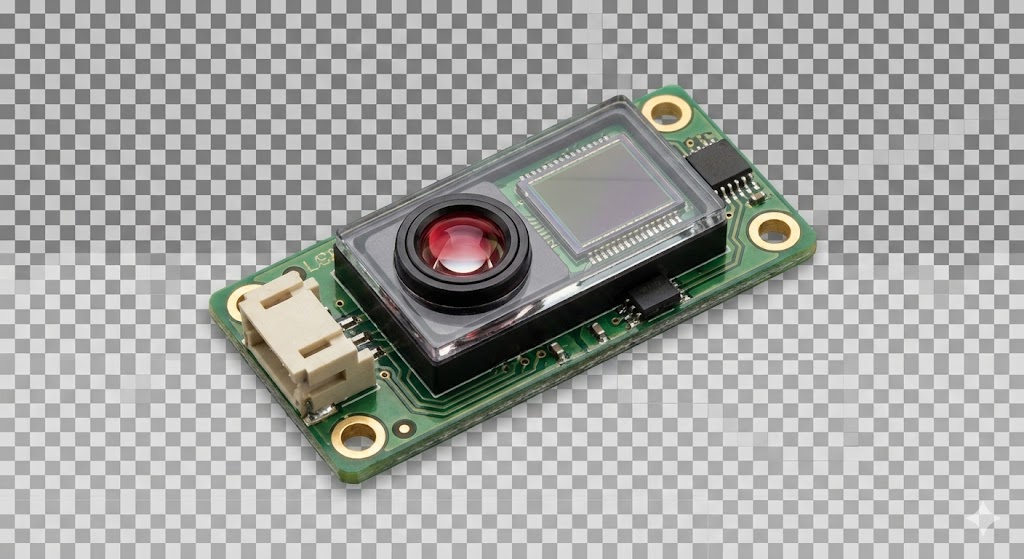
From an electrical engineering perspective, integrating a laser sensor into the mouse's design involves careful consideration of power management, signal integrity, and electromagnetic compatibility (EMC). The laser diode requires a stable current source, and the analog signals from the photodetector must be conditioned and digitized with minimal noise. The processing ASIC must be efficient to not significantly impact the mouse's overall power budget, especially in wireless models. Furthermore, the entire subsystem must be designed to avoid interfering with the primary optical or laser tracking sensor and the wireless radio frequency (RF) circuitry.
The manufacturing process for these components demands high precision. The encoder wheel's pattern must be fabricated with micron-level accuracy, and the alignment between the laser diode, the wheel, and the CMOS sensor is critical. Automated optical inspection (AOI) is typically employed during assembly to ensure perfect calibration. This level of precision contributes to the higher cost of mice equipped with such technology, positioning them in the premium segment of the market.
Looking forward, the integration of laser scroll wheel sensors is likely to become more widespread as costs decrease and the demand for reliability grows. We may also see further integration with haptic feedback systems, where the tactile "click" is simulated by an electromagnetic actuator (like a voice coil), and the laser sensor provides absolute positional feedback to the haptic controller, enabling customizable scroll resistance and dynamic detent profiles. This convergence of sensing and actuation technologies promises even more refined user interfaces.
In conclusion, the laser sensor in a mouse wheel is a sophisticated piece of electro-optical engineering that transforms a simple mechanical input into a reliable, high-precision digital command. Its adoption signifies the ongoing trend in peripheral design towards contactless, software-definable, and highly durable components. For engineers and specifiers, understanding this technology is key to appreciating the design complexities and performance benchmarks of modern human interface devices.