In the realm of precision measurement and industrial automation, displacement sensors are critical components for ensuring accuracy, quality control, and system efficiency. Among the various technologies available, the ring laser displacement sensor stands out for its exceptional precision and stability. This article delves into the working principles, key applications, and distinct advantages of ring laser displacement sensors, providing a comprehensive overview for engineers and technical professionals.
The fundamental principle of a ring laser displacement sensor is based on laser interferometry. Unlike traditional linear laser sensors that measure the time-of-flight or triangulation of a single beam, a ring laser sensor utilizes a closed-loop optical path, often in a ring or cavity configuration. Within this cavity, two laser beams travel in opposite directions—clockwise and counterclockwise. When the sensor is at rest relative to an inertial frame, the frequencies of these two counter-propagating beams are identical. However, when the sensor experiences rotational motion or the target undergoes displacement that induces an effective path length change, a frequency difference arises between the two beams due to the Sagnac effect. This frequency difference, or beat frequency, is directly proportional to the rate of rotation or, in configured setups, to linear displacement. By precisely measuring this interferometric signal, the sensor can determine displacement with extraordinary resolution, often in the sub-nanometer range.
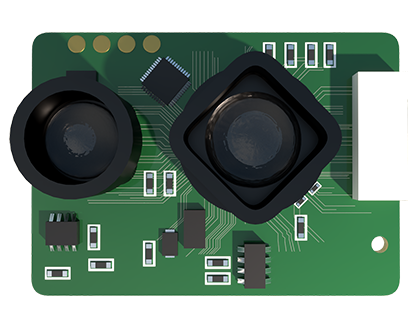
The core components of a typical ring laser displacement sensor include a laser source (often a helium-neon laser or solid-state laser), a ring-shaped optical cavity made from materials with low thermal expansion like Zerodur or ultra-low expansion glass, mirrors or optical fibers to form the closed path, photodetectors to capture the interference pattern, and sophisticated signal processing electronics. The design ensures minimal external interference from factors such as vibration, temperature fluctuations, and electromagnetic fields, which is paramount for high-precision applications.
The applications of ring laser displacement sensors are predominantly found in fields demanding the highest levels of metrological accuracy. In semiconductor manufacturing, these sensors are indispensable for wafer alignment, lithography stage positioning, and inspection of micro-electromechanical systems (MEMS). Their ability to provide non-contact, high-speed measurements without applying force makes them ideal for delicate processes. In precision engineering and machining, they are used for calibrating coordinate measuring machines (CMMs), monitoring tool wear, and ensuring the flatness and parallelism of critical components. Furthermore, in scientific research, ring laser gyroscopes—a closely related technology—form the basis for inertial navigation systems, and their principles are adapted for measuring extremely small displacements in experimental physics, such as in gravitational wave detectors like LIGO.
Several key advantages distinguish ring laser displacement sensors from other technologies like capacitive, inductive, or standard laser triangulation sensors. First and foremost is their unparalleled precision and long-term stability. They offer exceptional linearity and minimal drift over time, which is crucial for calibration standards and long-duration experiments. Secondly, as non-contact sensors, they eliminate issues of mechanical wear, hysteresis, and loading effects on the measured object. Thirdly, they provide a very high bandwidth, enabling dynamic measurement of rapid displacements or vibrations. Finally, their inherent design based on fundamental physical constants (the speed of light) makes them absolute measuring devices, often not requiring frequent recalibration.
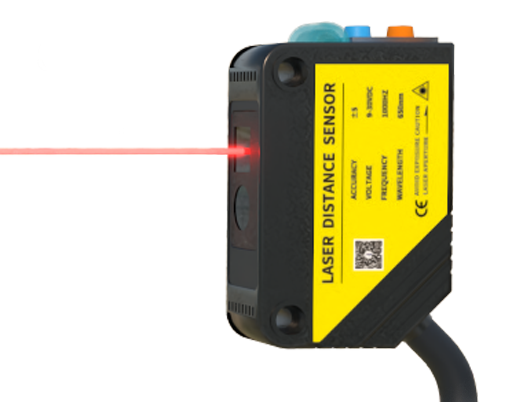
However, implementing ring laser displacement sensors also presents challenges. They are generally more complex and expensive than other sensor types, requiring careful installation and a stable environment. Their sensitivity can also make them susceptible to errors from refractive index changes in the air path, though vacuum-sealed cavities mitigate this in high-end applications. Therefore, their use is typically justified in scenarios where the highest precision is non-negotiable.
In conclusion, ring laser displacement sensors represent the pinnacle of displacement measurement technology. By harnessing the principles of laser interferometry within a ring cavity, they achieve levels of accuracy that are unattainable with conventional methods. For industries and research fields where micron, sub-micron, or nanometer-scale measurements are critical—such as semiconductor fabrication, advanced manufacturing, and fundamental physics—these sensors are invaluable tools. As technology advances, ongoing developments in laser diodes, fiber optics, and digital signal processing continue to enhance their performance, reliability, and accessibility, promising even broader adoption in the future of precision engineering.