In the realm of industrial automation and control, the reliable detection of objects is paramount. Among the diverse array of sensors available, the PNP Hall Effect proximity switch stands out for its robustness, precision, and versatility. This article delves into the operational principles, key characteristics, and practical applications of PNP Hall Effect proximity sensors, providing essential insights for engineers and technicians.
At its core, a Hall Effect proximity sensor operates based on the Hall Effect, discovered by Edwin Hall in 1879. When a current-carrying conductor is placed in a magnetic field, a voltage (the Hall voltage) is generated perpendicular to both the current and the field. In a proximity sensor, a semiconductor element (the Hall element) serves as this conductor. When a ferromagnetic or permanent magnet target approaches the sensor's active face, it disturbs the magnetic field, causing a change in the Hall voltage. This change is detected and processed by integrated circuitry within the sensor.
The designation "PNP" refers to the transistor switching output type. In a PNP (Positive-Negative-Positive) configuration, the output transistor switches the positive supply voltage to the load. In simpler terms, when the sensor is activated (target detected), the output line switches to a high state, sourcing current from the positive supply to the connected device, such as a PLC input or a relay. This contrasts with an NPN (Negative-Positive-Negative) sensor, which sinks current to ground. The choice between PNP and NPN often depends on regional conventions and the specific requirements of the control system's input card. PNP sourcing outputs are commonly preferred in many European and international designs.
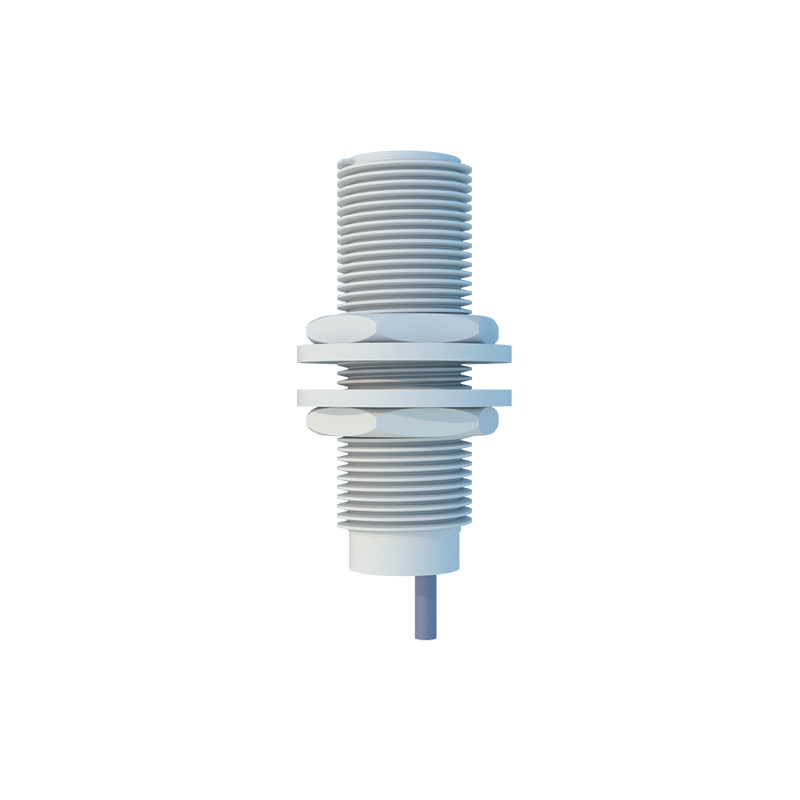
Key technical specifications define a sensor's suitability for an application. Sensing distance, typically ranging from a few millimeters to several centimeters, is a critical parameter. It is important to note the difference between nominal sensing distance and effective operational distance, which can be affected by target material, size, and environmental conditions. Repeat accuracy, the sensor's ability to consistently detect a target at the same point, is vital for precision automation. Response frequency indicates how quickly the sensor can detect objects passing by, a crucial factor in high-speed production lines.
Environmental robustness is a hallmark of industrial-grade Hall Effect sensors. They are often housed in rugged metallic (e.g., stainless steel) or high-grade polymer casings with ingress protection ratings like IP67 or IP69K, making them resistant to dust, water, oils, and coolants. Unlike inductive proximity sensors, Hall Effect sensors can detect magnetic fields directly, allowing them to sense both ferrous metals and permanent magnets. This makes them indispensable in applications involving non-ferrous machinery or where only a magnet can be mounted on the target.
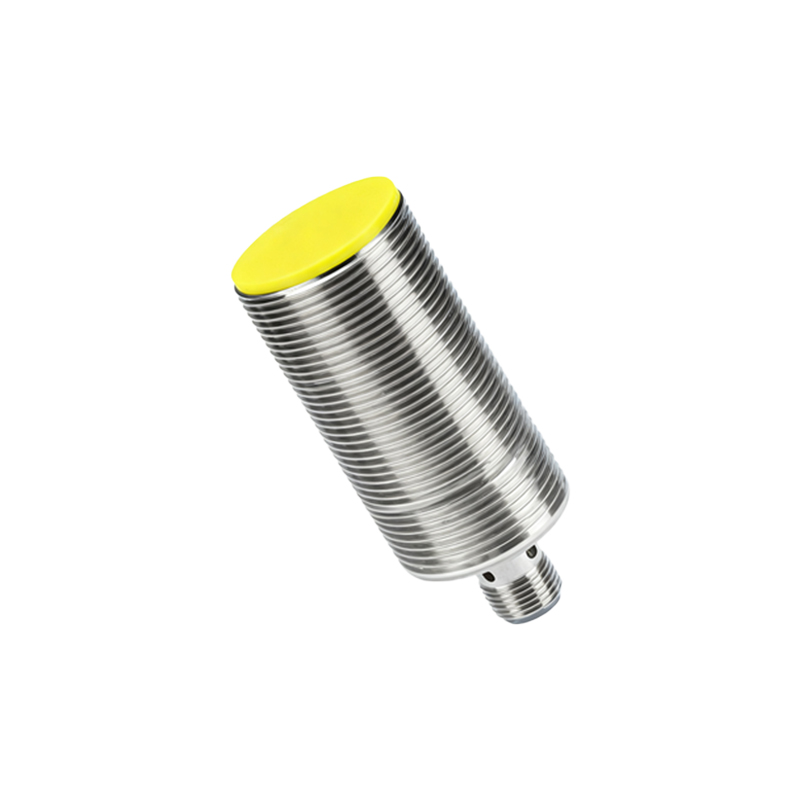
Wiring a PNP sensor is straightforward. Typically, a three-wire DC sensor will have brown (or red) for positive supply (+V), blue for negative supply (0V/Common), and black for the switched output signal. Upon detecting a valid target, the black wire will supply the positive voltage to the load. Always consult the manufacturer's datasheet for precise wiring diagrams and voltage ranges (commonly 10-30V DC).
Applications for PNP Hall Effect proximity sensors are vast across industry sectors. In automotive manufacturing, they are used for camshaft and crankshaft position sensing, providing critical timing data to engine control units. In material handling, they detect the position of pallets, robotic arms, or door closures. They are fundamental in conveyor systems for counting, sorting, and jam detection. Furthermore, their ability to function in dirty or wet environments makes them ideal for agricultural machinery, food processing, and packaging equipment.
When selecting a PNP Hall Effect sensor, engineers must consider several factors: the required sensing distance, the nature of the target (ferrous metal or magnet), the operating voltage of the control system, the required output current, environmental exposures, and housing style (e.g., tubular, rectangular). Proper mounting is also essential; metallic surroundings can influence the magnetic field and reduce the effective sensing range.
In conclusion, the PNP Hall Effect proximity sensor is a sophisticated yet durable component that forms the sensory backbone of modern industrial systems. Its combination of solid-state reliability, immunity to environmental contaminants, and precise magnetic detection ensures accurate and maintenance-free operation in demanding conditions. By understanding its principles and specifications, automation professionals can effectively integrate these sensors to enhance system reliability, safety, and productivity.