In the realm of industrial automation, robotics, and consumer electronics, proximity light sensors have become indispensable components. These devices detect the presence or absence of an object within a specific range without physical contact, primarily using light-based technologies. This article delves into the various types of proximity light sensors, their operating principles, key applications, and critical factors for selection.
The fundamental principle behind most proximity light sensors involves emitting a beam of light—often infrared (IR), visible, or laser—and measuring the reflected signal. The change in the reflected light's properties indicates an object's presence, distance, or specific characteristics. The primary categories include:
1. Infrared (IR) Proximity Sensors: These are among the most common types. They consist of an IR LED emitter and a photodiode or phototransistor receiver. The emitter sends out an infrared beam. When an object enters the detection field, it reflects the IR light back to the receiver. The sensor's circuitry then processes this signal. Diffuse reflective sensors, a subtype, detect objects based on the reflection from the object itself. They are widely used in applications like touchless faucets, automatic hand dryers, and paper detection in printers due to their cost-effectiveness and reliability.
2. Laser Proximity Sensors: Utilizing a focused laser beam, these sensors offer high precision and long detection ranges. They operate on time-of-flight (ToF) or triangulation principles. ToF sensors measure the time delay between the emitted laser pulse and the received reflection to calculate distance with exceptional accuracy. Laser sensors are crucial in precision manufacturing, dimensional gauging, and autonomous vehicle navigation systems where minute distance variations are critical.
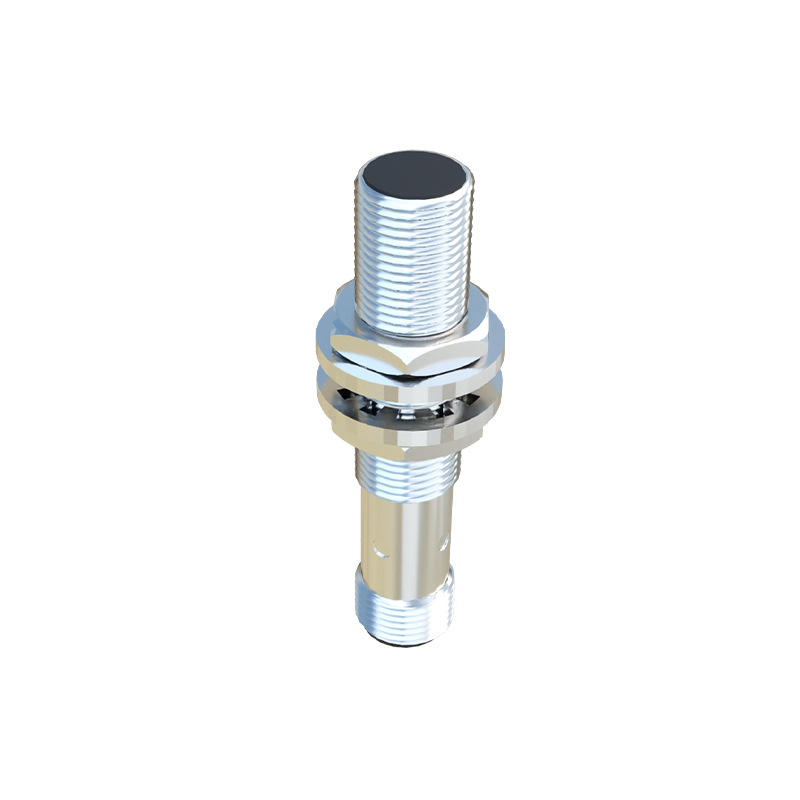
3. Photoelectric Sensors: While a broad category, many are configured for proximity sensing. These include through-beam, retro-reflective, and diffuse reflective models. Through-beam sensors have separate emitter and receiver units; an object is detected when it interrupts the light beam. Retro-reflective types use a reflector to bounce the beam back to a receiver housed in the same unit, with detection occurring upon beam interruption. They are staples in packaging lines, material handling, and safety curtains.
4. Fiber Optic Proximity Sensors: These sensors use optical fibers to transmit light to and from the sensing area. The main electronics can be remotely located, making them ideal for use in extreme environments—high temperatures, intense electromagnetic interference, or corrosive atmospheres—where standard sensors would fail. They are common in chemical processing, semiconductor fabrication, and high-voltage applications.
5. Ultrasonic Sensors (with Light Emission Option): Although primarily using sound waves, some advanced systems integrate a visual light indicator or laser aiming beam to show the detection zone. The core sensing remains ultrasonic, but the light component aids in precise alignment and setup, useful in complex material handling or level detection tasks.
Key application areas span multiple industries. In automotive manufacturing, they ensure precise part positioning and robot safety. In consumer devices, they enable features like automatic screen dimming during phone calls. In smart infrastructure, they manage lighting control and occupancy sensing for energy efficiency.
Selecting the right proximity light sensor requires careful analysis of several parameters:
Sensing Range and Field of View: Determine the required detection distance and the beam's spread.
Target Material and Color: Some materials (e.g., transparent glass, black surfaces) absorb or transmit light, affecting performance. IR sensors may struggle with black objects that absorb IR, while laser sensors might be more suitable.
Environmental Conditions: Consider ambient light (sunlight can saturate IR sensors), dust, fog, temperature, and potential optical interference.
Output Type: Decisions between digital (on/off), analog (proportional to distance), or IO-Link for smart sensor communication are based on control system needs.
Response Time and Accuracy: High-speed assembly lines demand fast response, while metrology requires high accuracy and repeatability.
In conclusion, the choice of a proximity light sensor is not one-size-fits-all. From the ubiquitous and economical IR sensor to the highly precise laser-based system, each type serves a distinct purpose. Understanding the underlying technology, operational environment, and specific application requirements is paramount for successful integration, ensuring reliability, efficiency, and longevity in any automated system. As Industry 4.0 advances, these sensors will continue to evolve, incorporating smarter features and connectivity for more sophisticated machine perception.