Internal laser sensors represent a pivotal advancement in industrial automation, offering unparalleled precision, speed, and reliability for a wide range of applications. These sensors operate by emitting a focused laser beam internally within a controlled system, detecting minute changes in position, distance, or surface characteristics through techniques such as triangulation, time-of-flight, or interferometry. Unlike traditional mechanical or optical sensors, internal laser sensors are often integrated directly into machinery, minimizing exposure to external contaminants and mechanical wear. This integration enhances durability and reduces maintenance needs, making them ideal for harsh environments like automotive assembly lines, semiconductor manufacturing, and robotic systems.
The core technology behind internal laser sensors involves sophisticated components such as laser diodes, photodetectors, and signal processors. Laser diodes generate coherent light beams that are directed toward a target, while photodetectors capture reflected or scattered light. Advanced algorithms within the signal processor analyze this data to calculate precise measurements, often with sub-micron accuracy. For instance, in quality control processes, these sensors can detect defects in materials by scanning surfaces at high speeds, identifying imperfections invisible to the human eye. Similarly, in logistics and packaging, they ensure accurate object positioning and dimension verification, optimizing throughput and reducing waste.
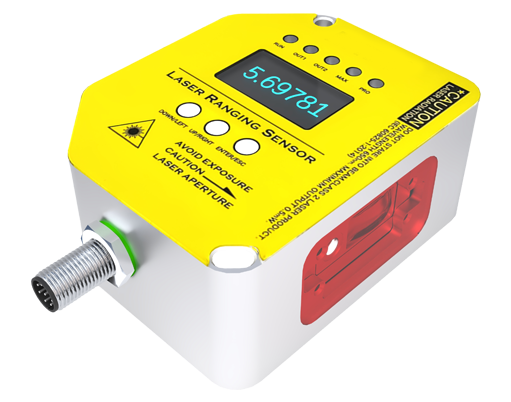
One of the key advantages of internal laser sensors is their adaptability to Industry 4.0 and smart factory initiatives. By providing real-time data, they enable predictive maintenance, where potential failures are identified before they cause downtime. This data can be integrated with IoT platforms, allowing for seamless communication between sensors and central control systems. For example, in automated guided vehicles (AGVs), internal laser sensors facilitate navigation and obstacle avoidance, enhancing safety and efficiency. Moreover, their non-contact nature eliminates the risk of damage to sensitive components, a critical factor in electronics and medical device manufacturing.
Despite their benefits, implementing internal laser sensors requires careful consideration of factors like environmental conditions, target material properties, and calibration needs. Dust, vibration, or extreme temperatures can affect performance, necessitating protective housings or specialized designs. However, ongoing innovations in miniaturization and energy efficiency are expanding their applicability, with newer models offering wireless capabilities and lower power consumption. As industries increasingly prioritize automation and precision, internal laser sensors are set to play a central role in driving productivity and innovation, from aerospace engineering to consumer goods production.
In summary, internal laser sensors are transforming industrial landscapes by delivering high-accuracy measurements in compact, robust packages. Their ability to operate in demanding settings while providing critical data underscores their value in modern manufacturing. As technology evolves, these sensors will likely become even more integral to automated systems, supporting advancements in artificial intelligence and machine learning for smarter, more responsive industrial operations.