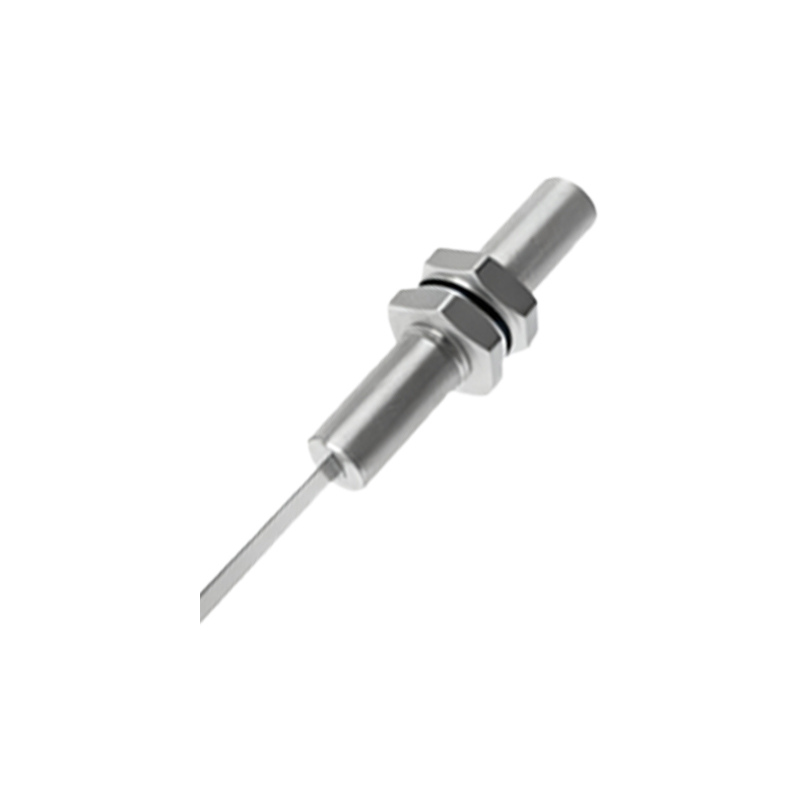
Proximity switch sensors, widely recognized for their non-contact detection capabilities in solid object sensing, have also carved a significant niche in liquid level detection across various industrial sectors. These sensors operate on principles such as inductive, capacitive, or ultrasonic technologies, with capacitive types being particularly prevalent for liquid applications due to their ability to detect materials regardless of conductivity. In liquid level control, a capacitive proximity sensor is often mounted externally on a tank wall or internally via a probe. It detects the change in capacitance caused by the presence or absence of the liquid medium. When the liquid reaches the sensing face, the dielectric constant changes, triggering the switch output. This method offers a distinct advantage: it avoids direct contact with the liquid, thereby eliminating risks of contamination, corrosion, or mechanical wear associated with float switches or conductive probes.
The selection of an appropriate proximity sensor for liquid detection hinges on several critical factors. First, the chemical properties of the liquid—such as acidity, alkalinity, and corrosiveness—dictate the required housing material (e.g., PTFE, stainless steel) to ensure longevity. Second, the dielectric constant of the liquid is paramount for capacitive sensors; liquids with higher constants like water are easily detected, while hydrocarbons with lower constants may require sensors with adjustable sensitivity. Temperature and pressure ranges within the vessel must also align with the sensor's specifications to prevent failure. Furthermore, installation considerations are vital. For non-metallic tanks, capacitive sensors mount directly on the outer surface, providing a completely sealed and leak-proof solution. For metallic containers, internal mounting with appropriate seals or the use of a bypass chamber might be necessary to avoid false triggers from the tank wall itself.
In practice, these sensors are integral to automated systems in chemical processing, food and beverage, pharmaceuticals, and water treatment plants. They provide point-level detection for high, low, or intermediate alarms, enabling pump control, valve actuation, and process sequencing. For instance, in a chemical reactor, a capacitive proximity sensor can reliably monitor the level of a corrosive solvent, sending a signal to a PLC to stop inflow at a predetermined high level, thus preventing overfill and potential safety hazards. Their rapid response time and solid-state reliability make them superior to mechanical alternatives in many demanding environments.
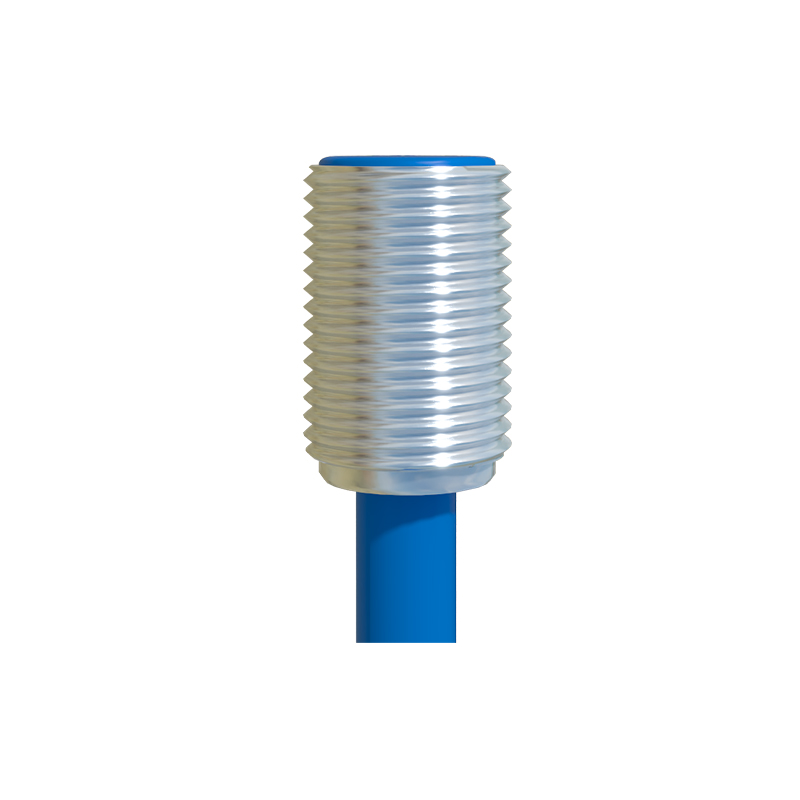
However, challenges persist. Foam, turbulence, or coating buildup on the sensor face can impair accuracy. Modern sensors address these issues with features like temperature compensation, coated face options to resist adhesion, and advanced circuitry that distinguishes between the target liquid and false signals. Regular maintenance and calibration, as per manufacturer guidelines, remain essential for consistent performance. As Industry 4.0 advances, smart proximity sensors with IO-Link communication are gaining traction, offering digital diagnostics, parameter setting via software, and integration into predictive maintenance systems, thereby enhancing overall operational efficiency and safety in liquid management.
In conclusion, proximity switch sensors offer a robust, versatile, and reliable solution for liquid level detection. Their non-contact nature, adaptability to various liquids and tank materials, and compatibility with automation frameworks make them indispensable in modern industrial control systems. Engineers must carefully evaluate process conditions and sensor specifications to deploy an optimal and durable detection setup.