Online measurement with laser sensors has revolutionized industrial processes by providing non-contact, high-precision, and real-time data acquisition. These sensors utilize laser technology to detect, measure, and monitor various parameters such as distance, displacement, thickness, and surface profile without physical contact with the target object. This non-invasive approach minimizes wear and tear, reduces maintenance costs, and enhances measurement accuracy, making laser sensors indispensable in modern manufacturing, automation, and quality control systems.
The core principle of laser sensors involves emitting a focused laser beam toward the target surface. The reflected light is captured by a detector, and the sensor calculates measurements based on techniques like triangulation, time-of-flight, or interferometry. For instance, in triangulation-based sensors, the position of the reflected laser spot on a photodetector changes with the target's distance, enabling precise distance measurements. Time-of-flight sensors measure the time taken for the laser pulse to travel to the target and back, suitable for long-range applications. This versatility allows laser sensors to adapt to diverse industrial environments, from harsh factory floors to clean rooms.
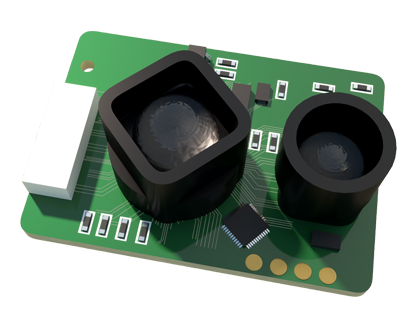
In industrial applications, laser sensors excel in online measurement tasks where continuous monitoring is critical. In automotive manufacturing, they are used to inspect component dimensions, align assembly parts, and verify weld quality in real-time. Any deviation from specifications triggers immediate adjustments, preventing defects and reducing waste. Similarly, in the electronics industry, laser sensors measure PCB thickness, component placement, and solder paste volume, ensuring high product reliability. The food and packaging sectors rely on these sensors to monitor fill levels, check seal integrity, and control labeling positions, maintaining compliance with safety standards.
The integration of laser sensors with Industry 4.0 technologies has further amplified their benefits. By connecting to IoT platforms and data analytics systems, laser sensors enable predictive maintenance and process optimization. For example, in steel production, laser sensors continuously measure roll gap and strip thickness, feeding data to control systems that adjust parameters dynamically. This real-time feedback loop enhances product consistency and reduces energy consumption. Moreover, advancements in miniaturization and cost reduction have made laser sensors more accessible, fostering adoption in small-scale industries and research laboratories.
Despite their advantages, challenges such as environmental interference (e.g., dust, vibrations, or ambient light) can affect laser sensor performance. To mitigate this, modern sensors incorporate features like adaptive filtering, robust housing, and wavelength selection. Regular calibration and alignment are also essential to maintain accuracy. Looking ahead, innovations in multi-sensor fusion and AI-driven analysis promise to expand the capabilities of laser sensors, paving the way for smarter, more autonomous industrial systems. In summary, laser sensors are a cornerstone of online measurement, driving efficiency, quality, and innovation across global industries.