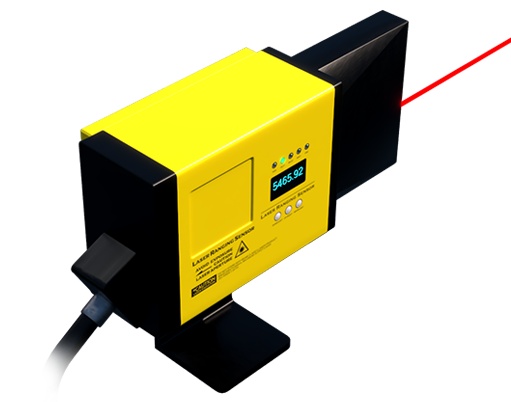
In the realm of industrial automation and quality control, precision measurement is paramount. Multi-point profile laser sensors have emerged as a critical technology, enabling high-speed, non-contact, and highly accurate dimensional inspection of objects. Unlike traditional single-point laser sensors that measure only one specific spot, these advanced systems project a line or a pattern of multiple laser points onto a target surface. A high-resolution camera then captures the deformation or displacement of this laser line/profile. Through sophisticated triangulation algorithms, the sensor generates a detailed two-dimensional or even three-dimensional cross-sectional profile of the object in real-time.
The core principle behind multi-point profile laser sensors is laser triangulation. A laser diode emits a focused line of light. When this line strikes the surface of an object, it becomes distorted according to the object's contour. A receiver, typically a CMOS or CCD camera positioned at a known angle, captures this distorted line. The displacement of each point along the line in the camera's field of view is directly correlated to the height or depth at that specific location on the object. By processing thousands of points simultaneously along this line, the sensor constructs a precise profile. This allows for the measurement of critical parameters such as height, width, gap, step, warp, volume, and cross-sectional area with micron-level accuracy.
The applications for these sensors are vast and transformative across numerous industries. In automotive manufacturing, they are indispensable for inspecting body panel gaps, verifying weld seam integrity, and ensuring the precise assembly of components. In electronics, they measure solder paste volume, component coplanarity, and connector pin height. The packaging industry relies on them to check fill levels, seal integrity, and package dimensions. Furthermore, in logistics and warehousing, they facilitate precise volume measurement for palletizing and storage optimization. Their ability to perform these inspections at production line speeds without physical contact eliminates wear and tear and prevents damage to delicate parts.
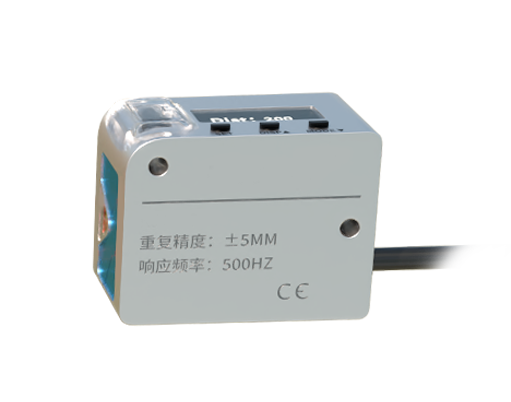
Key advantages of multi-point profile laser sensors include their exceptional speed and data density. They can capture entire profiles in a single scan, drastically reducing inspection time compared to point-by-point methods. This high data density provides a comprehensive view of the object, revealing defects or variations that a single-point measurement might miss, such as subtle surface scratches, dents, or complex shape deviations. Modern sensors also integrate powerful onboard processors, allowing for edge computing where profile data is analyzed directly within the sensor, outputting simple pass/fail results or measurement values via standard industrial communication protocols like Ethernet/IP, PROFINET, or IO-Link.
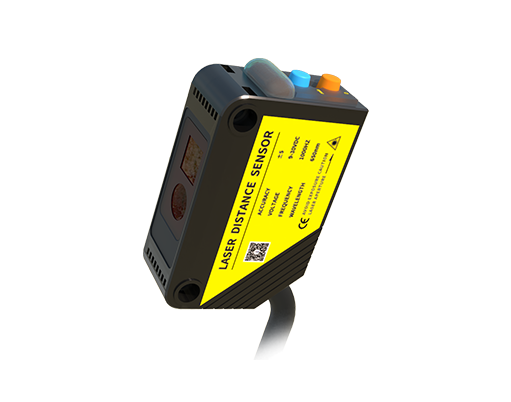
When integrating these sensors into a system, several factors must be considered. The choice of laser wavelength (typically red or blue) affects performance; blue lasers offer better performance on shiny or metallic surfaces by reducing specular reflection. Resolution and measurement range are inversely related and must be selected based on the application's required precision and the size of the target objects. Environmental factors like ambient light, dust, and vibration should be mitigated with proper enclosures and filters. Finally, the software for setting measurement zones, tolerances, and data logging is crucial for unlocking the sensor's full potential.
In conclusion, multi-point profile laser sensors represent a significant leap forward in metrology for smart factories and Industry 4.0. They provide a robust, flexible, and incredibly detailed method for ensuring product quality, optimizing processes, and reducing waste. As manufacturing demands for higher precision and faster throughput continue to grow, the role of these sophisticated optical measurement tools will only become more central to achieving operational excellence and maintaining a competitive edge in the global market.