Proximity sensors are indispensable components in modern industrial automation, offering non-contact detection of objects with high precision and reliability. As an experienced electrical engineer specializing in industrial control systems, I have witnessed the evolution of proximity sensor technology and its transformative impact on manufacturing, robotics, and safety applications. This article delves into the core principles, types, and implementation strategies for proximity sensor solutions, providing a technical overview tailored for industry professionals.
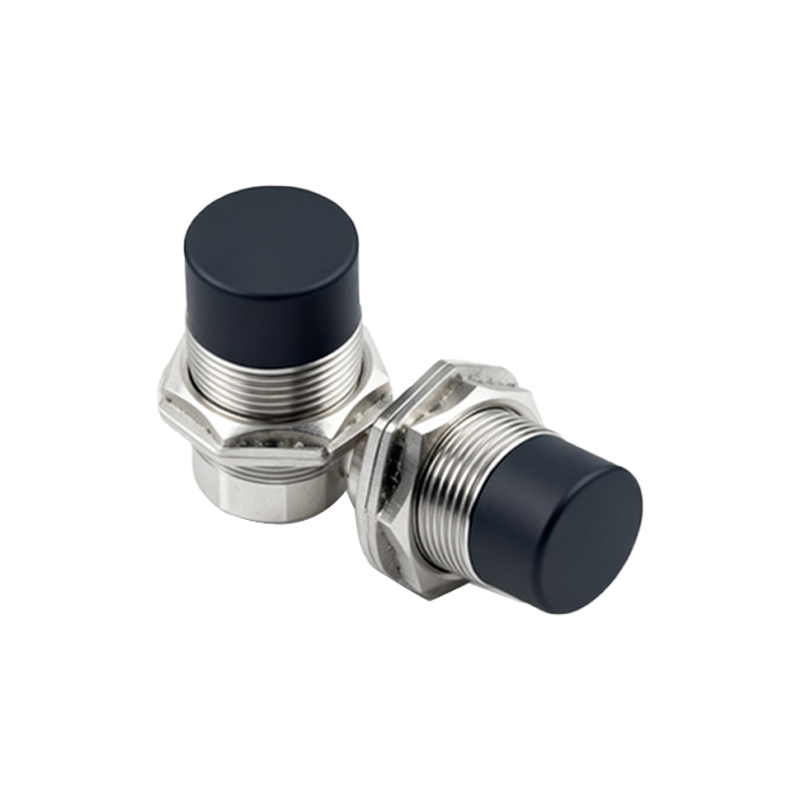
At its essence, a proximity sensor detects the presence or absence of an object within a specified range without physical contact. This is achieved through various sensing technologies, each suited to specific environmental conditions and target materials. The most prevalent types include inductive, capacitive, ultrasonic, and photoelectric sensors. Inductive sensors are ideal for detecting metallic objects, utilizing an electromagnetic field generated by a coil and oscillator. When a metal target enters this field, it induces eddy currents, causing a change in oscillation amplitude that triggers the sensor output. These sensors excel in harsh industrial environments with dust, oil, or moisture, offering robust performance for machine automation and position sensing.
Capacitive proximity sensors, on the other hand, can detect both metallic and non-metallic materials such as plastics, liquids, or granular substances. They operate by measuring changes in capacitance between the sensor and the target. When an object approaches the sensing face, it alters the dielectric constant of the surrounding space, leading to a detectable shift in capacitance. This makes capacitive sensors versatile for applications like level detection in tanks, material handling, and packaging systems. However, they may require careful calibration to avoid false triggers from environmental factors like humidity.
Ultrasonic sensors use sound waves beyond human hearing to measure distance or detect objects. They emit high-frequency pulses and calculate the time taken for echoes to return, enabling precise detection regardless of color, transparency, or material composition. These sensors are particularly effective in challenging conditions involving smoke, dust, or varying light levels, commonly deployed in automotive assembly lines, conveyor systems, and collision avoidance in automated guided vehicles (AGVs).
Photoelectric sensors rely on light beams, typically infrared or laser, to sense objects. They come in through-beam, retro-reflective, and diffuse reflection models, each with distinct advantages. Through-beam sensors offer the longest sensing ranges and high accuracy, while diffuse reflection types are compact and easier to install for close-range detection. Photoelectric sensors are widely used in counting, sorting, and inspection tasks across electronics, food processing, and pharmaceutical industries.
Implementing an effective proximity sensor solution requires careful consideration of several technical parameters. Sensing range, response time, output type (e.g., NPN/PNP, analog/digital), and environmental ratings (IP67, NEMA) are critical factors. For instance, in high-speed packaging machinery, sensors with millisecond-level response times ensure seamless operation, while IP67-rated units withstand washdowns in food processing plants. Additionally, integrating sensors with programmable logic controllers (PLCs) or industrial networks (e.g., IO-Link, Ethernet/IP) enhances data acquisition and system diagnostics.
Recent advancements have introduced smart sensors with embedded intelligence, enabling features like self-monitoring, condition-based maintenance, and adaptive sensing thresholds. These innovations reduce downtime and improve operational efficiency. As Industry 4.0 gains momentum, proximity sensors are evolving into interconnected nodes within the Industrial Internet of Things (IIoT), facilitating predictive analytics and real-time optimization.
In conclusion, selecting the right proximity sensor technology hinges on a thorough analysis of application requirements, including target material, environmental conditions, and performance metrics. By leveraging the appropriate solution—whether inductive, capacitive, ultrasonic, or photoelectric—engineers can enhance automation reliability, safety, and productivity. As technology progresses, the integration of smart features and IIoT connectivity will further expand the capabilities of proximity sensing in industrial landscapes.