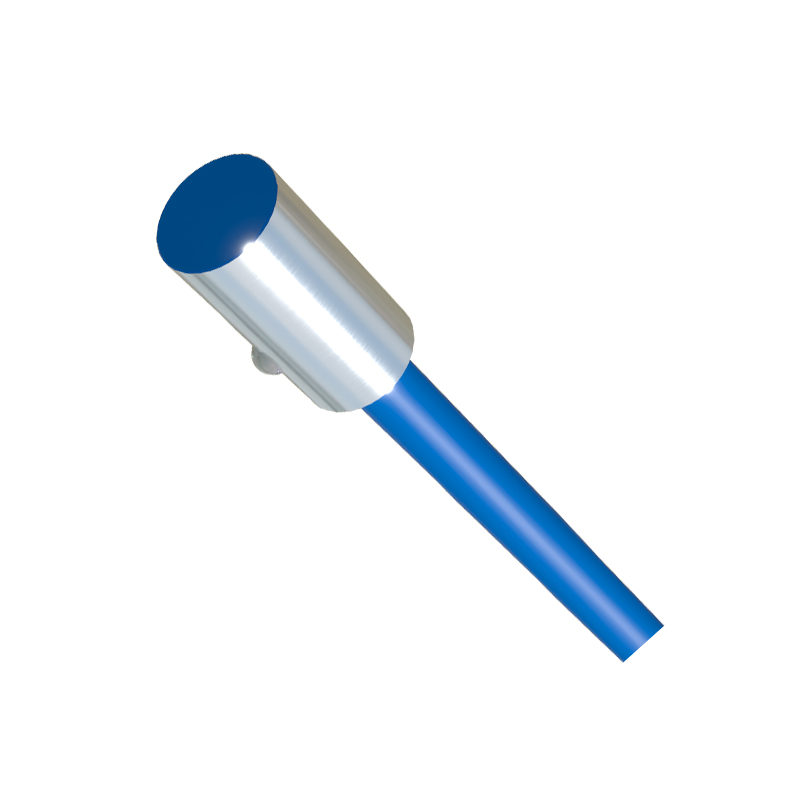
In the realm of industrial automation and machinery, proximity sensors are indispensable components, acting as the silent sentinels that detect the presence or absence of objects without physical contact. Their reliability and precision form the backbone of countless processes, from assembly line sequencing to safety interlocks. This article delves into the core principles of the most common types of machine proximity sensors, explaining their operation in a clear, industry-focused manner.
The fundamental principle uniting all proximity sensors is the use of an electromagnetic field or a beam of radiation. When a target object enters this field, it causes a detectable change in the field's state or the signal's return path. This change is then converted by the sensor's internal electronics into a clean, binary electrical output signal—typically a switch closure or an open-collector transistor state—indicating "object present" or "object absent."
The most ubiquitous type is the Inductive Proximity Sensor. These sensors are used exclusively for detecting metallic objects, primarily ferrous metals like steel and iron, though specialized versions can detect non-ferrous metals. The core of an inductive sensor is a coil wound around a ferrite core, connected to an oscillator. When powered, the oscillator generates a high-frequency alternating electromagnetic field at the active face of the sensor. When a conductive metal target enters this field, eddy currents are induced on the surface of the target. These eddy currents draw energy from the oscillator, causing its amplitude to decrease. A threshold circuit monitors this amplitude drop. Once the drop reaches a preset level (corresponding to a specific sensing distance), the circuit triggers, switching the output state. The sensing range is influenced by the target's material, size, and shape, with factors like the material's permeability and conductivity playing critical roles. Standardized correction factors are applied for non-ferrous metals.
For non-metallic objects—such as plastic, wood, glass, or liquids—Capacitive Proximity Sensors are employed. Their operating principle mirrors that of a variable capacitor. The sensor's active face acts as one plate of a capacitor, the target object acts as the other plate, and the air gap serves as the dielectric. The sensor's internal oscillator is tuned to a specific capacitance value. As a target approaches the active face, the capacitance of the system increases because the dielectric constant of most materials (other than air) is higher. This change in capacitance alters the oscillator's amplitude. Similar to the inductive type, a detection circuit senses this change and switches the output when the amplitude surpasses a threshold. Capacitive sensors are versatile but can be sensitive to environmental factors like humidity or dust, which can also alter the dielectric constant.
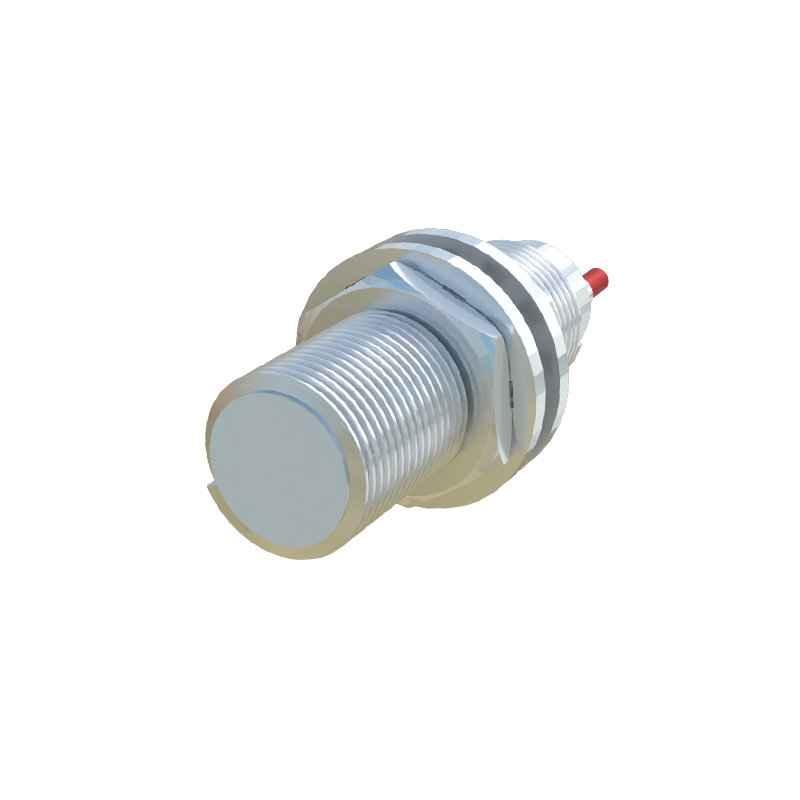
A third major category is the Ultrasonic Proximity Sensor. These sensors operate on the principle of sound wave echo. A piezoelectric transducer within the sensor emits high-frequency ultrasonic pulses (typically beyond human hearing, around 200 kHz). These pulses travel through the air, strike a target object, and are reflected back to the sensor. An internal timer measures the time elapsed between the emission of the pulse and the reception of its echo. Using the known speed of sound in air, the sensor's electronics calculate the distance to the target. An output is switched when the calculated distance falls within a pre-set window. Ultrasonic sensors are excellent for detecting objects of virtually any material, provided the surface is sufficiently sound-reflective. They are ideal for applications involving clear object detection, liquid level sensing, or uneven surfaces, though their performance can be affected by temperature variations (which change the speed of sound) and by soft, sound-absorbing materials.
Finally, Photoelectric Sensors deserve mention, though they are often categorized separately. They function by projecting a light beam (visible, infrared, or laser) from an emitter to a receiver. In the proximity-sensing "diffuse" mode, the emitter and receiver are housed in the same unit. The emitted light hits a target and is diffusely reflected back to the receiver. The intensity of the returned light is evaluated, and an output is triggered when it exceeds a threshold. Their effective range and reliability depend heavily on the target's color, reflectivity, and surface texture.
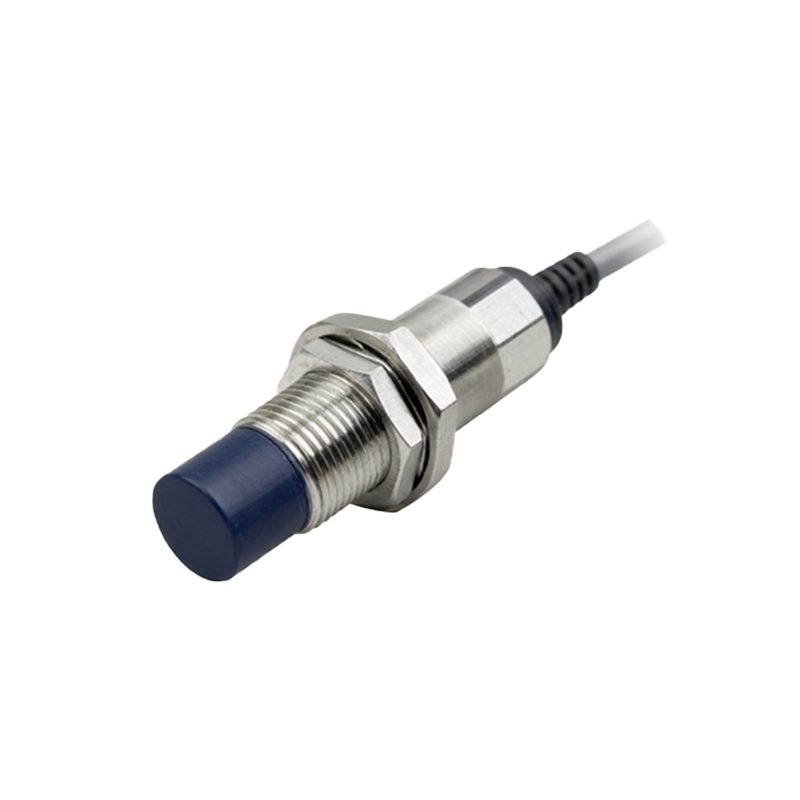
Key performance parameters for all proximity sensors include the nominal sensing distance (Sn), which is the theoretical operating distance under standardized conditions, the hysteresis, which is the difference between the switch-on and switch-off points (preventing output chatter), and the response frequency, indicating how quickly the sensor can detect objects in rapid succession. Environmental sealing (IP ratings) and immunity to electrical noise are also critical selection criteria for harsh industrial environments.
In summary, machine proximity sensors translate a physical phenomenon—the disturbance of a field by a target—into a decisive electrical command. Understanding whether your application involves metals, non-metals, specific distances, or challenging environments will guide the selection