Inductive proximity sensors are fundamental components in modern industrial automation, offering non-contact detection of metallic objects with exceptional reliability. This video guide delves into the operational principles, key specifications, and practical implementation strategies for these versatile devices.
At their core, inductive proximity sensors generate an electromagnetic field from a coil energized by an oscillator. When a metallic target enters this field, eddy currents are induced on the target's surface. This causes a change in the oscillation amplitude, which is detected by a threshold circuit, triggering a solid-state output switch. This principle allows for the detection of ferrous metals like steel and iron, as well as non-ferrous metals such as aluminum, copper, and brass, though with varying sensing distances.
A critical parameter is the nominal sensing distance (Sn), typically specified for a standard mild steel target. Real-world sensing distance (Sr) is often derated, especially for non-ferrous metals. For instance, aluminum may reduce the effective range to approximately 40-50% of Sn. The video demonstrates how factors like target size, shape, and mounting conditions (flush vs. non-flush) significantly influence performance. Flush-mounted sensors can be embedded in metal without loss of function, while non-flush types offer longer ranges but require a clear surrounding area.
Output configurations are predominantly PNP (sourcing) or NPN (sinking), with 3-wire designs being most common. The choice depends on the PLC or controller input module. Advanced models feature analog outputs (4-20 mA or 0-10V) for distance-proportional signaling, or IO-Link for digital communication of diagnostics and parameter data. Housing materials, such as nickel-plated brass or stainless steel, are selected based on environmental demands like washdowns, coolants, or chemical exposure.
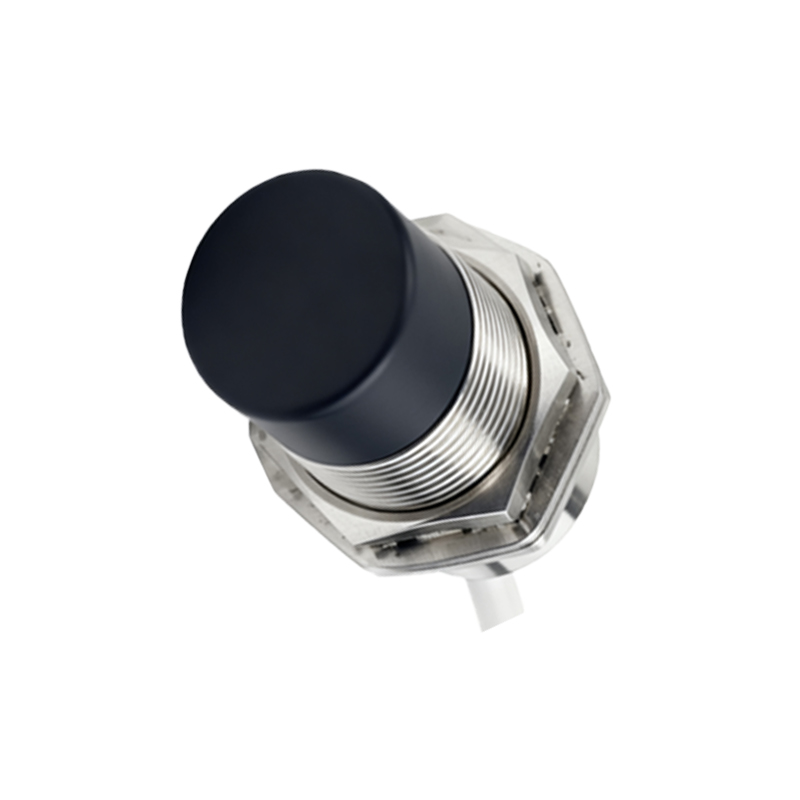
Installation is paramount. The video details best practices: ensuring adequate clearance from adjacent metals to prevent false triggering, verifying switching frequency against required cycle times, and selecting appropriate cable types with proper shielding in electrically noisy environments. Common failure modes, like weld field immunity issues or physical damage from repeated target impact, are also examined with troubleshooting tips.
Applications are vast, from simple tasks like counting metal parts on a conveyor to critical roles in robotic tool changing, cylinder position feedback, and machine safety interlocks. The guide concludes with a comparative analysis against other technologies, such as capacitive or photoelectric sensors, highlighting inductive sensors' superiority in harsh, dirty environments where only metal detection is needed. Their robustness, speed, and longevity make them indispensable for precision manufacturing, packaging, and material handling systems. By understanding their specifications and limitations, engineers can optimize sensor selection for enhanced system reliability and uptime.