In the rapidly evolving landscape of industrial automation, sensing technology plays a pivotal role in enabling precision, safety, and efficiency. Among the various sensing solutions available, laser sensors have emerged as a cornerstone for long-range detection and measurement applications. Specifically, laser sensors with a 60-meter range represent a significant technological advancement, offering robust performance in demanding environments. This article delves into the operational principles, key features, and diverse applications of these powerful devices, providing insights for engineers and industry professionals.
At its core, a 60-meter range laser sensor operates on the principle of time-of-flight (ToF) or phase-shift measurement. The sensor emits a focused laser beam towards a target. The light is then reflected back to the sensor's receiver. By precisely calculating the time delay between the emission and reception of the laser pulse, or by analyzing the phase shift of a modulated continuous wave, the sensor can accurately determine the distance to the object. This non-contact measurement method is highly reliable and unaffected by the target's surface color or material in most conditions, although extreme reflectivity can require calibration.
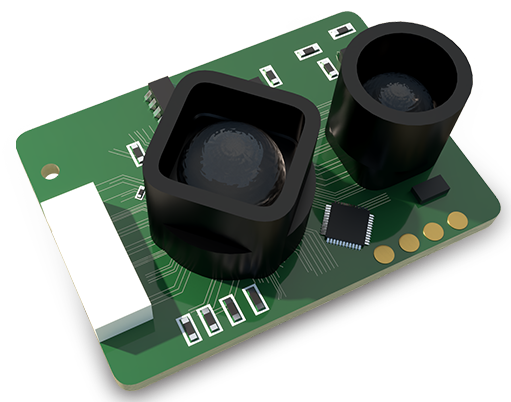
The achievement of a stable 60-meter range is not trivial and hinges on several critical engineering factors. First is the laser source itself. Typically, Class 1 or Class 2 laser diodes operating in the infrared spectrum (e.g., 850 nm or 905 nm) are used for eye safety and atmospheric penetration. The optical system, comprising high-quality lenses, is designed to produce a narrow, collimated beam with minimal divergence. This ensures that the laser spot remains small even at long distances, enhancing measurement accuracy and reducing interference from background objects.
Secondly, the receiver circuitry is paramount. Advanced photodiodes or avalanche photodiodes (APDs) are employed to detect the faint reflected signal. Sophisticated signal processing algorithms filter out ambient light noise and compensate for varying environmental conditions, such as changes in air temperature or the presence of dust and light fog. Modern 60-meter laser sensors often incorporate microprocessor-based intelligence for real-time data processing, offering features like programmable measurement windows, multi-echo evaluation (to ignore foreground obstacles like mesh or glass), and digital interfaces (IO-Link, Ethernet/IP, PROFINET).
The applications for 60-meter range laser sensors are vast and span multiple industries. In logistics and warehousing, they are indispensable for inventory management, monitoring the fill levels of large silos or storage bays, and guiding automated guided vehicles (AGVs) in expansive facilities. Their long range allows for fewer sensors to cover large areas, optimizing system cost and complexity.
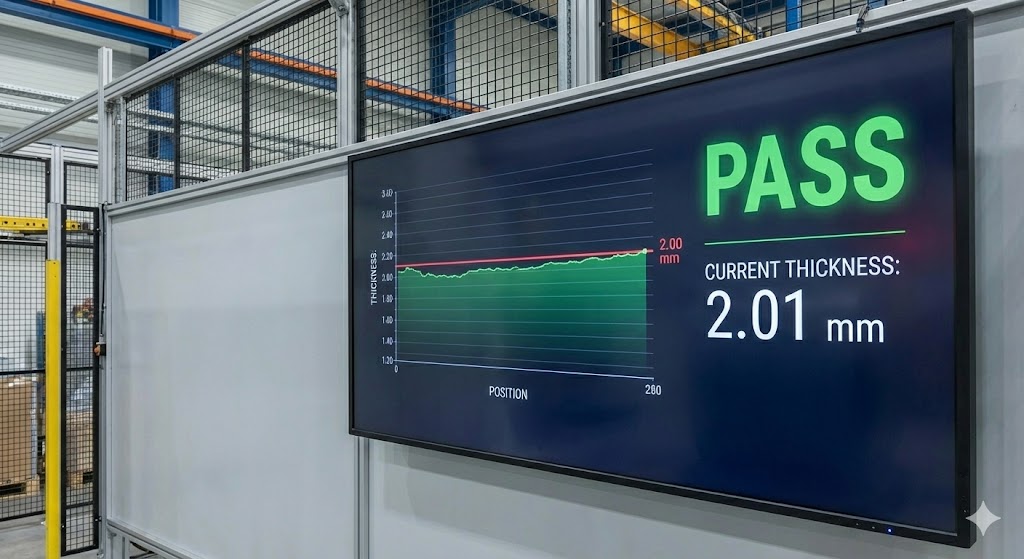
In the construction and mining sectors, these sensors are used for vehicle detection, collision avoidance on large machinery, and monitoring stockpile volumes. Their robustness against dust and vibration makes them suitable for harsh outdoor environments. In manufacturing, they facilitate precise positioning of crane systems, control of conveyor belt systems over long stretches, and safeguard hazardous zones by creating invisible safety curtains.
Furthermore, in the agricultural domain, they can be deployed for monitoring grain levels in tall storage towers or for guiding autonomous farming equipment. The security industry utilizes them for perimeter protection over long distances, where they can detect intrusions with high precision.
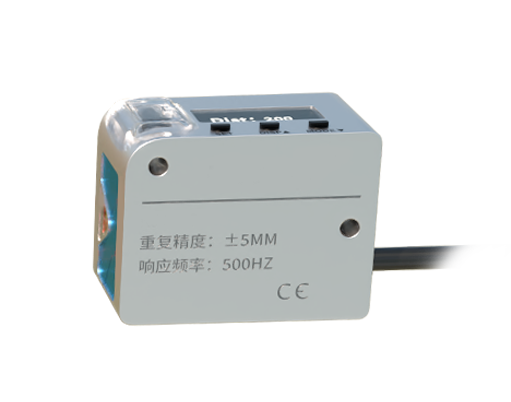
When selecting a 60-meter laser sensor, engineers must consider several parameters beyond just the range. Key specifications include measurement accuracy (often in the millimeter range at shorter distances, potentially centimeters at the maximum range), repeatability, response time, the size of the laser spot at 60 meters, and the sensor's environmental protection rating (IP67/IP69K is common for industrial use). The choice of analog output (4-20 mA, 0-10 V) or digital communication protocol must align with the existing control system architecture.
In conclusion, the 60-meter range laser sensor is a versatile and powerful tool that extends the reach of automated sensing. By combining advanced optics, sensitive electronics, and intelligent software, it solves complex measurement and detection challenges across logistics, heavy industry, manufacturing, and beyond. As technology progresses, we can anticipate even greater ranges, higher accuracies, and more integrated smart features, further solidifying the laser sensor's role as a critical component in the Industry 4.0 ecosystem.