Laser tracking sensors represent a cornerstone technology in modern industrial automation, enabling precise, non-contact measurement and real-time positional tracking of objects. Their applications span robotics, coordinate measurement machines (CMMs), assembly verification, and large-scale metrology. Understanding the different types is crucial for selecting the optimal sensor for a specific task. This article delves into the primary categories of laser tracking sensors, explaining their operating principles, key characteristics, and typical use cases.
The most fundamental classification is based on the measurement principle. The predominant technology is interferometric laser tracking. These systems utilize a laser interferometer, which is often combined with an absolute distance meter (ADM). The core component is a steering mechanism, typically a two-axis gimbal with high-precision angular encoders, that directs a laser beam to a retroreflector (commonly a spherically mounted retroreflector, or SMR) attached to the target. The interferometer measures the change in the optical path length as the target moves with nanometer-level accuracy, while the angular encoders provide the direction. The ADM provides an absolute distance reference to resolve the interferometer's inherent ambiguity in counting wavelength fringes. This type offers the highest accuracy for dynamic tracking over large volumes, often exceeding 10 meters, making it ideal for aerospace assembly, wind turbine blade inspection, and automotive body-in-white verification.
A second major category is laser radar (Lidar) tracking systems. While sharing the "laser tracking" nomenclature, their operational principle differs significantly. These systems, sometimes called laser trackers in a broader sense, use time-of-flight or phase-shift measurement to determine the distance to a target. They emit a laser pulse or modulated beam and measure the time or phase difference of the reflected signal. Modern laser radar trackers often scan the beam across a wide field of view to track multiple points or surfaces without a physical retroreflector, though retroreflectors can be used for enhanced signal strength. Their accuracy is generally lower than interferometric trackers but they offer advantages in speed, ability to measure to diffuse surfaces, and operational simplicity. They are extensively used for rapid scanning of large structures, shipbuilding, and reverse engineering applications.
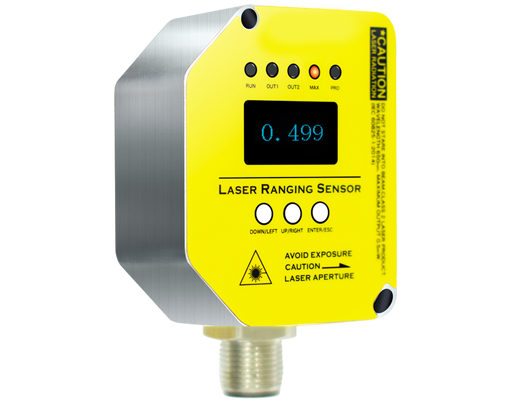
Emerging as a powerful alternative are vision-based laser tracking sensors. These systems integrate one or more cameras with structured laser light, typically a laser line or dot. The camera observes the laser projection on the target object. By using triangulation principles and sophisticated image processing algorithms, the system calculates the 3D position of the laser point(s) in real-time. Their measurement volume is usually smaller than long-range trackers, but they provide very high update rates and can track multiple degrees of freedom simultaneously. They are commonly embedded in robotic guidance systems for seam tracking in welding, precise part placement, and collaborative robot (cobot) applications where the sensor is mounted on the robot arm itself.
Another important distinction lies in the number of measurement axes or degrees of freedom (DOF) tracked. Traditional laser trackers are primarily 3DOF systems, providing the X, Y, and Z coordinates of a single point (the retroreflector's center). However, advanced 6DOF laser tracking probes have been developed. These probes incorporate additional sensors (like inclinometers or a miniaturized camera system within the probe) that communicate with the tracker's base station. This allows the system to measure not only the probe's position but also its orientation (pitch, yaw, roll). This is invaluable for aligning complex tooling, measuring hidden features, and performing detailed assembly tasks without constant reorientation of the probe.
The choice of sensor type depends heavily on application requirements. Key selection criteria include:
* Accuracy and Uncertainty: Ranging from sub-micron levels for interferometric systems to tens of microns for laser radar and vision-based systems.
* Measurement Volume: From a few cubic meters for vision-based cells to entire aircraft hangars for long-range trackers.
* Measurement Rate: From several hundred Hertz for point-by-point tracking to over a million points per second for scanning laser radar.
* Target Surface: Requires a cooperative retroreflector (SMR), or can work on diffuse surfaces.
* Environmental Robustness: Sensitivity to vibration, temperature drift, and ambient light varies between technologies.
In conclusion, the landscape of laser tracking sensors is diverse, moving beyond the classic interferometric tracker to include laser radar and integrated vision-laser systems. Each type—interferometric, laser radar, and vision-based—occupies a specific niche defined by its balance of accuracy, speed, volume, and target compatibility. The evolution towards multi-DOF tracking further expands their utility in smart manufacturing. Engineers must carefully evaluate the technical specifications and operational constraints to deploy the most effective laser tracking solution, ensuring it meets the stringent demands of precision, efficiency, and reliability in today's automated industrial environments.