In industrial automation and precision measurement, laser sensors play a critical role in ensuring accuracy, efficiency, and safety. However, like all electronic components, they have a finite lifespan and may require replacement due to wear, technological obsolescence, or changing application requirements. Replacing a laser sensor is not merely a matter of swapping out an old unit for a new one; it involves a systematic process of evaluation, selection, and integration to maintain or enhance system performance.
The decision to replace a laser sensor often stems from several factors. The most common is outright failure, where the sensor no longer provides a reliable signal or meets its specified accuracy. Physical damage from environmental hazards like excessive dust, moisture, or impact can also necessitate replacement. Beyond failure, technological upgrades are a proactive reason for replacement. Newer sensor models may offer superior resolution, faster response times, longer ranges, or advanced communication protocols like IO-Link or Ethernet/IP, which can unlock new capabilities for a production line. Furthermore, changes in the manufacturing process itself—such as new materials, different part geometries, or increased line speed—may demand a sensor with different specifications.

A successful replacement project begins with a thorough audit of the existing sensor and its operating context. Key parameters must be documented: the current sensor's make and model, its sensing range, spot size, output type (e.g., digital PNP/NPN, analog 4-20mA), power supply requirements, and mounting configuration. Crucially, one must understand the application's *functional* requirement: What is it actually measuring? Is it detecting presence/absence, measuring precise distance, profiling a contour, or gauging thickness? Recording the environmental conditions—temperature extremes, ambient light, vibration levels, and exposure to contaminants—is equally vital. This audit forms the essential specification for the replacement.
The selection phase involves finding a suitable successor. The ideal path is a direct like-for-like replacement using the same model, which minimizes integration effort. If the original model is discontinued, manufacturers often provide cross-reference guides to recommended newer equivalents. When a direct replacement isn't available or an upgrade is desired, engineers must match the new sensor's specifications to the documented requirements. Critical factors include measurement range and resolution, repeatability, response time, and the required mounting distance. The sensor's housing class (IP rating for dust/water ingress) must suit the environment. Compatibility with the existing control system's electrical interface and communication network is non-negotiable to avoid costly rewiring or programming changes.
Installation and commissioning are where planning meets practice. After safely locking out the equipment's power, the old sensor is carefully removed, noting its exact orientation and cable routing. The new sensor is mounted, ensuring it is aligned precisely as the old one was; even a slight angular deviation can cause significant measurement error. Electrical connections are made according to the datasheet, with careful attention to polarity for DC sensors. Once powered, the sensor typically requires configuration. This might involve teaching-in the sensing distance via a push-button, setting thresholds via a potentiometer, or using dedicated software for more complex devices. The final and most critical step is validation: running the process with test samples or calibrated targets to verify the new sensor's output is correct and stable under all expected operating conditions.
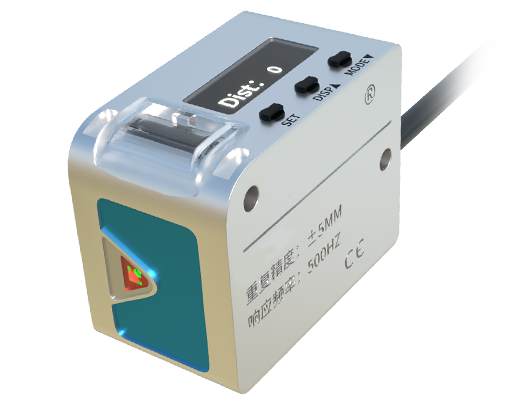
Post-replacement, it is prudent to document the change thoroughly. Update equipment manuals, maintenance logs, and spare parts lists with the new sensor's model and serial number. This documentation aids future troubleshooting and replacements. Implementing a preventive maintenance schedule, such as periodic lens cleaning and performance verification, can extend the life of the new sensor and prevent unplanned downtime.
In conclusion, laser sensor replacement is a strategic activity that, when executed methodically, ensures continuous operational integrity. It bridges the gap between legacy systems and modern technological advancements. By focusing on detailed requirement analysis, careful product selection, and meticulous installation, maintenance teams can execute replacements that are transparent to the production process, thereby safeguarding productivity, quality, and return on investment in automated systems.