Laser displacement sensors are non-contact measurement devices that have become indispensable in modern industrial automation, quality control, and research. Their core function is to precisely measure the distance, position, or displacement of a target object by projecting a laser beam onto its surface and analyzing the reflected light. Unlike traditional contact probes, they eliminate the risk of damaging delicate surfaces and enable high-speed, high-accuracy measurements that are critical for today's manufacturing tolerances.
The operating principle of most industrial laser displacement sensors is based on triangulation. The sensor emits a focused laser beam from its transmitter. This beam strikes the target surface and is diffusely reflected. A receiving lens within the sensor, positioned at a known angle to the emitter, collects this reflected light and focuses it onto a position-sensitive detector, typically a CMOS or PSD (Position Sensitive Device). The exact spot where the light lands on this detector shifts depending on the distance to the target. By calculating this shift in the received light spot's position, the sensor's internal processor can determine the exact distance to the object with remarkable precision, often in the micron range.
Key performance parameters define a sensor's capability. Measurement range specifies the minimum and maximum distances over which it can operate accurately. Resolution indicates the smallest detectable change in distance. Linearity error defines the deviation from a perfectly straight calibration line across the measurement range. Spot size refers to the diameter of the laser beam on the target, affecting the ability to measure small features or uneven surfaces. Finally, sampling speed, often in the kilohertz range, determines how many measurements can be taken per second, which is vital for inspecting fast-moving objects on a production line.
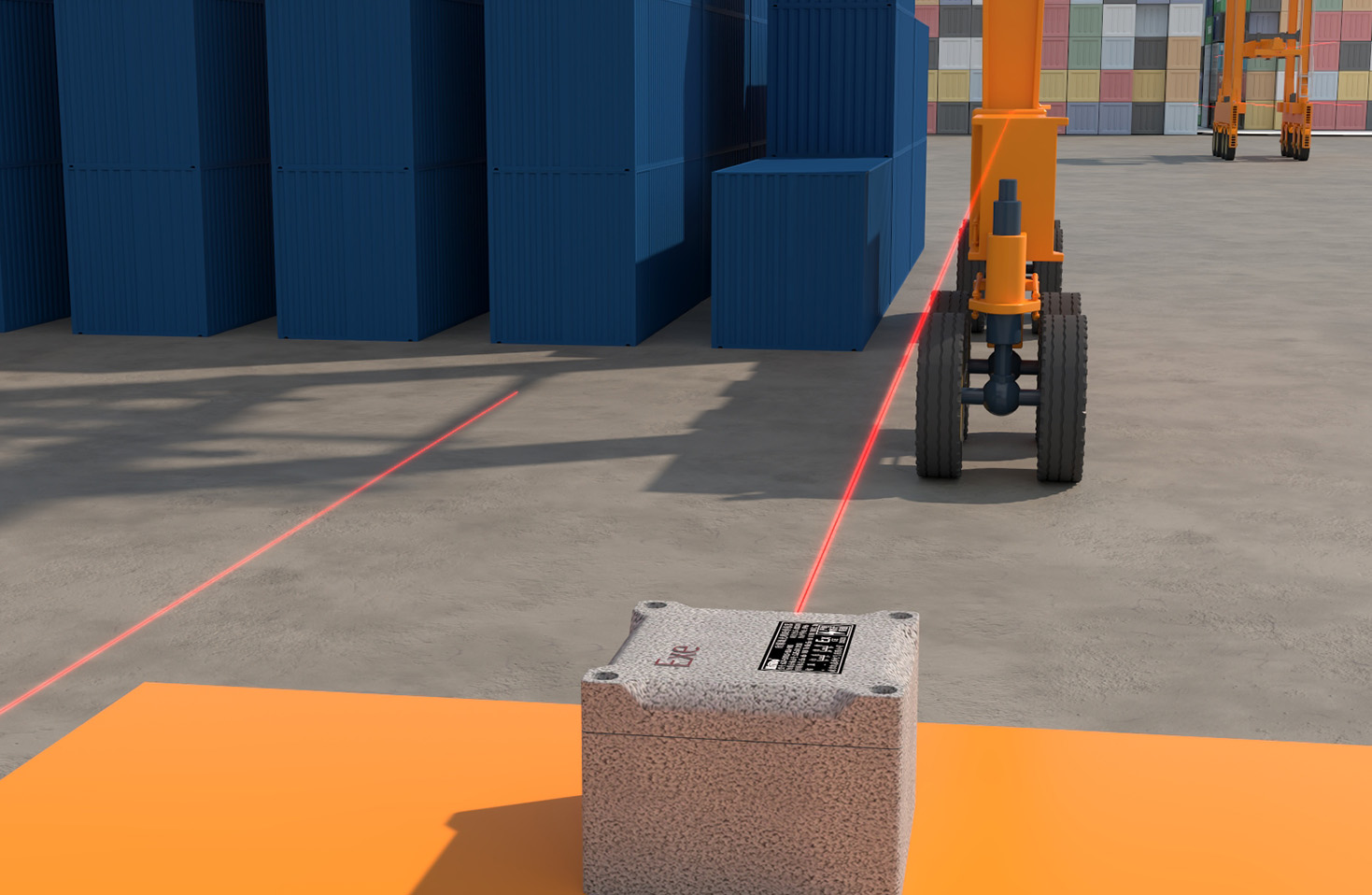
The applications for laser displacement sensors are vast and varied. In automotive manufacturing, they are used to measure panel gaps, inspect weld seams, and verify the dimensions of engine components. In the electronics industry, they ensure the coplanarity of chip leads, measure solder paste thickness, and inspect micro-components. They are crucial for controlling roll gap and thickness in steel and paper mills. In robotics, they provide precise feedback for guidance and positioning. Furthermore, they are employed in vibration analysis, profile scanning to create 3D models of surfaces, and even in medical devices for precise alignment.
Selecting the right laser displacement sensor requires careful consideration of the application's specific needs. For highly reflective or mirror-like surfaces, a diffused reflection type or a sensor with automatic gain control is necessary to prevent saturation. For dark, low-reflectance, or absorbent materials, a model with higher laser power or specialized receiving optics is required. The required accuracy and resolution will dictate the sensor's grade and price point. Environmental factors such as ambient light, dust, oil mist, or temperature fluctuations must be accounted for, potentially necessitating sensors with robust housings (IP67 ratings), specific laser wavelengths less susceptible to interference, or built-in cooling systems.
Integration is another critical step. Modern sensors offer various output options, including analog voltage/current, digital interfaces like Ethernet/IP, PROFINET, or RS-485, and direct relay outputs for go/no-go judgments. Proper mounting, alignment, and calibration are essential for optimal performance. Users must also consider the setup software provided by the manufacturer, which often allows for sophisticated configuration of measurement modes, filtering, and data processing.

In conclusion, laser displacement sensors represent a powerful fusion of optics, electronics, and computing. Their ability to deliver fast, accurate, and reliable non-contact measurements solves countless challenges in industrial metrology and process control. As technology advances, we see trends toward even smaller sensor sizes, higher speeds, embedded intelligence for edge computing, and enhanced capabilities for challenging surfaces. By understanding their principles, specifications, and application requirements, engineers and technicians can effectively leverage these tools to enhance product quality, optimize processes, and drive innovation across numerous fields.