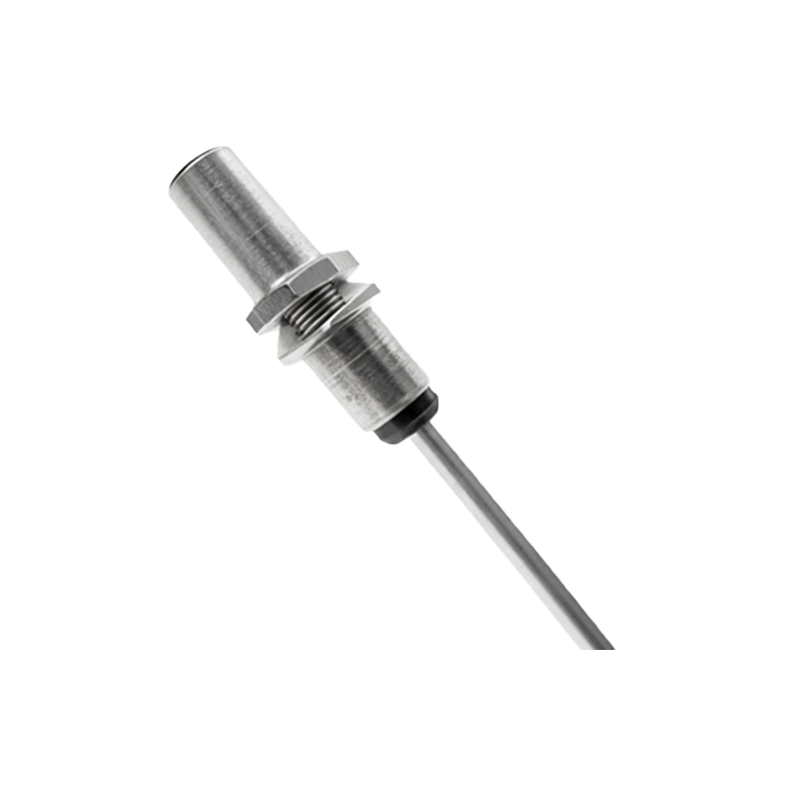
Proximity capacitive image sensing represents a significant leap forward in non-contact detection and imaging technology. Unlike traditional single-point capacitive sensors, these advanced devices capture a two-dimensional 'image' of capacitance variations, enabling detailed profiling of objects' presence, shape, and even material composition without physical contact. At its core, the technology operates on the fundamental principle of fringing electric fields. A dense array of micro-electrodes forms the sensor's active surface. When an excitation signal is applied, an electric field projects from this electrode array into the surrounding space. The introduction of any object with a dielectric constant different from air (virtually all materials) distorts this field, altering the local capacitance at specific electrode nodes. Sophisticated integrated circuitry measures these minute, localized capacitance changes across the entire array, processing the data to construct a detailed spatial map—the capacitive image.
The architecture of a modern proximity capacitive image sensor is a marvel of miniaturization and integration. It typically comprises a sensing electrode array fabricated on a printed circuit board (PCB) or flexible substrate, a dedicated application-specific integrated circuit (ASIC) for signal conditioning and data acquisition, and a digital signal processor (DSP) or microcontroller for image processing and interpretation. The ASIC is critical, as it must handle high-frequency signals, suppress noise, and detect capacitance changes often measured in femtofarads (fF). Advanced designs employ techniques like sigma-delta modulation or charge-transfer methods to achieve the required sensitivity and signal-to-noise ratio. The resulting output is a grayscale or binary image where pixel intensity corresponds to the measured capacitance or the proximity of the target object.
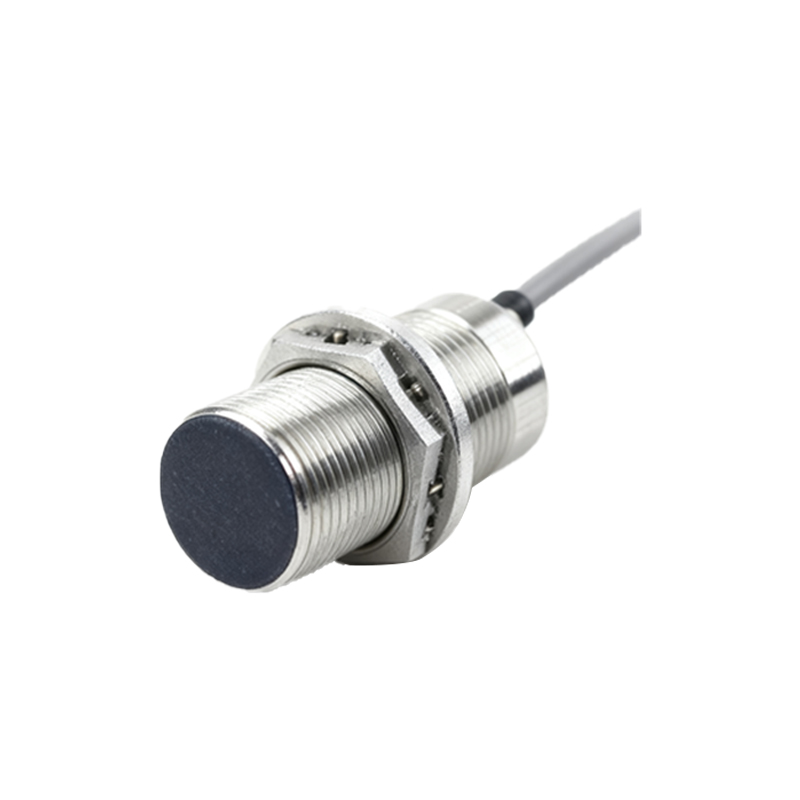
The advantages of this technology are manifold, driving its adoption across diverse sectors. Firstly, it is entirely non-contact and non-invasive, making it ideal for delicate materials, cleanroom environments, or applications where contamination is a concern. Secondly, it is insensitive to environmental factors like ambient light, dust (non-conductive), or color, which often plague optical systems. It can detect objects through certain non-conductive barriers like thin glass, plastic, or packaging materials. Furthermore, these sensors consume relatively low power and have no moving parts, ensuring high reliability and longevity in demanding industrial settings.
Industrial applications are vast and growing. In automated manufacturing, proximity capacitive image sensors are deployed for precise presence detection, orientation verification, and counting of components on conveyor belts, even if they are stacked or overlapping slightly. They excel in robotic guidance systems, providing a reliable sense of object contours for pick-and-place operations. In the automotive industry, they are used for seat occupancy detection with high resolution, distinguishing between a person, a child seat, or groceries, which is crucial for advanced airbag systems. Another critical application is in web and foil processing, where they monitor material edges, detect tears, or measure thickness variations in real-time without contact, preventing costly production halts.
Looking ahead, the future of proximity capacitive image sensing is intertwined with trends like Industry 4.0 and the Internet of Things (IoT). The integration of artificial intelligence and machine learning directly at the sensor edge (edge AI) will enable these devices to not just capture images but also classify objects, identify defects, and make predictive decisions autonomously. Developments in flexible and stretchable electronics will allow for conformable sensor arrays that can be applied to curved surfaces for novel inspection tasks. Furthermore, the fusion of capacitive image data with other sensing modalities—such as thermal, pressure, or optical—will create multi-dimensional perception systems, offering unparalleled insight into processes and products. As miniaturization continues and processing power becomes more accessible, we can expect these sensors to become even more sensitive, affordable, and ubiquitous, solidifying their role as a cornerstone of smart, responsive industrial automation.