Paper proximity sensors are critical components in modern industrial automation, particularly within printing, packaging, and paper converting machinery. These sensors detect the presence, absence, or position of paper sheets, rolls, or stacks without physical contact, ensuring precise process control and preventing material damage or machine jams. The core working principle relies on non-contact sensing technologies, primarily electromagnetic or capacitive methods, adapted for the specific dielectric and physical properties of paper materials.
Electromagnetic inductive proximity sensors are commonly used for detecting metallic elements in paper handling, such as staples in recycled stock or foil layers in specialty papers. They generate an oscillating electromagnetic field from a coil and oscillator circuit. When a metallic object enters this field, it induces eddy currents, which dampen the oscillation amplitude. This change is detected by a threshold circuit, triggering an output signal. For purely non-metallic paper detection, capacitive sensors are the standard choice. A capacitive proximity sensor creates an electrostatic field between its active face and a ground reference. Paper, as a dielectric material, alters the capacitance of this field when it enters the sensing zone. The sensor's internal circuit measures this capacitance change, often by incorporating it into an RC oscillator circuit where the presence of the paper changes the oscillation frequency, which is then converted into a switch signal.
The effectiveness of a capacitive sensor with paper depends heavily on the material's dielectric constant (εr). Standard paper has a relatively low dielectric constant (typically between 1.5 and 3), which is higher than air (εr ≈ 1) but lower than many plastics or liquids. This necessitates sensors with high sensitivity and the ability to be tuned or calibrated. Factors like paper thickness, moisture content, coating, and basis weight significantly influence the dielectric constant and, consequently, the sensing distance. For instance, damp paper or paper with clay coatings presents a higher dielectric constant, making detection easier, while dry, thin tissue paper poses a greater challenge. Modern sensors feature sensitivity adjustment potentiometers or teach-in functions to set the optimal trigger point for a specific paper grade, compensating for these variations.
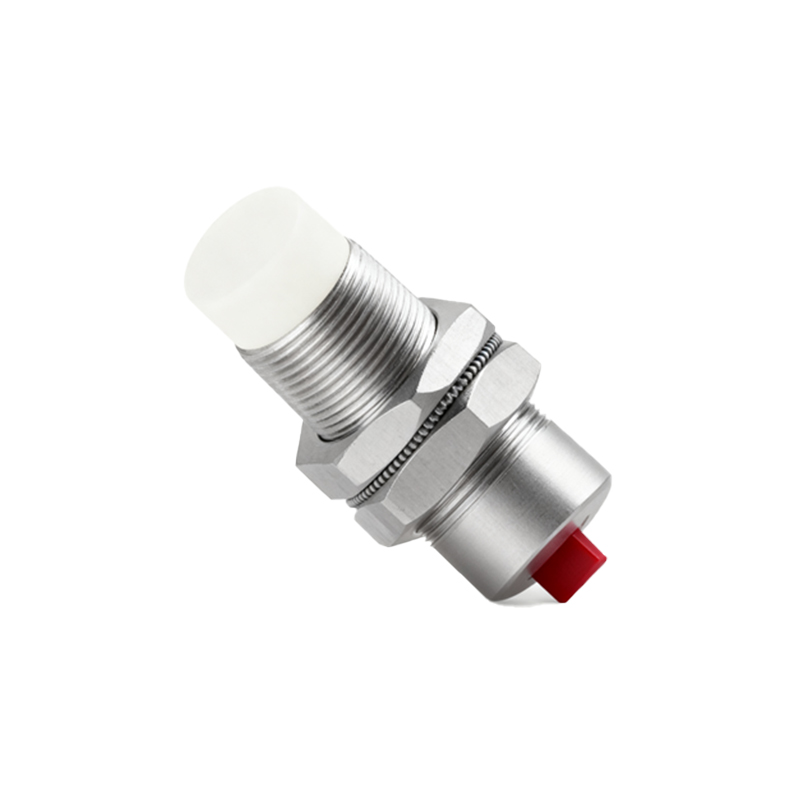
Key design considerations include the sensor's nominal sensing distance (Sn), which is rated for a standard material. For paper, the effective sensing distance is often reduced and must be determined empirically. Shielding is another crucial aspect. Shielded (flush-mountable) capacitive sensors have a focused field projecting frontally, making them ideal for detecting paper in confined spaces or when mounted in metal frames, as they are immune to lateral interference. Unshielded sensors have a larger, more diffuse field, suitable for detecting paper edges or for applications requiring a wider sensing lobe, but they are more susceptible to environmental effects.
Applications are diverse. In printing presses, these sensors monitor paper feed, ensuring a single sheet is present before the impression cylinder engages. In sheet counters, they accurately tally passing sheets. For roll stands, they detect the diminishing diameter of a paper roll, initiating an automatic splice or roll change. In packaging lines, they verify the presence of a carton blank before folding and gluing. Advanced systems integrate multiple sensors for edge guiding, ensuring the paper web remains aligned throughout the converting process.
Maintenance involves regular cleaning of the sensor face to prevent dust and paper fiber buildup, which can cause false triggering. Environmental factors like ambient humidity and temperature fluctuations should be stabilized where possible, as they affect both the paper and the sensor's performance. Selecting the correct sensor type—considering factors like required sensing range, response frequency, output type (PNP/NPN analog, or IO-Link for digital parameterization), and environmental protection rating (IP67 for washdown areas)—is paramount for reliable operation.
In summary, paper proximity sensors, predominantly capacitive types, operate by detecting changes in an electrostatic field caused by the dielectric properties of paper. Their successful implementation hinges on understanding paper's variable characteristics, careful sensor selection, and precise calibration to achieve reliable, non-contact detection that enhances efficiency and protects valuable machinery and materials in high-speed automated environments.