In the realm of industrial automation, ensuring production line continuity and product quality is paramount. One critical component that plays a vital role in achieving this is the absence detection laser sensor. These sophisticated devices are engineered to identify the presence or, more specifically, the absence of objects, components, or materials with exceptional precision and reliability. Unlike traditional mechanical or proximity sensors, laser sensors utilize a focused beam of light, offering superior accuracy and the ability to detect minute gaps or missing items even in challenging environments.
The fundamental operating principle of an absence detection laser sensor is based on the interruption or reflection of a laser beam. Typically configured in a through-beam or retro-reflective mode, the sensor consists of a transmitter and a receiver. The transmitter emits a continuous or modulated laser beam. In a through-beam setup, the receiver is positioned directly opposite the transmitter. When an object is present on the conveyor or assembly line, it blocks the beam, and the receiver detects a loss of signal. Conversely, the *absence* of an object allows the beam to reach the receiver uninterrupted. The sensor's logic is then programmed to trigger an alert or halt the process when the beam is unbroken, indicating a missing component. Retro-reflective models work similarly but use a reflector to bounce the beam back to a receiver housed in the same unit as the transmitter, simplifying installation in space-constrained areas.
The advantages of employing laser sensors for absence detection are numerous. First and foremost is their high precision. The collimated laser beam can be focused to a very small spot, enabling the detection of tiny objects or precise edges, such as verifying the presence of a specific electronic chip on a PCB or a seal on a packaging line. This level of accuracy is unattainable with standard photoelectric sensors. Secondly, they offer long sensing ranges, often exceeding tens of meters, allowing for flexible mounting positions away from harsh processes. Their response time is extremely fast, in the microsecond range, making them suitable for high-speed production lines where every millisecond counts.
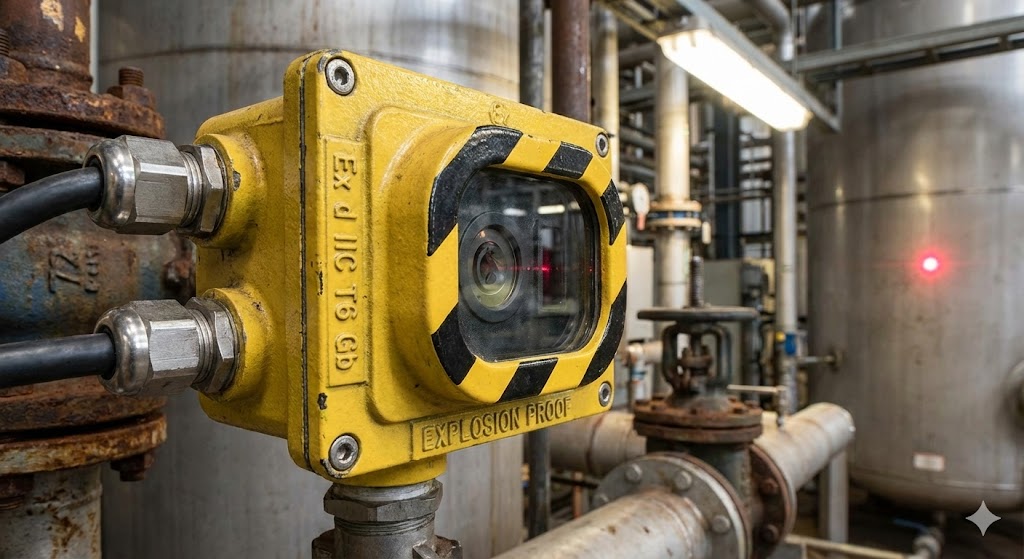
Furthermore, laser sensors are remarkably immune to ambient light interference and can perform consistently in environments with varying lighting conditions, thanks to modulated light signals and specialized filters. Their ability to detect transparent objects, like glass vials or plastic films, is another significant benefit, as these materials often pose a challenge for other sensing technologies. Modern laser sensors also come equipped with advanced features such as adjustable sensitivity, teach-in functions for easy setup, and robust industrial housing ratings (e.g., IP67) for resistance to dust, moisture, and vibration.
Application scenarios for absence detection laser sensors are vast across industries. In the automotive sector, they verify the presence of pistons, bolts, or gaskets on engine blocks moving along an assembly line. In pharmaceutical packaging, they ensure every blister pack contains a tablet before sealing. In the electronics industry, they check for missing components on circuit boards after soldering. On high-speed bottling lines, they confirm the presence of caps or labels. In each case, a single missing item detected by the sensor can prevent defective products from proceeding, saving costs on rework, recalls, and protecting brand reputation.
When selecting an absence detection laser sensor, several factors must be considered. The required sensing distance and the size of the target object determine the necessary beam diameter and sensor range. The environmental conditions, including temperature, potential contaminants, and ambient light, dictate the needed ingress protection and optical filtering. The required response speed must match the line velocity. Output types (e.g., NPN/PNP, analog, IO-Link) should be compatible with the existing PLC or control system. Finally, ease of alignment and configuration through intuitive interfaces or software tools is crucial for minimizing downtime during installation and maintenance.
In conclusion, absence detection laser sensors are indispensable tools in modern industrial automation. They provide a non-contact, highly reliable, and precise method for ensuring material and component completeness, directly contributing to operational efficiency, product quality, and overall equipment effectiveness (OEE). As manufacturing processes become faster and more complex, the role of these intelligent sensors will only grow, evolving with integration into Industry 4.0 frameworks for predictive analytics and smarter quality control.