In the dynamic world of electrical engineering and industrial maintenance, precision measurement is not just a convenience—it's a fundamental requirement. Among the plethora of tools available, handheld laser distance sensors have emerged as indispensable instruments, revolutionizing how professionals capture dimensions, verify layouts, and conduct inspections. These compact, powerful devices leverage laser technology to deliver fast, accurate, and non-contact measurements, streamlining workflows across construction sites, manufacturing floors, and complex electrical installations.
At its core, a handheld laser distance sensor operates on the principle of time-of-flight or phase-shift measurement. The device emits a focused laser beam towards a target. The beam reflects off the surface and returns to the sensor's receiver. By precisely calculating the time delay between emission and reception, or by analyzing the phase shift of the modulated laser wave, the onboard microprocessor computes the distance with remarkable accuracy. Modern units typically achieve accuracies within ±1.5 mm, with ranges extending from a few centimeters to over 200 meters, depending on the model and environmental conditions.
For electrical engineers, the applications are vast and critical. During the planning and installation of cable trays, conduit runs, and busway systems, precise measurements are paramount. A handheld laser meter allows for quick verification of distances between support structures, lengths of cable required, and clearances from other building services, all without the need for cumbersome tape measures or ladders. This not only saves significant time but also enhances safety by minimizing physical contact with potentially hazardous or hard-to-reach areas. In control panel fabrication, these tools ensure correct component spacing and cabinet dimensions, adhering to strict design specifications and safety standards like NFPA 70 (NEC) and IEC 61439.
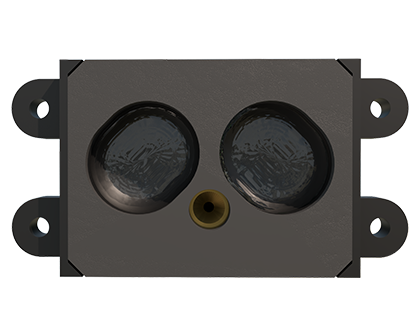
Furthermore, in facility management and retrofit projects, these sensors are invaluable for conducting as-built surveys. Engineers can swiftly document existing conditions, measure room dimensions for new equipment placement, or verify spatial requirements for transformer installations and switchgear rooms. The ability to calculate area and volume directly within the device simplifies load calculations and space planning.
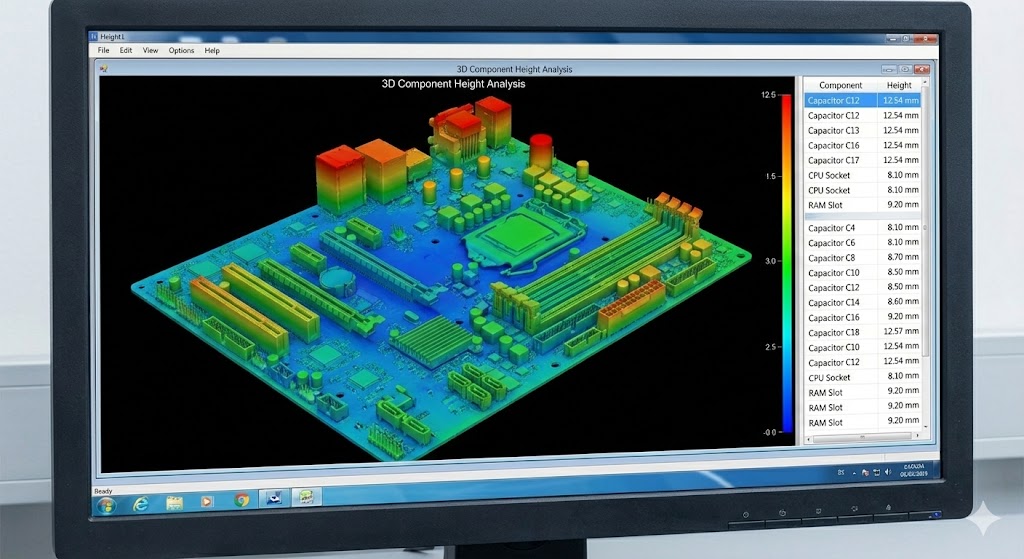
When selecting a handheld laser distance sensor, several key specifications demand careful consideration. Range and Accuracy are the primary benchmarks. For most indoor electrical work, a range of 50-100 meters is sufficient, while outdoor or large-scale industrial projects may require longer ranges. Accuracy should align with the project's tolerance levels. Laser Class is a crucial safety factor. Most consumer and professional devices are Class 2 (visible laser,<1mW), which is eye-safe for accidental exposure. However, engineers must always avoid direct eye exposure and be aware of the classification. Durability and Ingress Protection (IP) Rating are essential for harsh environments. A robust housing and an IP54 rating or higher protect against dust and water splashes, common on construction sites. Functionality varies; basic models measure length, while advanced units offer features like continuous tracking, Bluetooth connectivity for data transfer to CAD/BIM software, tilt sensors for indirect height calculations, and onboard memory for storing multiple measurements.
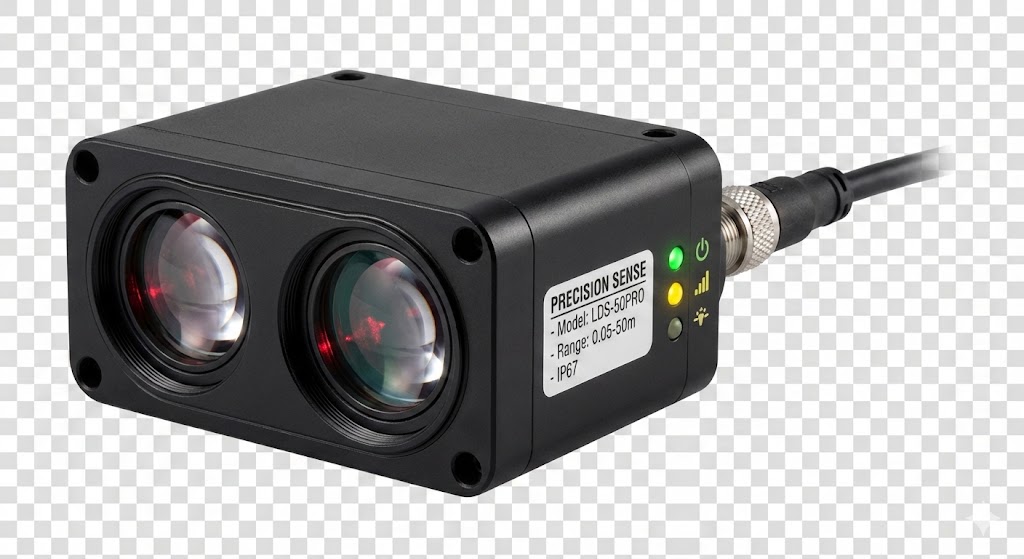
Despite their advantages, users must be aware of limitations. The laser requires a solid, opaque surface for a reliable reflection. Highly reflective, transparent, or absorbent surfaces (like shiny metal, glass, or black foam) can cause errors or measurement failures. Bright ambient light can also interfere with the sensor's receiver. Practical tips include using a target plate for difficult surfaces and avoiding aiming the laser towards intense light sources.
The integration of handheld laser sensors with Building Information Modeling (BIM) and digital twin technologies represents the future. By exporting precise point-cloud data or direct measurements to BIM software, engineers can create highly accurate digital representations of electrical systems, facilitating clash detection, maintenance planning, and lifecycle management. This digital workflow enhances collaboration between electrical, mechanical, and civil disciplines.
In conclusion, the handheld laser distance sensor is far more than a simple measuring tool; it is a catalyst for efficiency, accuracy, and safety in electrical engineering practice. By enabling rapid, precise data acquisition in a non-invasive manner, it empowers engineers to make informed decisions, reduce rework, and adhere to stringent project specifications. As technology advances, with improvements in battery life, measurement speed, and software integration, these devices will continue to solidify their role as a cornerstone tool in the modern electrical engineer's toolkit, bridging the gap between physical infrastructure and digital design.