Laser displacement sensors represent a cornerstone technology in modern industrial automation, quality control, and precision measurement. Their core function is to determine the distance, or displacement, of a target object from a reference point with exceptional accuracy, speed, and reliability. Unlike contact-based measurement tools, these sensors perform non-contact measurements, eliminating the risk of damaging delicate surfaces or influencing the measurement through physical force. The fundamental operating principle involves emitting a focused laser beam onto the target surface. The sensor then detects the position of the reflected light using a sensitive receiving element, such as a Position Sensitive Detector (PSD) or a Charge-Coupled Device (CCD). By analyzing the angle or the position of the reflected spot, the sensor's internal processor calculates the precise distance to the target using triangulation or time-of-flight principles, depending on the sensor type.
The functionality of laser displacement sensors extends far beyond simple distance measurement. A primary and critical function is high-speed, real-time profiling and thickness measurement. In manufacturing lines for materials like metal sheets, plastic films, or glass panels, sensors are often deployed in pairs opposite each other. By simultaneously measuring the distance to both surfaces, the system can calculate and monitor material thickness continuously, ensuring it remains within specified tolerances. This application is vital in industries such as rolling mills, paper production, and battery electrode manufacturing, where consistent thickness directly correlates with product performance and safety.
Another essential function is vibration analysis and monitoring. By taking rapid, successive distance measurements, a laser sensor can capture the minute oscillations of a rotating shaft, a motor housing, or a turbine blade. This data is processed to generate vibration amplitude and frequency spectra, enabling predictive maintenance. Engineers can identify imbalances, misalignments, or bearing wear before they lead to catastrophic failure, significantly reducing downtime and maintenance costs. This non-contact method is superior for measuring hot, rotating, or otherwise inaccessible components where attaching a physical accelerometer would be impractical or dangerous.
Laser displacement sensors also excel in detecting presence/absence and precise positioning. In automated assembly lines, they verify the correct placement of components, such as ensuring a chip is seated on a circuit board or a gasket is present in an engine block. Their high resolution allows them to detect minute height differences, making them perfect for checking coplanarity of multiple pins on an integrated circuit or verifying the flatness of a machined surface. This function is integral to Zero Defect manufacturing initiatives, preventing faulty products from progressing down the line.
Furthermore, these sensors perform intricate shape and contour inspections. By scanning a laser line across an object or moving the object under a fixed sensor, a detailed 2D or 3D profile can be constructed. This function is used to inspect the tread depth and wear patterns on tires, the profile of machined gears, the seal geometry on medical device packaging, or the surface topography of semiconductor wafers. Any deviation from the digital master model can be instantly flagged. The ability to measure transparent objects, like glass or clear plastics, using specialized models with coaxial or confocal optics, further broadens their application scope in electronics and pharmaceutical packaging.
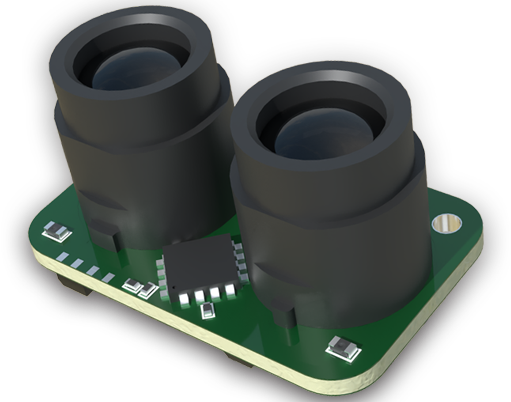
Selecting the right laser displacement sensor requires careful consideration of several functional parameters. Measurement range, stand-off distance, and spot size determine the sensor's working envelope and suitability for the target. Resolution and linearity define its accuracy. Sampling speed, or response frequency, is crucial for capturing data on fast-moving production lines or high-frequency vibrations. Environmental factors like ambient light, temperature fluctuations, and the target's surface characteristics (color, reflectivity, texture) must also be accounted for, often necessitating sensors with automatic exposure control or specialized filters.
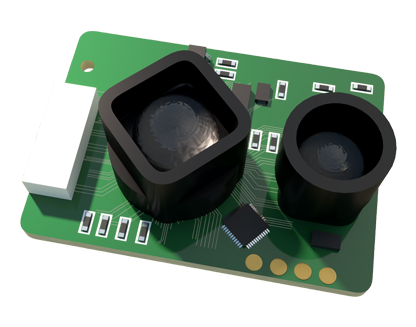
In conclusion, the functionality of laser displacement sensors is multifaceted and indispensable in advanced industrial settings. From ensuring microscopic precision in electronics assembly to safeguarding large-scale machinery through vibration monitoring, they provide the critical data needed for automation, quality assurance, and operational efficiency. As technology advances, newer models offer enhanced speed, smaller form factors, and smarter features like embedded Ethernet connectivity and integrated data processing, solidifying their role as a key enabler of Industry 4.0 and intelligent manufacturing ecosystems. Their non-contact, high-precision measurement capability makes them an irreplaceable tool for engineers striving for excellence in measurement and control.